Best Desk Dimensions and Shapes for Multi-Monitor Livestream Setups
You’ll want at least 60 inches of desk width for dual 27-inch monitors, but go for 72+ inches with an L-shaped design if you’re running triple monitors or ultrawides, since it gives you better sightlines, reduces neck strain, and separates your streaming from gaming zones. Aim for 30–36 inches of depth so your gear stays in arm’s reach and your posture stays neutral. L-shaped desks outperform rectangular ones by supporting 160° monitor angles and stream decks, while sit-stand models with 265+ lb capacity handle heavy rigs smoothly. Reinforced steel frames, built-in grommets, and layered cable management keep everything stable and tidy-especially when adjusting height-so your focus stays on performance, not clutter.
We are supported by our audience. When you purchase through links on our site, we may earn an affiliate commission, at no extra cost for you. Learn more. Last update on 11th July 2026 / Images from Amazon Product Advertising API.
Notable Insights
- Choose a desk at least 60 inches wide for dual 27-inch monitors, with 72+ inches ideal for triple or ultrawide setups.
- Opt for 30–36 inches of desk depth to maintain ergonomic monitor distance and accommodate stands or arms.
- L-shaped desks of 78+ inches provide superior space, zone separation, and angular monitor placement for streaming efficiency.
- Use sit-stand desks with 60+ inches width, 30+ inches depth, and 265+ lbs capacity for stability and height flexibility.
- Prioritize desks with cable management features and a weight capacity exceeding 100 kg to handle multiple heavy devices safely.
Why Desk Size Makes or Breaks Your Livestream Setup
While you might be tempted to save space with a compact desk, going too small can seriously undermine your stream quality and comfort, especially when running multiple monitors. A Desk Width under 48 inches forces awkward Monitor Placement in Dual Monitor Setups, straining your neck and degrading performance. You need at least 60 inches of Desk Width and 30 inches of Desk Depth to meet ergonomic guidelines, giving you room for screens, peripherals, and smooth camera framing. Shallow 24-inch depths won’t cut it-monitor stands add 4–6 inches of needed space. Heavy streaming setup gear, like triple ultrawides and a full tower, demands a desk with 120kg Load Capacity and reinforced steel frames. L-shaped or 72-inch wing desks maximize desk space, especially on standing desks, ensuring stability, reach, and pro-level function.
How Wide Should Your Multi-Monitor Desk Really Be?
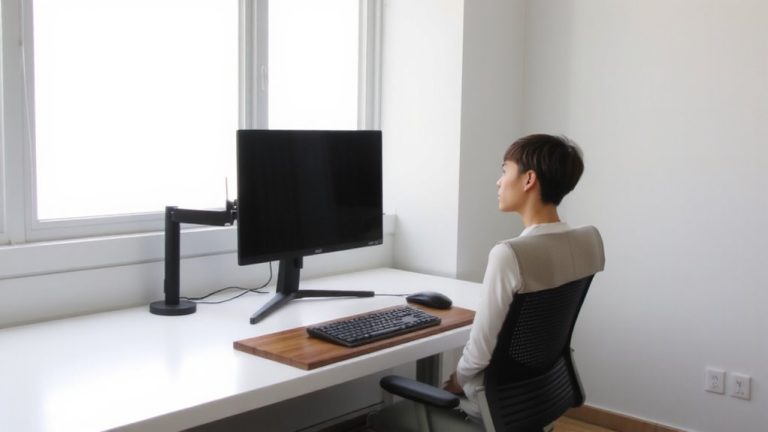
You’ve seen how cramped setups can throw off your posture and camera angles, so let’s talk specifics: how wide should your desk actually be for a multi-monitor livestream? For a dual monitor desk with two 27-inch monitors, you’ll need at least 55 inches of desk width-60 inches is better to fit bezels, stands, and gear. Each 27-inch monitor takes up about 24–25 inches, so anything narrower eats into your screen real estate and messes with viewing distance. A triple-monitor setup? Go 72 inches minimum. Ultra-wide duals (34-inch or 32-inch) demand 65+ inches for proper alignment. L-shaped desks, especially 78 inches or more, give you zone separation and smarter cable management. They also let you mount monitor arms without crowding your ergonomic height. A wider desk means room to breathe, better angles, and a cleaner, more professional multi-monitor setup-exactly what your stream needs.
How Desk Depth Affects Your Posture and Gear Layout
If you’re leaning forward to see your screens or cramming gear at the edge of your desk, chances are your desk depth isn’t set up for real streaming comfort-aim for 30 to 36 inches (76–91 cm) to keep monitors at a true arm’s length and support a neutral spine position. This ideal depth reduces eye strain and helps maintain neutral posture during long multi-monitor sessions. With less than 24 inches, you’ll feel cramped and hunched, but using VESA arms or monitor arms frees up space, letting you work comfortably even at 24–26 inches. Enough desk depth means your peripherals-keyboards, mice, stream decks-stay in ergonomic reach, while the desk surface holds boom arms and mic stands. Plus, deeper desks improve cable management, giving room for power bricks and tangled cords without cluttering your workspace. Get the depth right, and your whole setup flows naturally.
L-Shaped vs. Rectangular Multi-Monitor Desks
A solid desk depth sets the foundation for comfort, but your layout choice-L-shaped or rectangular-determines how well your multi-monitor streaming rig scales across long sessions and complex workflows. L-shaped desks offer at least 78 inches of surface, ideal for dual PCs and triple 27-inch monitor setups, letting you position dual monitors at 160° for reduced glare and better viewing distance. A 72-inch L-desk with 30-inch depth keeps 34-inch ultrawides at the ideal viewing distance while fitting stream decks in primary reach zones. In contrast, a rectangular desk under 60 inches forces flat dual monitors, increasing neck strain. Even at 60×30 inches, rectangular desks provide less efficient ergonomic desk layouts. L-shaped desks support asymmetric monitor setup with room for monitor arms and accessories. The desk shape directly impacts your streaming setup efficiency, making L-shaped desks the smarter pick for serious multi-monitor workflows.
Sit-Stand Desks for Multi-Monitor Streaming
While streaming marathons demand both comfort and adaptability, a sit-stand desk can make or break your multi-monitor setup-especially when you’re running dual 27-inch screens or a triple-monitor rig. For two monitors on arms, go for at least 55 inches wide-60+ is better-to keep everything within arms length and prevent a wobbly desk. Depth matters too: 30–36 inches gives you enough surface space while maintaining screen distance. Your standing desk must support at least 120 lbs (1.5x your gear weight), so pick an electric dual-motor model with 265+ lbs capacity for heavy loads. Adjusting desk height from 28″ to 42″? Smart cable management with slack storage keeps cords safe. A stable sit-stand desk means no interruptions, just smooth shifts and peak performance.
Prevent Wobble: Weight Limits for Heavy Setups
You’ll want a desk that stays rock-solid when you’re in the middle of a high-stakes stream, and that starts with respecting weight limits. To prevent wobble, your desk must handle both static load and dynamic loads from quick movements. Heavy setups-like three 34-inch ultrawides, a full-tower PC, and accessories-can push the Total Weight to 67 kg (148 lbs), so aim for at least 100 kg (220 lbs) static load capacity. Don’t overload: keep equipment weight under 75% of the rated limit, so a 120 kg desk should carry no more than 90 kg. Dual motors with 120–200 kg lifting capacity help maintain stability at full height. Look for reinforced steel frames and desktops ≥15mm thick-they meet BIFMA X5.5 standards and prevent micro-vibrations that ruin audio and video quality. Know how much weight your gear adds, and match it to real specs, not estimates.
Cable Management for Multi-Monitor Desks
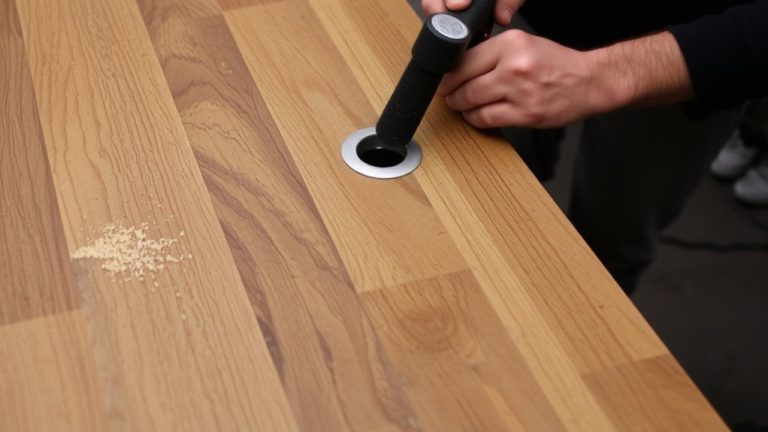
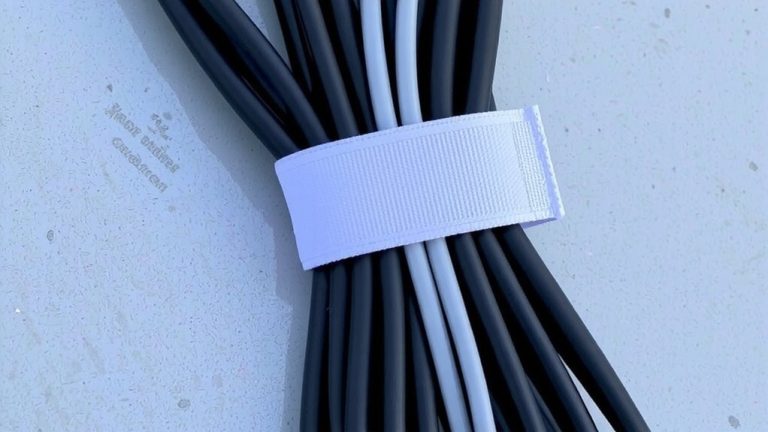
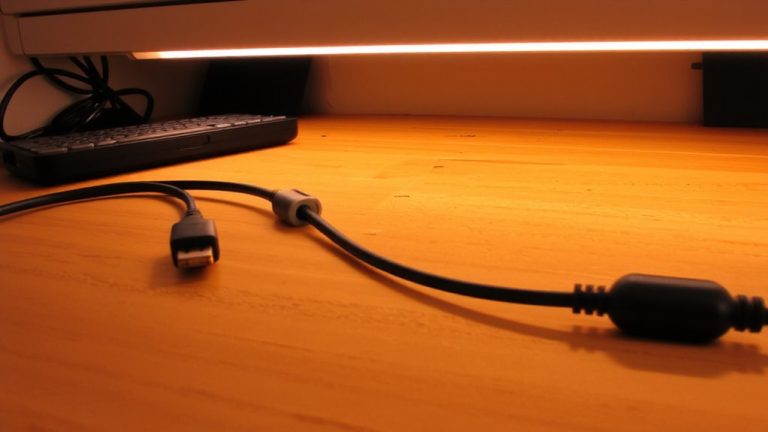
Keeping your desk stable under heavy gear means nothing if tangled cables clutter your workspace and sap your setup’s performance, so smart cable management isn’t just tidy-it’s a core part of a pro-grade livestream desk. Built-in cable trays and grommets with brush plates keep thick power cables and data lines organized while meeting UK HSE DSE guidelines. Use a three-layer system: route primary cables through under-desk channels, bundle with Velcro or magnetic ties, then feed them neatly via grommets. This keeps power bricks and dense wiring off your surface, boosting airflow by 15–25% around hot gear. Separate power and data cables during cable routing to cut electromagnetic interference and protect display signal quality. For standing desks, leave enough slack-24 to 50 inches-to avoid disconnections when moving monitor arms or under-desk CPU mounts.
On a final note
Your desk should be at least 60 inches wide and 30 inches deep to fit multiple monitors and gear comfortably, while an L-shaped design offers extra real estate for peripherals, cams, and audio interfaces. For stability, pick a frame rated over 200 lbs, like the UPLIFT V2, and pair it with a thick desktop to reduce wobble. Integrated cable trays and grommets keep HDMI, USB-C, and XLR lines tidy, saving setup time and boosting focus during long streams.