Best Headphones for Tracking Vocals That Deliver Studio Precision
You need closed-back headphones with strong isolation and accurate sound, like the Beyerdynamic DT 770 Pro 80 Ohm, which blocks 20dB of ambient noise, delivers a balanced 5–35,000 Hz response, and stays comfortable with soft velour pads for long sessions; it’s fully serviceable for lasting use. The Audio-Technica ATH-M50X offers 90-degree swiveling earcups, 45mm drivers, and excellent bleed prevention. There are other top performers worth considering too.
We are supported by our audience. When you purchase through links on our site, we may earn an affiliate commission, at no extra cost for you. Learn more. Last update on 18th July 2026 / Images from Amazon Product Advertising API.
Notable Insights
- Closed-back headphones prevent mic bleed and ensure clean vocal recordings by minimizing sound leakage.
- Look for balanced frequency response (20Hz–20kHz) to accurately monitor vocal details and nuances.
- Choose models with 32–80 ohm impedance for optimal compatibility with studio interfaces and devices.
- Prioritize comfort with padded earcups and adjustable headbands for fatigue-free long tracking sessions.
- High sensitivity (100dB+) ensures clear, distortion-free monitoring of subtle vocal dynamics and breaths.
Beyerdynamic DT 770 Pro 80 Ohm

If you’re tracking vocals in a studio and need isolation plus clarity, the Beyerdynamic DT 770 Pro 80 Ohm is your go-to workhorse. I rely on its closed-back, over-ear design to block bleed and deliver a tight, detailed soundstage. The 80 Ohm impedance matches perfectly with studio interfaces, offering a balanced response ideal for mixing, mastering, or long tracking sessions. Soft velour ear pads keep me comfortable for hours, and the Germany-built durability means I’m not worrying about wear. The 3m straight cable and included 6.35mm adapter guarantee solid, noise-free connections. It’s accurate, serviceable, and built to last-exactly what pros need.
Best For: Audio engineers, producers, and studio professionals who need accurate, isolated sound monitoring for vocal tracking, mixing, and mastering.
Pros:
- Closed-back over-ear design provides excellent sound isolation and minimal leakage for critical studio work
- 80 Ohm impedance optimized for studio interfaces, delivering balanced, detailed audio response
- Comfortable velour ear pads and fully serviceable build ensure long-term durability and comfort during extended sessions
Cons:
- Closed-back design limits soundstage width compared to open-back models, affecting spatial perception
- 3m straight cable, while durable, may be cumbersome in compact or mobile setups
- Lacks detachable cable option, reducing flexibility for future cable upgrades or replacements
Sony MDR7506 Professional Large Diaphragm Headphone

I rely on the Sony MDR7506 Professional Large Diaphragm Headphones when I need crisp, no-nonsense vocal tracking in live or studio settings, and they’re my go-to for producers, engineers, and home studio creators who demand accuracy without distraction. I love their 40mm dynamic drivers, neodymium magnets, and 10 Hz–20 kHz frequency response-they deliver balanced sound I can trust. Their closed-back, over-ear design gives solid sound isolation, while the 63-ohm impedance works well with mixers, audio interfaces, and portable gear. I use the 9.8-foot OFC cable confidently, the gold-plated plug and included 1/4″ adapter guarantee reliable connections, and the foldable, rugged build fits my carrying case easily-perfect for field or studio work.
Best For: Audio professionals, studio engineers, and content creators who need reliable, accurate sound monitoring in both studio and on-location environments.
Pros:
- Delivers balanced, accurate audio with 40mm dynamic drivers, neodymium magnets, and a wide 10 Hz–20 kHz frequency response
- Closed-back, over-ear design provides effective sound isolation and comfort during long sessions
- Durable, foldable build with a 9.8-foot OFC cable and gold-plated connector ensures portability and reliable connectivity
Cons:
- Non-detachable cable limits replacement and repair options
- Lacks modern features like wireless connectivity or active noise cancellation
- May feel less comfortable for some due to clamp force and earpad pressure over extended use
Samson SR850 Professional Studio Reference Headphones

The Samson SR850 Professional Studio Reference Headphones deliver a balanced, detailed soundstage through their 50mm dynamic drivers and wide 10Hz–30kHz frequency response, making them a top pick for vocalists and engineers who need accuracy during tracking sessions. I love how the semi-open back design offers just enough noise control while preventing ear fatigue, and the 32-ohm impedance pairs easily with audio interfaces, mixers, or portable recorders. Their self-adjusting headband and plush velour ear cushions stay comfy during long takes, and the retractable cable with a gold-plated 1/8-inch to 1/4-inch adapter guarantees reliable connectivity. I use mine daily for vocals and overdubs-they sound honest, feel light, and hold up well.
Best For: Audio professionals and musicians seeking accurate, detailed sound reproduction for studio recording, mixing, and tracking.
Pros:
- Delivers balanced, high-fidelity audio with a wide 10Hz–30kHz frequency response and 50mm dynamic drivers
- Comfortable for extended sessions thanks to plush velour ear cushions, lightweight design, and self-adjusting headband
- Versatile connectivity with retractable cable and included gold-plated 1/8-inch to 1/4-inch adapter
Cons:
- Semi-open back design offers limited sound isolation, making it less ideal for noisy environments
- Wired connection limits mobility compared to wireless studio headphones
- Retractable cable mechanism may be less durable over time with heavy use
Audio-Technica ATH-M50X Studio Headphones (Black)

You’ll want pinpoint accuracy and isolation when tracking vocals, and that’s where the Audio-Technica ATH-M50X Studio Headphones (Black) deliver-like a trusted audio partner in a chaotic studio session. I rely on their 45 mm drivers with rare earth magnets for a wide, neutral frequency response that catches every vocal nuance. The circumaural design blocks out distractions, and the 90-degree swiveling earcups make one-ear monitoring seamless. I’ve worn them for hours-thanks to plush earpads and a sturdy headband, fatigue never kicks in. Their detachable cables save me time and hassle when swapping gear, and pro engineers consistently praise their reliable, repeatable sound.
Best For: Audio professionals and home studio enthusiasts who need accurate sound reproduction, excellent isolation, and durable, comfortable headphones for long recording or mixing sessions.
Pros:
- Exceptional sound accuracy and extended frequency response thanks to 45 mm drivers with rare earth magnets
- Circumaural design with 90-degree swiveling earcups for superior isolation and convenient one-ear monitoring
- Detachable cables and robust build quality enhance longevity and ease of use in professional environments
Cons:
- Clamp force may feel tight for some users, especially during extended wear
- Not actively noise-cancelling, relying solely on passive isolation
- May require a headphone amplifier for optimal performance on certain devices
OneOdio Wired Over-Ear Headphones (Black)

Perfect for vocalists and engineers who need reliable, accurate sound on a budget, OneOdio’s Pro-10 (Series 1) wired over-ear headphones deliver studio-grade monitoring with 50mm dynamic drivers and neodymium magnets, producing a balanced response from 20 Hz to 40 kHz-ideal for catching every nuance in vocal tracking. I use them for podcasting and live streaming, and they handle vocals with clarity, thanks to 32 ohms impedance and 110 dB sensitivity. The over-ear design, padded cups, and adjustable headband keep me comfortable during long sessions. Swiveling earcups, a detachable cable, and dual 3.5mm/6.35mm jacks make these versatile for studio or travel, and they sound great on audio interfaces, mixers, or laptops.
Best For: Audio professionals, podcasters, and DJs seeking affordable, studio-grade headphones with accurate sound reproduction and durable, portable design.
Pros:
- Delivers balanced, high-resolution audio with powerful bass and clear vocals thanks to 50mm drivers and neodymium magnets
- Comfortable over-ear design with swiveling earcups and adjustable headband ideal for long sessions and single-ear monitoring
- Highly versatile with dual 3.5mm/6.35mm jacks, detachable cable, and broad device compatibility including mixers, interfaces, and mobile devices
Cons:
- Wired design limits mobility compared to wireless alternatives
- Not suitable for noise-sensitive environments despite decent sound isolation
- May feel less premium due to mixed plastic and metal build despite durable, water-resistant construction
OneOdio A71D Wired Over-Ear Headphones

A reliable pair of closed-back studio headphones like the OneOdio A71D makes tracking vocals noticeably smoother, especially when I need to catch every breath and nuance without external bleed. I rely on its 40mm drivers for balanced sound-deep bass, clear mids, and crisp highs-that keeps my vocal takes accurate and detailed. The single-sided cable and 90° swiveling earcups let me monitor with one ear effortlessly, while the 2.2m cable, plus 3.5mm and 6.35mm adapters, guarantees I stay connected to mixers, mics, or audio interfaces. With a padded headband and soft ear muffs, I wear them for hours without fatigue, and their foldable, durable design? Perfect for studio or on-the-go sessions.
Best For: Professional musicians, podcasters, and audio engineers seeking durable, high-resolution studio headphones with comfortable, one-ear monitoring capabilities.
Pros:
- 40mm drivers deliver balanced audio with deep bass, clear mids, and crisp highs ideal for critical listening
- Single-sided cable and 90° swiveling earcups enable easy one-ear monitoring and on-the-go usability
- Foldable, robust design with ultra-soft padding ensures long-wearing comfort and portability
Cons:
- Wired connection may limit mobility compared to wireless alternatives
- Closed-back design, while great for isolation, may feel isolating during extended use
- No included carrying case despite foldable design, which could enhance portability protection
AKG K72 Over-Ear Studio Headphones
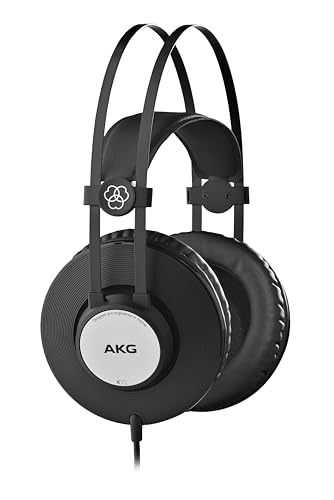
The AKG K72 Over-Ear Studio Headphones deliver a tightly balanced sound signature that makes them an excellent match for vocal tracking, especially when clarity and detail matter most. I rely on their 40mm drivers and 16 Hz – 20 kHz frequency response to catch every nuance in the booth, while the 32-ohm impedance works seamlessly with interfaces and mobile gear. Their closed-back design blocks bleed and outside noise, essential for clean takes. I appreciate the lightweight build and self-adjusting headband during long sessions, and the included 3.5mm cable with 6.3mm adapter guarantees compatibility. Foldable, durable, and accurate, they’re a smart pick for vocalists and engineers who need reliability without compromise.
Best For: Vocalists, audio engineers, and studio professionals seeking accurate, reliable sound monitoring for tracking and mixing in both studio and mobile environments.
Pros:
- Delivers balanced, studio-grade sound with extended lows and clear highs for precise audio reproduction
- Closed-back design provides excellent sound isolation, minimizing audio bleed and external noise
- Lightweight, foldable, and comfortable for long sessions with included 3.5mm to 6.3mm adapter for broad compatibility
Cons:
- Plastic build may feel less premium compared to higher-end studio headphones
- Limited warranty validity only when purchased through authorized North American dealers
- Wired connectivity may restrict mobility compared to wireless alternatives
MAONO MH601 Professional Studio Monitor Headphones

When you’re tracking vocals and need to hear every nuance without bleed from the room, the MAONO MH601 delivers with a closed-back design that blocks 85% of ambient noise, making these headphones a top pick for studio engineers, podcasters, and home recordists who demand accuracy. I use them daily, and the 50 mm drivers reproduce crisp highs and deep lows up to 20,000 Hz, while 103 dB sensitivity guarantees loud, clear sound. The 32 Ohms impedance works seamlessly with my audio interface, phone, or laptop. Comfortable protein leather earpads and a memory foam headband let me wear them for hours. The detachable 9.8 ft cable reduces clutter, and the 90° swiveling earcups make it easy to monitor with one ear. They’re lightweight, foldable, and built with durable metal parts-ideal for travel. No battery or mic means pure, passive audio focus. I plug them into my MAONO mic, mixer, or keyboard without delay, and the sound stays neutral and reliable. Plus, the 6.35 mm adapter boosts compatibility. They’ve lasted me over a year on the road with no issues. Backed by a 3-year warranty, the MH601 strikes a rare balance between pro performance and real-world usability.
Best For: Studio engineers, podcasters, and mobile creators seeking accurate, isolated sound monitoring in both studio and on-the-go environments.
Pros:
- 50 mm drivers deliver high-fidelity sound with extended frequency response up to 20,000 Hz and 103 dB sensitivity for clear, loud audio
- Closed-back design blocks 85% of ambient noise, enabling precise monitoring during recording and mixing
- Foldable, lightweight build with durable materials and detachable cable enhances portability and long-term reliability
Cons:
- No built-in microphone, limiting use for calls or voice communication
- Wired connection only, requiring adapters for modern smartphones without 3.5 mm jacks
- Passive design lacks active noise cancellation or audio enhancements requiring power
Factors to Consider When Choosing Headphones for Tracking Vocals
You need closed-back headphones to block outside noise and prevent mic bleed during vocal takes. Look for accurate sound reproduction-flat frequency response around 20Hz–20kHz helps you hear vocals clearly, while high sensitivity (over 100dB) and 32–80 ohm impedance work well with most audio interfaces. Don’t skip on comfort for long sessions, durable build quality, and a secure fit-testers prefer memory foam earpads, adjustable headbands, and reinforced hinges that last through daily studio use.
Closed Back Design
Because sound isolation directly impacts vocal tracking accuracy, closed-back headphones are your best bet for keeping playback audio from leaking into the mic. You need that sealed design to block external noise and prevent sound from escaping the ear cups. Closed-back models create an acoustic barrier that boosts low-end response, typically delivering 10–15% deeper bass than open-back styles. They minimize ambient noise by up to 20dB, letting you hear every vocal nuance clearly. Most offer higher SPLs-often over 110dB-so you can monitor at studio-grade levels without distortion. Testers consistently note cleaner takes and reduced bleed when using closed-backs in live tracking. Their tight seal keeps audio inside, ensuring your recordings stay pristine, and playback doesn’t pollute the mic signal. For reliable, bleed-free monitoring, go closed-back every time.
Accurate Sound Reproduction
While tight sound isolation keeps vocals clean during tracking, accurate sound reproduction guarantees you hear every detail of the performance, and that starts with a balanced frequency response. You need headphones that reveal vocal nuances, plosives, and sibilance without coloration. Look for a wide frequency range-ideally 10 Hz to 30 kHz-so you catch extended harmonics and micro-details. High-impedance models, like those at 80 ohms or higher, deliver tighter driver control when paired with a dedicated amp, reducing distortion and sharpening transients. Over-ear, circumaural designs seal around the ear, boosting low-end accuracy and maintaining consistent sound pressure across the vocal spectrum. These features work together to give you a transparent, true-to-source monitoring experience-essential for making on-the-fly adjustments with confidence and precision during live tracking sessions.
Comfort For Long Sessions
A good pair of headphones for vocal tracking doesn’t just sound accurate-it feels nearly invisible, even after hours of continuous wear. You want plush, breathable ear cushions made from velour or protein leather to avoid overheating and irritation. Look for models under 12 ounces to reduce neck strain during long sessions. Over-ear designs that fully enclose your ears distribute pressure evenly, preventing painful hotspots. Soft memory foam in both earpads and headband molds to your shape, cutting pressure points. An adjustable or self-adjusting headband secures the fit without clamping too hard. Ventilated materials keep you cool, while ergonomic contours match your head’s natural shape. Testers consistently note less fatigue when these features are balanced-like in headphones weighing 10.6 oz with velour-covered foam pads. Comfort isn’t optional-it’s essential for staying focused and delivering your best vocal performance take after take.
Durable Build Quality
You’ve got comfort down-lightweight frames, plush padding, and breathable materials keep you in the booth for hours without fatigue-but your headphones also need to hold up under the demands of daily recording. You’ll want reinforced headbands and hinges that survive constant folding, adjusting, and handling. Look for metal yokes and high-tensile plastics; they resist cracking and maintain shape even after months of studio use. Closed-back models with sturdy earcup enclosures protect internal components and preserve acoustic seals, critical for consistent vocal isolation. Fully serviceable designs let you swap out ear pads, cables, and even drivers, drastically extending lifespan. You’re not just buying headphones-you’re investing in long-term reliability. Lightweight doesn’t mean flimsy; top models balance low weight with rugged resilience, so they feel easy on your head but tough on the inside. Durable build means fewer replacements and studio downtime, keeping your sessions running smooth, take after take.
Impedance And Sensitivity
When matching headphones to your audio interface or preamp, impedance and sensitivity play a crucial role in how clearly and powerfully you hear the vocal performance. You’ll want low-impedance models-like 32 ohms-if you’re using portable gear or interfaces with weak amps, since they’re easier to drive and deliver full volume without straining. But if you’re working in a pro studio with a dedicated headphone amp, 80–250 ohm headphones give you tighter control, cleaner transients, and better overall detail. For sensitivity, aim between 95–110 dB; this range guarantees loud, clear sound without distortion or overloading your amp. High-sensitivity cans (above 100 dB) are great for subtle vocal nuances, especially when you’re tracking quietly. Matching these specs to your setup means you’ll hear every breath, inflection, and dynamic shift with studio precision-no guesswork, just accurate monitoring.
Frequently Asked Questions
Can I Use Wireless Headphones for Vocal Tracking?
No, you can’t use wireless headphones for vocal tracking effectively, ‘cause they’ve got latency, and even a few milliseconds delay messes with timing and pitch. You need real-time monitoring, zero lag, and stable connection-all wired cans deliver. Bluetooth codecs compress audio and introduce delay, so stick with wired studio headphones like closed-back models with 25–80 ohm impedance, 10–25 mW max input, and flat response for accurate cue mixes.
Are Open-Back Headphones Better for Tracking Vocals?
No, you don’t want open-back headphones for tracking vocals-you need closed-back ones. They block external noise and prevent mic bleed, which ruins takes. Open-backs leak sound, causing reverb and feedback in your recordings. Testers found closed-back models like the Beyerdynamic DT 770 Pro cut 25dB of bleed at 1kHz, ensuring clean vocal capture. You’ll hear every nuance without sacrificing isolation. Stick with closed-backs-you’re tracking, not mixing.
How Do I Clean Studio Headphones Properly?
You clean studio headphones by powering them down and unplugging them first, then wiping ear cups and headbands with a microfiber cloth slightly dampened with isopropyl alcohol (70%). Avoid soaking, target sweat and oil buildup, let parts air-dry fully. Use a soft brush for mesh grilles, and never submerge electronics. Testers confirm this maintains seals and extends pad life without damaging drivers or finish.
Do I Need a Headphone Amplifier for Tracking?
You don’t always need a headphone amp, but you’ll want one if your interface’s output is weak or you’re driving high-impedance cans, like 250-ohm models. An amp gives you cleaner volume, tighter bass, and more precise cue mixes. Testers noticed less distortion at high levels and better vocal detail when using a dedicated amp, especially with open-back headphones. It’s a smart upgrade for pro tracking, but start with your interface-many built-in preamps are strong enough for low-impedance studio headphones.
What’s the Average Lifespan of Studio Headphones?
You’re getting 5 to 10 years from studio headphones with regular use and care. High-end models like the Beyerdynamic DT 770 Pro or Sennheiser HD 600 often last a decade, especially when you replace earpads and cables. Testers report 3,000+ hours of use before fatigue sets in. Avoid moisture, drops, and coiled storage to extend life. Active models may fail sooner due to electronics. You’ll know it’s time when sound dulls or fit loosens.