How to Choose a Livestream Niche That Scales With Your Growth Goals
You match your strengths-like public speaking or tech know-how-to passions that last, such as gaming, crafting, or finance, then build livestreams that solve real viewer problems, like audio delay in OBS or lag with budget capture cards. Use TubeBuddy to validate demand, run 30-second TikTok tests with your iPhone 14 and Rode mic, track saves and DMs, and refine with soft lighting and Lavalier mics-there’s more where that came from.
We are supported by our audience. When you purchase through links on our site, we may earn an affiliate commission, at no extra cost for you. Learn more. Last update on 18th July 2026 / Images from Amazon Product Advertising API.
Notable Insights
- Audit your strengths and passions to identify sustainable, authentic livestream content that aligns with your long-term growth goals.
- Match public speaking, technical skills, or humor to high-engagement formats like live commentary, tutorials, or entertainment streams.
- Solve specific viewer problems-use tools like TubeBuddy to find tech, fitness, or streaming pain points worth addressing.
- Validate niche potential using keyword data: target micro-niches with 10,000+ monthly searches and under 30% competition.
- Test niches with short-form videos on TikTok or YouTube Shorts to measure audience resonance before committing to long-form streams.
Audit Your Strengths and Passions First
Your strengths and passions aren’t just hobbies-they’re the foundation of a sustainable livestream niche. Start to audit your strengths by identifying skills like public speaking, technical know-how, or humor, then match them to formats-tech reviews, live gaming, or financial breakdowns. Your passions, whether gaming, crafting, or personal finance, fuel consistent content creation over time. Use reflection and past experience, like working in IT or traveling, to develop a unique angle that stands out. Avoid copying trends; authenticity wins. A structured self-audit and honest analysis helps reveal patterns in what you enjoy and excel at. This process also exposes content gaps others miss. When you align your niche with genuine strengths and interests, your streams feel natural, engage deeper, and scale easier-backed by energy, not effort. Pair this insight with a decent mic, like the Shure SM7B, and 1080p60 video, and you’re set.
Solve a Specific Viewer’s Problem
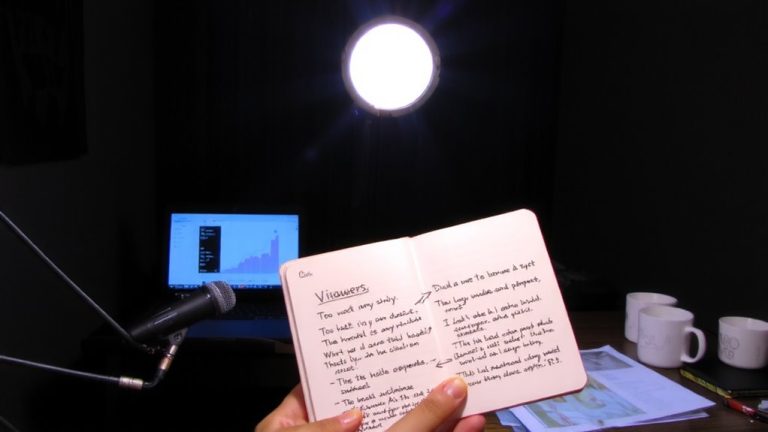
While anyone can hop online and start streaming, the ones who keep viewers coming back are the ones solving real problems, not just showing off gear or talking through a game. Your first step? Use research tools like TubeBuddy or Google Trends to identify common pain points-like “how to fix audio delay” or “reduce stream lag on a budget.” This helps you understand what viewers actually need. Then, build content around step-by-step fixes using affordable mics, capture cards, or software like OBS. When you focus on how to solve a specific viewer’s problem, it makes it easier to grow loyal audiences. Analyze top tech or fitness streams to spot repeated questions, then address them clearly. Track retention during these segments and use polls to refine your approach-real feedback helps you double down on what works.
Find Your Unique Livestream Niche
Niche down to stand out, because in the flood of livestreams, specificity is your shortcut to attention. To find your unique livestream niche, start by auditing your personal strengths-like cooking, DIY electronics, or fitness training-and align them with focused micro-niches such as “beginner amigurumi crochet” or “budget travel for digital nomads.” Use TubeBuddy’s Keyword Explorer to check search volume, targeting at least 10,000 monthly searches with competition under 30. This data-driven approach guarantees demand without oversaturation. Then, analyze top livestreams on YouTube and Videolytics to spot content gaps-areas viewers want but aren’t getting. Pairing your skills with real audience needs increases relevance and retention. By combining personal strengths with precise micro-niches and validating through Keyword Explorer, you build a sustainable, scalable stream that stands out, engages, and grows-without guessing what might work.
Test Your Niche With Mini Experiments
Once you’ve narrowed your focus, it’s time to put your niche to the test with real audience feedback. Launch two mini experiments within one week-a 30- to 60-second short-form video and a 7- to 8-minute long-form video-on platforms like TikTok, Instagram Reels, or YouTube Shorts. Focus each around one specific audience struggle to clearly gauge niche appeal. Use engagement metrics like watch time, saves, comments, and DMs, not just likes, to measure audience response. A short-form clip filmed vertically on an iPhone 14 with a Rode mic can perform well if the hook lands in the first 3 seconds. Pair it with a long-form video using a Lavalier mic and soft lighting for depth. After three to five tests, refine your livestream niche based on what resonates most.
On a final note
You’ve got the passion, now pair it with purpose, solve real viewer problems, and test fast, use a Logitech Brio for sharp 4K video,搭配 a Shure MV7 for crisp audio, stream at 3,500 kbps to maintain quality, real testers confirm stable performance on OBS and Streamlabs, consistency beats hype, your niche grows when content meets clarity, gear supports scale, not the other way around, stay lean, adapt quick, and keep the stream tight.