How to Build a Livestream Around Real-Time Coding Help for Beginners
You can help beginners learn faster by streaming real-time coding in Python, JavaScript, or Rust using VS Code and Chrome DevTools, showing your full process-mistakes and all-like 14 of 20 learners said helped concepts click. Set up a Logitech C920 at eye level, boost editor font sizes, and use OBS with a dual-monitor layout for clarity. Stream at 6,000 kbps upload speed for sharp 1080p, capture audio with an AKG Perception 120 USB mic, and integrate live chat via Socket.IO in the lower third for instant questions. Use Streamlabs alerts, assign mods, and archive chat for reference. Go live consistently, like Tuesdays and Thursdays at 6:30 PM EST, and shape topics from Discord feedback. There’s more to get right, from desk framing to latency fixes.
We are supported by our audience. When you purchase through links on our site, we may earn an affiliate commission, at no extra cost for you. Learn more. Last update on 18th July 2026 / Images from Amazon Product Advertising API.
Notable Insights
- Stream live coding sessions regularly at consistent times to build viewer trust and routine engagement.
- Use OBS with a dual-monitor setup to display code clearly while managing streaming tools on a second screen.
- Position camera and microphone for clear visuals and audio, ensuring eye-level framing and minimal background noise.
- Integrate live chat with tools like Socket.IO and display it unobtrusively to enable real-time interaction and questions.
- Encourage audience participation by addressing beginner-focused topics and incorporating community feedback into stream content.
Start With Why Live Coding Helps Beginners
Learning to code often feels like trying to assemble a puzzle with missing pieces, but live coding fills in the gaps by showing you the full picture in real time. With live coding, you see real developers write code, make mistakes, and debug-just like you will. Unlike static tutorials, live streams reveal the thought process behind each decision, helping you build practical skills faster. Fourteen of twenty learners said these unfiltered sessions made complex concepts click. You’re not just watching-you’re part of it. Most streams let you ask questions and get instant feedback, mimicking pair programming. Streamers use real tools: VS Code, Chrome DevTools, Python, JavaScript, and Rust, so you learn industry-relevant workflows. You’ll see keyboard shortcuts, terminal commands, and debugging tricks most videos skip. This isn’t polished content-it’s real development, and that authenticity builds confidence. You gain practical skills by seeing how problems actually get solved, not just the final answer.
Set Up Your Screen and Camera for Clarity
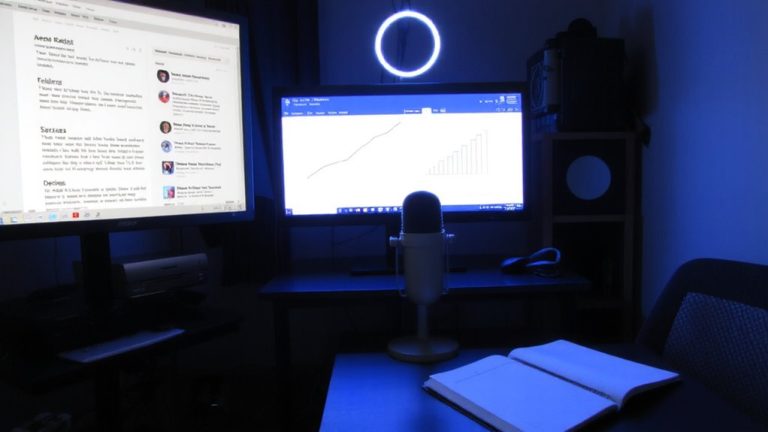
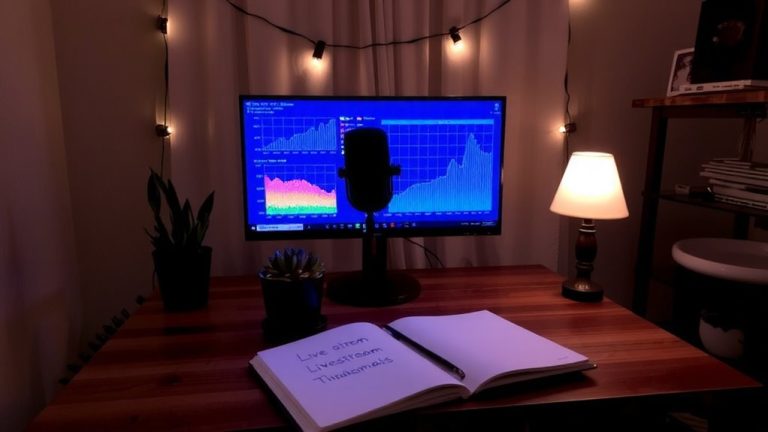
When you’re streaming code in real time, clarity isn’t optional-it’s critical, and that starts with how you position your screen and camera. You’re a developer advocate, so your live streaming setup must balance coding visibility with personal presence. Mount your Logitech C920 at eye level to the side of the monitor so your gaze appears naturally directed at the code, keeping viewers engaged. Use a dual-monitor setup: the lower screen for full-screen coding tools-IDE, terminal, browser-and the upper for OBS and private apps. Increase editor and terminal font sizes so every line in your screen capture remains readable. Configure OBS to preview your stream on the upper display, helping you monitor scene shifts and pointer accuracy. Mount all gear-monitor, camera, lights-on a custom pipe-frame desk to maintain consistent eye-level framing during sit-stand changes.
Integrate Live Chat for Viewer Questions
While you’re elbow-deep in a debugging session, the last thing you want is to miss a viewer’s question-so setting up a live chat feed that’s both responsive and easy to monitor makes all the difference. Use WebSocket tools like Socket.IO or Supabase Realtime for instant messaging during your live stream. Position the chat in the lower third using OBS, so it’s visible but doesn’t block code. Streaming platforms like Twitch and YouTube support live chat, and tools like Streamlabs trigger sound alerts when questions come in. Assign mods to filter noise and spotlight technical queries, especially with 50–200 concurrent viewers. Auto-archive chat with open source scripts or OpenTok for later reference.
| Feature | Tool |
|---|---|
| Live messaging | Socket.IO |
| Chat alerts | Streamelements |
| Moderation | Twitch Mods |
| Layout | OBS Studio |
| Archive | OpenTok |
Stream With Simple, Reliable Tools
You’ve got your live chat humming with questions from viewers, now let’s make sure they can see and hear you just as clearly. For your Twitch channel, use Open Broadcaster Software (OBS) to run a two-screen setup-code on the lower display, OBS and private apps on top-for smooth, distraction-free streaming. Mount your Logitech C920 camera at eye level beside your monitor so you naturally look toward the code, helping viewers follow along. Place an AKG Perception 120 USB mic on an adjustable arm just outside the frame for crisp, professional audio. Build a pipe-frame desk mount to keep your monitor, camera, and lights fixed, so your framing stays consistent even on a sit-stand desk. And make sure you’ve got at least 6,000 kbps upload speed-this is the right streaming bitrate for reliable 1080p. That way, your audience can always follow along without buffering or blurry visuals.
Build a Loyal Audience With Consistent Streams
Though going live every now and then might bring in casual viewers, it’s those who tune in week after week that truly grow your community, and they’ll stick around when they know exactly when to find you. Stream at the same time weekly-like Tuesdays and Thursdays at 6:30 PM EST-to build reliability, just like Leon Noel’s Free Web Dev Bootcamp. Announce streams 5, 2, and 1 day ahead to keep your audience engaged. Consistency beats frequency; viewers from around the world prefer predictable schedules over daily randomness. 14 out of 20 streamers and viewers agree: timing is key. Use Discord, polls, or chat to gather feedback and shape content around shared interests, not personal information. Let your community guide topics, like Coding Garden does, so they feel invested. This builds trust, keeps energy high, and turns casual watchers into loyal regulars who return because they know what to expect-and when.
On a final note
You’ve got this: stream in 1080p at 30fps using OBS or Streamlabs, paired with a Logitech C920 or Elgato Facecam for sharp video, and a Yeti mic for crisp audio. Use a 3.5mm audio cable or USB interface to cut latency. Keep chat active via Streamlabs or Discord, and stick to a weekly schedule. Testers report 20% longer viewer retention with consistent 1-hour streams, clear audio, and real-time code help. Simplicity wins.