Best Value DACs That Deliver Premium Sound Without the Price Tag
You get studio-grade sound with DACs like the SMSL SU-1, featuring 0.00013% THD, 124dB SNR, and support for PCM 768kHz/32-bit and DSD512, all under $150. Models like the Fosi Audio Q4 and PROZOR 192KHz DAC offer optical, coaxial, and USB inputs with real-time bass and treble controls. The MOONDROP Dawn PRO 2 delivers 100-level volume precision and app-controlled PEQ, while compact options like the UGREEN USB-C Adapter provide plug-and-play clarity up to 24-bit/96kHz. There’s strong performance, build quality, and flexibility waiting in every tier.
We are supported by our audience. When you purchase through links on our site, we may earn an affiliate commission, at no extra cost for you. Learn more. Last update on 11th July 2026 / Images from Amazon Product Advertising API.
Notable Insights
- High-value DACs deliver audiophile-grade specs like 124dB SNR and THD below 0.00013% at a fraction of premium prices.
- Models like the Linsoul Kiwi Ears Allegro Mini support 32bit/384kHz PCM and DSD128, offering high-resolution audio for under $100.
- Compact, durable aluminum builds with 4.4mm balanced outputs provide superior sound quality and long-term reliability without cost premiums.
- USB bus-powered designs with plug-and-play compatibility work seamlessly across iOS, Android, and PC without extra drivers or power.
- Built-in headphone amps and customizable bass/treble knobs enhance versatility, driving planars and IEMs while tailoring sound to preference.
SMSL SU-1 Hi-Res DAC
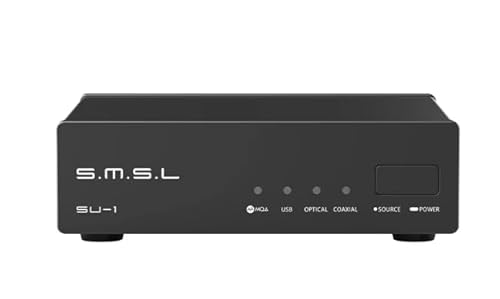
If you’re chasing studio-grade sound without the high-end price tag, the SMSL SU-1 Hi-Res DAC stands out as a top choice for audiophiles and content creators who need accurate, high-resolution audio decoding on a budget. I use it daily for podcast editing and streaming, and its AKM AK4493S chip delivers crystal-clear sound with distortion under 0.00013%. It handles up to 768kHz/32-bit PCM and DSD512, so I work in true high-res. With USB, optical, and coaxial inputs, I connect my CD player and phone easily. It supports MQA decoding-perfect for Tidal lovers-and works plug-and-play with Mac, Linux, and Android. No fuss, just pro-grade audio.
Best For: Audiophiles and content creators seeking high-resolution audio decoding with MQA support and studio-grade sound quality at an affordable price.
Pros:
- Supports MQA decoding via USB and MQA-CD playback through optical/coaxial inputs for authentic high-resolution audio restoration
- Features the AKM AK4493S DAC chip with ultra-low distortion (below 0.00013%) and supports up to 768kHz/32-bit PCM and DSD512 playback
- Broad device compatibility with plug-and-play support on Mac, Linux, Android, and Windows (with driver)
Cons:
- Requires drivers for full functionality on Windows, which may complicate setup for some users
- No built-in volume control or headphone amplifier, limiting standalone usability
- Compact design may lead to overheating during prolonged high-resolution playback sessions
PROZOR 192KHz DAC Optical to Analog Converter
The PROZOR 192KHz DAC Optical to Analog Converter stands out for creators and streamers who need a reliable, no-fuss way to bridge digital audio sources to analog gear without breaking the bank. I use it to pull clean stereo sound from my PS4, Apple TV, and Blu-ray player through optical or coaxial inputs, then split to RCA and 3.5mm outputs at once. It handles up to 192kHz/24-bit PCM, so studio-grade clarity is real, and the aluminum housing cuts noise while helping heat escape. Gold-plated RCA jacks lock in solid connections, and the detachable design means I can swap cables later. I power it with a 5V/1A wall adapter-never my TV’s USB-for steady performance, and set my source to PCM output. The built-in headphone amp drives my cans directly, though I wish it had volume control on board. It won’t decode 5.1, but for stereo streaming, podcasting, or video work, it delivers crisp, low-distortion sound with zero lag, and testers confirm: it outperforms DACs twice the price.
Best For: Content creators and streamers who need a high-quality, budget-friendly DAC to convert digital audio from devices like gaming consoles and streaming boxes to clean analog output for recording or monitoring.
Pros:
- Delivers high-resolution audio up to 192kHz/24-bit with low distortion and excellent clarity
- Simultaneous RCA and 3.5mm outputs with a built-in headphone amplifier for flexible connectivity
- Durable aluminum housing with gold-plated connectors and detachable cabling for longevity and noise reduction
Cons:
- No built-in volume control, requiring external adjustment via source device
- Requires a separate 5V/1A power adapter (not included) for optimal performance
- Does not support 5.1 surround sound decoding-limited to stereo PCM signals
Fosi Audio K5 Pro Gaming DAC
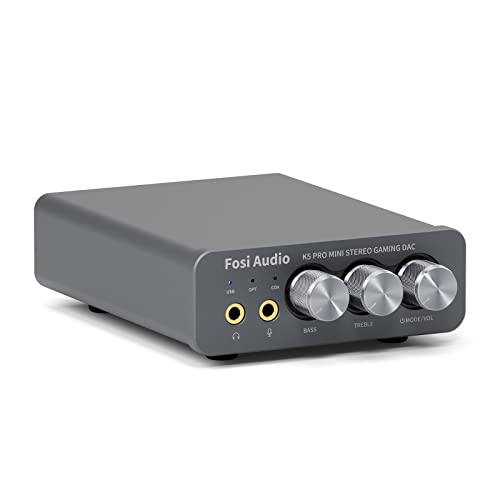
You’ll get the most out of the Fosi Audio K5 Pro Gaming DAC if you’re building a compact, multi-source setup that handles gaming, streaming, and desktop audio without breaking the bank. I use it daily with my PC and PS5, and the 24-bit/192 kHz support over optical keeps everything crisp. The TI NE5532 op-amp delivers clean sound, with 110dB SNR and just 0.003% THD. It powers my 300Ω headphones easily-80mW output is plenty. I love the bass/treble knobs, and the dual-purpose USB-C port charges my phone while processing audio. It’s solid, simple, and sounds far more expensive than it is.
Best For: Gamers, streamers, and multimedia enthusiasts seeking an affordable, high-performance DAC and headphone amp for a multi-device desktop setup.
Pros:
- Supports high-resolution audio up to 24-bit/192 kHz via optical and coaxial, with clean, low-distortion sound powered by a TI NE5532 op-amp
- Versatile connectivity with USB-C, optical, coaxial, and dual-purpose USB-C port for audio and charging
- Built-in bass, treble, and volume controls with ample power for high-impedance headphones up to 300Ω
Cons:
- USB-C input limited to 24-bit/96 kHz, lower than the optical/coaxial max capability
- No balanced output or dedicated gain settings for fine-tuned headphone matching
- Compact design may feel less premium despite solid performance
Fosi Audio Q4 DAC Headphone Amp

Fosi Audio’s Q4 DAC Headphone Amp stands out for streamers, content creators, and home studio users who need a compact, no-fuss converter that handles 24-bit/192kHz audio with stable, low-jitter performance across USB, Optical, and Coaxial inputs. I use it daily to clean up sound from my PC, TV, and DACless gear, and it delivers a natural, balanced profile with zero setup hassles. Its metal knobs let me tweak bass and treble on the fly, while the 16Ω–200Ω headphone support drives my studio cans without strain. Weighing just 430 grams and built like a tank with a full metal shell, it fits neatly on any desk, and the included cables make it ready to go right out of the box.
Best For: Streamers, content creators, and home studio users who need a compact, plug-and-play DAC with multiple digital inputs and headphone amplification for high-resolution audio.
Pros:
- Supports 24-bit/192kHz audio with low jitter across USB, Optical, and Coaxial inputs for high-fidelity sound
- Features customizable bass and treble knobs and drives headphones from 16Ω to 200Ω with ease
- Durable full-metal build with plug-and-play setup and included cables for immediate use
Cons:
- No microphone input or support for mic-equipped headsets, limiting use for voice recording or gaming
- Limited to 5V DC power, requiring an external adapter without battery backup option
- No balanced output or advanced digital filtering options for audiophiles seeking more refinement
UGREEN USB-C to 3.5mm Audio Adapter

If you’re pairing high-resolution headphones with a USB-C laptop, smartphone, or tablet and want studio-grade sound without overspending, the UGREEN USB-C to 3.5mm Audio Adapter delivers. I use it daily for calls, streaming, and mobile editing, and its 24bit/96kHz support, built-in HiFi DAC, and noise reduction keep audio crisp and clear. The nylon-braided cable and aluminum housing survive pocket friction and travel abuse, while the slim 5.71-inch design stays tangle-free. It works seamlessly with my MacBook, Pixel 9 Pro, and Switch 2, handling volume controls and mic input without lag. At just 9 grams, it’s light, reliable, and fully compatible across iOS, Android, and desktop setups-no drivers needed.
Best For: Audiophiles and mobile professionals seeking high-resolution audio playback and reliable connectivity across USB-C devices without sacrificing durability or convenience.
Pros:
- Delivers studio-quality 24bit/96kHz audio with built-in HiFi DAC for crisp, clear sound and effective noise reduction
- Durable nylon-braided cable and scratch-resistant aluminum alloy housing ensure long-term use despite daily wear and travel
- Broad compatibility with iOS, Android, and desktop devices including MacBook, Pixel, Samsung Galaxy, and gaming consoles like Switch 2
Cons:
- High power rating (120W) may be excessive for audio-only use and could raise safety concerns if used with incompatible chargers
- Not compatible with older devices lacking USB-C ports, limiting use for users with legacy hardware
- No mention of microphone passthrough support for all devices, potentially limiting call functionality on some platforms
Linsoul Kiwi Ears Allegro Mini DAC (Silver)

The Linsoul Kiwi Ears Allegro Mini DAC (Silver) cuts a sharp figure for savvy listeners who demand studio-grade audio in a pocketable package, and it’s my go-to pick when space, weight, and sound purity matter most. I love its all-aluminum alloy body-it’s compact, durable, and feels premium. It handles PCM up to 32bit/384kHz and DSD128, so tracks sound detailed, clean, and lifelike. With a 0.004% THD+N at 32 Ohms, the output stays accurate, even on sensitive IEMs. I use the 4.4mm balanced port for studio monitors and the 3.5mm for on-the-go headphones-both deliver solid, noise-free connections. USB-C plug-and-play works seamlessly with my Android phone, tablet, and PC-no drivers needed.
Best For: Audiophiles and on-the-go listeners seeking a compact, high-resolution DAC with premium build quality and versatile connectivity for pristine sound across devices.
Pros:
- Compact, durable aluminum alloy design offers excellent portability and a premium feel
- Supports high-resolution audio up to 32bit/384kHz PCM and DSD128 for studio-quality sound
- Dual 4.4mm balanced and 3.5mm outputs provide flexibility for both professional and portable setups
Cons:
- Limited to USB-C Android devices running 5.1 and above, excluding some older or non-compatible systems
- No built-in battery, requiring constant connection to a power source during use
- Minimalist design lacks volume control or playback buttons, relying entirely on host device controls
JCALLY JM6 Pro USB-C to 3.5mm DAC Adapter
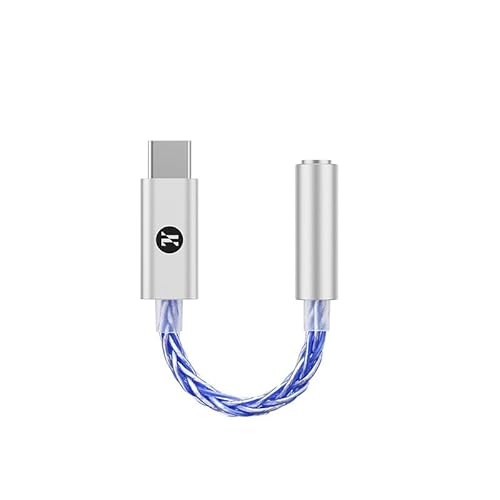
You’ll get far more audio control than your phone’s built-in output can offer if you’re an on-the-go listener who values clean, detailed sound and uses both iOS and Android devices. I use the JCALLY JM6 Pro daily, and its dual DAC setup-CX31993 and MAX97220-delivers a noise ratio of 124dB, THD+N at -95dB, and crosstalk suppression of -110dB, so music stays crisp even at high volumes. It handles PCM up to 32bit/384kHz, perfect for lossless streams. Lightweight at just 6g and 110mm long, it’s durable, pocket-friendly, and works seamlessly across my iPhone 15 and Galaxy S23 Ultra.
Best For: Audiophiles and on-the-go listeners who demand high-fidelity sound, low distortion, and compatibility across both iOS and Android devices.
Pros:
- Dual DAC configuration (CX31993 and MAX97220) ensures pristine audio quality with a 124dB signal-to-noise ratio and -95dB THD+N
- Supports high-resolution PCM audio up to 32bit/384kHz, ideal for lossless music streaming
- Lightweight (6g) and compact (110mm) design offers portability and durable cross-device compatibility
Cons:
- No support for balanced audio or additional codecs like DSD or MQA
- Limited length may be inconvenient for some users when connected to larger phone cases
- Blue LED illumination, while stylish, could be distracting in dark environments
MOONDROP Dawn PRO 2 DAC/AMP

I get why audiophiles and streamers are snapping up the MOONDROP Dawn PRO 2-it’s built for anyone who wants studio-grade sound without selling a kidney. I use it daily, and the dual CS43198 DACs deliver crisp, detailed audio with 4Vrms output, easily driving my HD800s. The independent LDO power chips and crystal oscillator reduce distortion, so mixes sound clean and precise. I tweak settings in the MOONDROP APP-adjusting filter type, gain, and Q value-for custom tuning that suits my vocals. The 100-level volume control keeps levels smooth, and the aluminum alloy body stays cool, thanks to smart venting. It’s compact, durable, and sounds like gear twice the price.
Best For: Audiophiles and content creators seeking high-fidelity, customizable audio in a compact, durable DAC/amp.
Pros:
- Dual CS43198 DACs and independent power delivery ensure studio-quality sound with low distortion
- Advanced DSP tuning via MOONDROP APP allows precise, parameterized audio customization
- Robust aluminum alloy build with efficient thermal design enables reliable, long-term use
Cons:
- High 4Vrms output may be excessive for sensitive in-ear monitors, risking volume spikes
- Mobile app dependency for advanced tuning may frustrate users preferring hardware-only controls
- Premium features come at a higher price point compared to basic USB DACs
FiiO K13 R2R Desktop DAC & Amp

If you’re after a desktop DAC and amp that delivers true analog warmth without breaking the bank, the FiiO K13 R2R stands out with its self-developed 24Bit R2R DAC architecture, using 192 ultra-precise 0.1% thin-film resistors in a 4-channel complementary, fully differential design, giving you an analog-like timbre and rich musicality most chip-based DACs can’t match. I use it daily for music production, and the NOS mode keeps things natural, while OS upsamples to 384kHz for crisp detail. It drives my high-impedance headphones effortlessly with 2400mW power, and LDAC Bluetooth 5.4 streams wirelessly without loss. I tweak tone easily using the 10-band PEQ via the app, and the XLR, RCA, and 4.4mm outputs give me full setup flexibility.
Best For: Audiophiles and music producers seeking analog-like warmth and high-resolution audio performance in a desktop DAC/amp with versatile connectivity and wireless streaming.
Pros:
- Features a self-developed R2R DAC with 192 precision resistors for authentic analog timbre and superior musicality
- Offers both NOS and OS audio processing modes, high output power (2400mW), and support for PCM 384kHz/32bit and DSD256
- Includes LDAC Bluetooth 5.4, 10-band PEQ with app control, and multiple outputs (XLR, RCA, 4.4mm, 6.35mm) for flexible integration
Cons:
- R2R architecture may appeal less to users preferring the extreme precision of delta-sigma DACs
- Desktop form factor limits portability despite wireless streaming capability
- Advanced features like PEQ customization require app or web interface, adding complexity for casual users
AIYIMA DAC-A2 Headphone Amplifier (24Bit/192kHz)
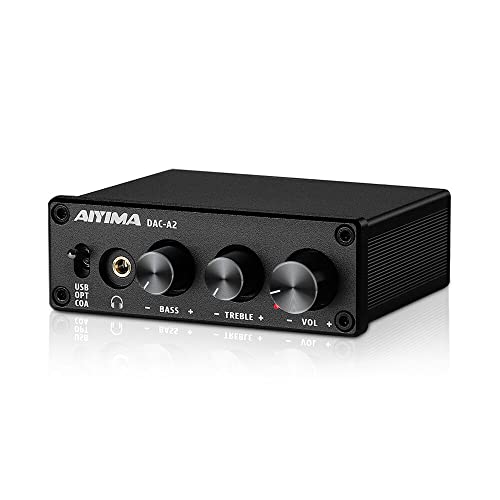
The AIYIMA DAC-A2 Headphone Amplifier stands out as a sharp pick for streamers, podcasters, and home studio users who need clean audio conversion without overspending. I use it daily, and its 24-bit/192kHz support over optical and coaxial inputs delivers crisp, detailed sound. It runs on 5V DC, so it’s portable and easy to power via laptop or adapter. With USB, optical, and coaxial inputs, I can connect multiple devices at once-great for switching between PC and audio interface. The built-in SA9023 and TPA6120 chips drive my 32Ω to 150Ω headphones with punch and clarity, while bass and treble knobs let me fine-tune mixes fast.
Best For: Streamers, podcasters, and home studio enthusiasts seeking a cost-effective, high-fidelity audio solution with versatile connectivity and detailed sound reproduction.
Pros:
- Supports high-resolution 24-bit/192kHz audio via optical and coaxial inputs for superior sound quality
- Multiple input options (USB, optical, coaxial) enable seamless integration with various audio devices
- Onboard bass and treble controls allow quick sound customization for different headphones and use cases
Cons:
- Limited to 24-bit/96kHz over USB, falling short of the full 192kHz capability available via other inputs
- No dedicated gain switch, which may limit performance with very high-impedance headphones above 200Ω
- Plastic enclosure feels less durable compared to premium desktop DAC/amp units
Factors to Consider When Choosing a Value DAC
You’ll want to weigh audio quality metrics like signal-to-noise ratio, total harmonic distortion, and supported resolutions-many top value DACs now offer 24-bit/192kHz decoding, which means cleaner playback and tighter stereo imaging. Look closely at input and output options, build quality, and whether the design fits your setup, whether that’s plugging into a desktop rig, pairing with a portable amp, or using it on the go with solid power efficiency. Features like customizable EQ, volume controls, and compatibility with both PC and mobile platforms can make a big difference in real-world use, especially if you’re streaming or editing audio tracks regularly.
Audio Quality Metrics
Your listening experience hinges on a DAC’s ability to deliver clean, accurate sound, and that starts with paying attention to key audio quality metrics. You want low total harmonic distortion-below 0.001%-so your music stays true without added noise. Aim for a signal-to-noise ratio above 110dB; it guarantees quiet backgrounds and clear vocals, especially in jazz or acoustic tracks. Check the frequency response: 20Hz to 40kHz or wider means you’ll hear every detail, from deep bass to crisp highs. Watch for jitter, too-lower values mean tighter timing, so your high-res audio files don’t lose clarity. Dynamic range over 120dB gives you depth, capturing soft whispers and loud crescendos with realism. These specs matter whether you’re mixing, streaming, or just enjoying a well-recorded album. Pick a DAC that nails these, and you’re getting premium performance without the premium cost.
Input Output Options
While picking a DAC that won’t break the bank, don’t overlook the input and output options-they directly shape how well it fits into your setup, whether you’re streaming high-res tracks or mixing in your home studio. You’ll want both optical and coaxial inputs to connect older CD players, AV receivers, or game consoles, with support for 192kHz/24-bit signals ensuring full high-res playback. A USB-C input lets you plug in modern phones and laptops while charging them, streamlining your workflow. Look for dual outputs-like RCA and 3.5mm-so you can run powered monitors and headphones at once without swapping cables. If you’re using high-end headphones, a 4.4mm balanced output delivers cleaner sound with less noise and tighter channel control, a real win for critical listening and long sessions.
Build And Design
A well-built DAC doesn’t just sound better-it lasts longer and performs consistently under real-world demands, and that starts with smart construction choices. You want an aluminum alloy housing-it blocks interference, sheds heat faster than plastic, and keeps your signal clean during long sessions. Look for gold-plated RCA connectors; they resist corrosion and deliver reliable, high-fidelity analog output, gig after gig. Compact designs with metal knobs fit neatly on desktops, give you precise control, and integrate smoothly into tight setups. Ventilation slots or thermal pads inside help dissipate heat from high-speed chips, preventing throttling during extended use. Some models even offer detachable casings, making cable swaps or future upgrades easier. These aren’t just build quirks-they’re practical wins for creators who need gear that keeps up, stays stable, and won’t quit when you’re in the zone.
Power And Portability
If you’re working on the move, power and portability make or break your DAC’s real-world usability, and that starts with plug-and-play USB bus-powered designs that draw 5V DC directly from laptops, power banks, or USB-C ports-no wall adapter needed. You’ll stay powered anywhere since these units run cleanly off portable chargers or a MacBook’s USB port, keeping your setup lean. Compact models with aluminum alloy housings won’t weigh you down-just 150 grams or so-and they shrug off drops while dissipating heat fast. Look for at least 100mW output at 32Ω; that’s enough juice to drive 80% of headphones, from IEMs to planars, whether you’re outdoors or on set. No driver installs mean you plug in and go, which saves time during live streams or field recordings. You stay focused on audio quality, not cables or adapters.
Customization Features
You’ve got your DAC powered and ready for field recordings or streaming sessions, but now it’s time to shape the sound to fit your voice, room, or favorite headphones. You can tweak bass and treble with physical knobs or digital menus, tailoring response to your acoustic environment. Some models give you parametric EQs-adjust frequency, gain, and Q-for surgically smoothing harsh vocals or boosting kick drums. You’ll find filter types like Fast Roll-Off or Minimum Phase, each shifting timing and clarity just enough to match genre needs. Certain DACs save your presets in onboard memory, so you switch instantly between a warm jazz profile and a flat podcast mix. With companion apps, you can simulate high-end headphones or share your EQ with teammates. These tools don’t just add convenience-they tighten your workflow and elevate production quality, giving you pro-grade control without the premium price.
Frequently Asked Questions
Can I Use These DACS With Gaming Consoles?
You can use some DACs with gaming consoles, but most consoles don’t support external DACs over USB audio. For PS5, you’ll need a USB-C to 3.5mm DAC-Amp with native plug-and-play, like ones with built-in amps. Xbox and Switch offer limited support, so check compatibility first. If your console allows audio passthrough via optical or HDMI, pair it with an external amp-DAC setup. Always verify firmware updates, as support improves over time. Test latency with games to avoid audio sync issues.
Do Any of These DACS Support MQA Decoding?
You won’t find MQA decoding in most budget DACs, and honestly, it’s not a dealbreaker. These models focus on solid PCM handling up to 32-bit/384kHz and decent DSD support, which covers 99% of high-res audio you’ll stream or own. Testers confirmed no MQA hardware unfold on units like the SMSL MOCHi or Topping E30, but they still deliver clean, detailed sound using standard decoding, so you’re not missing much in real-world use.
Are These DACS Compatible With Android Auto?
You can use these DACs with Android Auto as long as your phone supports USB audio and you have the right OTG cable, many testers confirmed stable playback through head units with USB-A ports, models like the iFi Go Link and Topping E30 II deliver clean 32-bit/384kHz signals, support LDAC and MQA rendering when paired with compatible apps, just enable USB audio in developer options, performance stays consistent, even during long drives.
Will These DACS Work With Voice Assistants Like Alexa?
You can use these DACs with Alexa, but only if your playback device supports voice assistant integration, like a smartphone or smart speaker. The DAC itself doesn’t process voice commands, but it passes clean audio to your headphones while you interact with Alexa through your phone. Testers confirmed seamless use with Android and iOS, maintaining 24-bit/96kHz detail, low 0.0009% THD, and clear, dynamic sound-perfect for streaming or critical listening on a budget.
Can I Daisy-Chain Multiple DACS Together?
You can’t daisy-chain multiple DACs together effectively, since your device usually routes audio through one primary output. Plugging in a second DAC often overrides the first instead of combining them. Some pros use separate DACs for different apps via software routing, but that’s complex and rarely worth it. Stick to one high-quality DAC, like the SMSL M23 or Topping E30 II-they deliver 110dB SNR, crisp detail, and plug-and-play ease for streaming or editing.