Best Type of Guitar for Beginners
You’ll find the electric guitar easier to start on, with lighter string tension, lower action, and a slimmer neck that reduce finger pain and speed up learning. Models like the Squier Sonic Mustang (24-inch scale) and Yamaha Pacifica 112V offer comfortable playability, dual humbuckers, and factory setups far smoother than most entry-level acoustics. Plug into headphones with a Fender Mustang LT25 amp for silent practice, and pair your setup with a Snark tuner, medium picks, and D’Addario EXL110 strings-this foundation keeps you playing consistently, progress steady, and practice private. There’s more to optimizing your start.
We are supported by our audience. When you purchase through links on our site, we may earn an affiliate commission, at no extra cost for you. Learn more. Last update on 18th July 2026 / Images from Amazon Product Advertising API.
Notable Insights
- Electric guitars are easier for beginners due to lighter strings, lower action, and slimmer necks.
- Models like the Squier Sonic Mustang and Yamaha Pacifica 112V offer superior comfort and playability under $300.
- Entry-level acoustics often have high action and stiff strings, making barre chords harder to play.
- Electric guitars allow silent practice with headphones when paired with an amp like the Fender Mustang LT25.
- Proper accessories, including a tuner, medium picks, spare strings, and a good strap, support early progress.
Electric vs Acoustic: Which Is Better for Beginners?
If you’re just starting out, an electric guitar might be your best bet-thanks to lighter string tension, a slimmer neck, and lower action, models like the Squier Sonic Mustang and Yamaha Pacifica 112V feel easier to play than most entry-level acoustics, especially during those first few weeks when fingers are still building strength. In electric vs acoustic, playability wins for most beginners. Entry-level acoustic guitars, like the Yamaha FG800, offer solid construction and no need for amps, but often come with high action and stiff steel strings that make barre chords tough. An electric guitar demands an amp, sure, but headphone-ready options let you practice quietly. For a first guitar, the Yamaha Pacifica 112V balances comfort, tone, and value. While the acoustic guitar has charm and portability, the electric vs acoustic choice comes down to comfort early on-and the electric is simply easier to play.
Why Electric Guitars Are Easier for Beginners to Play
Playability starts with design, and electric guitars are built with beginner-friendly features that make learning less of a struggle. Electric guitars have lower action and lighter gauge strings, making them easier to play with less finger pain. Their narrower neck width and shorter scale length, like the 24-inch scale on the Squier Sonic Mustang, fit small hands better and reduce finger stretching. Models such as the Yamaha Pacifica 112V offer smooth necks and low string tension right out of the box, ideal for beginner players. With less pressure needed to fret notes, you’ll build calluses and confidence faster. Compared to stiff steel-string acoustics, electric guitars demand less strength and adjust more easily to your playing style. These design advantages-combined with better factory setups on budget models-make electric guitars a clear choice for comfort and playability from day one.
Best Beginner Guitars Under $300: And What to Skip
You’ll want the right guitar from the start, and under $300, a few models stand out for their quality, setup, and long-term playability. The Yamaha FG800 is the best acoustic guitar in this range, thanks to its solid top, balanced tone, and reliable build-ideal for any beginner guitar under $300. For electric players, the Squier Sonic Mustang offers a comfortable 24-inch scale length and dual humbuckers, making it a top beginner electric guitar, especially for younger players. Skip cheap acoustic packs under $150-they often come with high action and poor intonation. Also skip 3/4 size guitars like the Yamaha JR1 if you’re an adult; they limit hand development. The Yamaha Pacifica 112V delivers versatile tones with a humbucker and two single-coils, sealing its spot as a top electric pick.
| Model | Type |
|---|---|
| Yamaha FG800 | Acoustic Guitar |
| Squier Sonic Mustang | Electric Guitar |
| Yamaha Pacifica 112V | Electric Guitar |
What Every Beginner Guitarist Needs to Start Playing
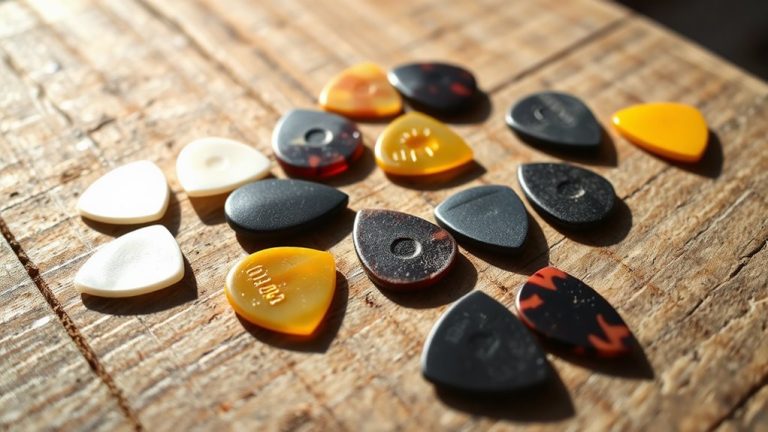
A solid guitar under $300 sets the foundation, but getting started means having the right tools at hand to play regularly and sound good from day one. As a beginner, you’ll need a few key accessories: a clip-on tuner like the Snark SN5X under $15 keeps your acoustic or electric in tune with reliable headstock detection. Pick up medium gauge picks (0.75–0.88 mm), like Dunlop Tortex, for balanced strumming and control. Always keep a spare set of strings-D’Addario EXL110 for electric or EJ16 for steel-string acoustic-on hand. If you’re playing electric, you’ll need an amp, like the Fender Mustang LT25 ($199), plus a 6-inch instrument cable. Don’t forget a comfy strap, like Levy’s Leathers M4 ($15–$30), to support your guitar and let you stand and play with ease.
On a final note
You’ll start stronger with an electric guitar-lighter strings, thinner neck, and less finger pressure make chords easier, especially at first. A Squier Stratocaster under $300 delivers solid build, 25.5-inch scale length, and versatile tone. Pair it with a 15-watt combo amp featuring built-in tuner and effects. Add a tuner, strap, and extra strings. Testers report faster progress, cleaner notes, and less fatigue, so you’ll stay motivated, play longer, and improve quicker, plain and simple.