Best Songs to Show off Speakers
You’ll hear Radiohead’s “The National Anthem” expose tonal balance, with its 50–200Hz overdriven bass, piercing 2kHz brass, and warped vocals demanding clarity. Thundercat’s “Uh Uh” tests bass precision up to 1kHz, while Massive Attack’s “Angel” reveals sub-bass control down to 35Hz. Bob Marley and Nine Inch Nails map soundstage depth and width, and the *Flower Duet* locks imaging in place. Gershwin and The Chemical Brothers stress dynamics, from whisper-quiet passages to 105dB peaks. There’s more where that came from.
We are supported by our audience. When you purchase through links on our site, we may earn an affiliate commission, at no extra cost for you. Learn more. Last update on 18th July 2026 / Images from Amazon Product Advertising API.
Notable Insights
- Radiohead’s “The National Anthem” reveals tonal balance with layered brass, bass, and vocals demanding clarity under pressure.
- Thundercat’s “Uh Uh” tests bass precision with fast, complex lines from 40Hz to 1kHz requiring clean attack and decay.
- Bob Marley’s “Turn Your Lights Down Low” maps soundstage width and depth with natural instrument placement and reverb.
- The *Flower Duet* from *Lakmé* evaluates imaging accuracy with stable, separated soprano voices panned left and right.
- Gershwin’s *Rhapsody in Blue* exposes dynamic range with sweeping orchestral contrasts from soft piano to full ensemble crescendos.
Assess Tonal Balance: Radiohead’s Cacophony vs. Control
Ever wonder how well your speakers handle chaos with control? Testing new speakers with Radiohead’s “The National Anthem” reveals their tonal balance under pressure. This track throws overdriven bass, blaring brass, and warped vocals into a frenzy, making it a real sound test for any system. Good speakers keep the layers distinct-the pulsing bassline, sharp horn jabs, and looping “half the world” vocals-without muddying the midrange. You’ll hear if your setup can handle acoustic and electronic elements with equal poise. Weak speakers exaggerate the horns or bury the bass, wrecking the song’s tension. But when your system nails it, the climax hits with clarity, separation, and attack. Testing new tracks like this doesn’t just impress-it exposes a speaker’s true capabilities, so you know what you’re really getting.
Test Bass Precision: Thundercat’s Speed and Massive Attack’s Depth
While you’re dialing in your speaker setup, don’t overlook how well it handles both lightning-fast bass runs and crushing sub-bass depth-two extremes that reveal true low-end precision. Thundercat’s “Uh Uh” throws rapid six-string basslines at your speakers, with notes from 40Hz to 1kHz demanding sharp attack, clean decay, and zero smearing-test your speaker’s ability to keep complex low end articulate. You’ll hear every nuance only if the system offers real bass precision. Then switch to Massive Attack’s “Angel,” where a slow, deep bassline hovers between 35–50Hz, pushing your speakers to deliver sustained, distortion-free sub-bass. This track tests depth, amplifier damping, and driver control. Together, they challenge both speed and stamina, making them essential for evaluating bassline clarity and sub-bass power in any high-performance setup.
Map the Soundstage: Bob Marley and Nine Inch Nails in 3D
When you’re trying to pinpoint how well your speakers recreate a three-dimensional soundfield, few tracks reveal the truth like Bob Marley & The Wailers’ “Turn Your Lights Down Low” and Nine Inch Nails’ “Right Where It Belongs” - the former opens with a wide, natural stereo image where the bass drum sits slightly to the right, the upright bass anchors center-left, and Marley’s voice floats in the middle with just enough reverb to place it half a step behind the instruments, creating a front-to-back depth that’s easy to measure with a ruler on your listening plane if you close your eyes. Every sound is well defined, making it one of the best tracks to test stereo imaging. The Nine Inch Nails track pushes your speakers’ ability to expand beyond physical boundaries, with ambient pads and vocals that should float in space when room correction is properly applied. Both are great recordings that expose flaws in sound quality, serving as essential test tracks for true 3D staging.
Follow Every Note: Imaging Tests With Flower Duet and Prokofiev
The *Flower Duet* from Léo Delibes’ *Lakmé* is a masterclass in stereo imaging, with its two sopranos panned distinctly left and right, delivering a transparent test of your system’s horizontal soundstage accuracy. When you play this classical piece, you’ll immediately notice if your new speakers blur or drift the voices-each note should stay locked in place. It’s a test record that’s carefully curated for precision. Pair it with Prokofiev’s *Montagues and Capulets*, where the low brass, snare, and triangle reveal depth and separation. The recording quality must be top-tier, like that of *Dark Side of the Moon*, to expose subtle flaws. Listen for ghosting or smearing-clean imaging means each instrument occupies its own space. Use these tracks to evaluate your speakers performance objectively, not just for volume or bass, but for spatial truth in every piece of music.
Hear the Difference: Gershwin and Chemical Brothers on Dynamics
You’ve just tested your speaker’s ability to keep voices anchored and instruments separated, but now it’s time to push their responsiveness to sudden shifts in volume and intensity. Add George Gershwin’s *Rhapsody in Blue* to your test disc-it’s one of the best songs to test dynamic range, with quiet piano lines exploding into bold orchestral swells, exposing how well your pair of speakers handles contrast without distortion. Next, play The Chemical Brothers’ *Das Spiegel*, a test track loaded with heavy bass and sharp electronic attacks that demand precise transient response and damping control. Together, they stress both macro and micro-dynamics, revealing flaws in amplifier integration and driver accuracy. Use them to audition some new gear or fine-tune your setup. If your system keeps clarity during peaks and maintains rhythm in layered sections, you’re on track. Please share your results-they help others tune in right.
On a final note
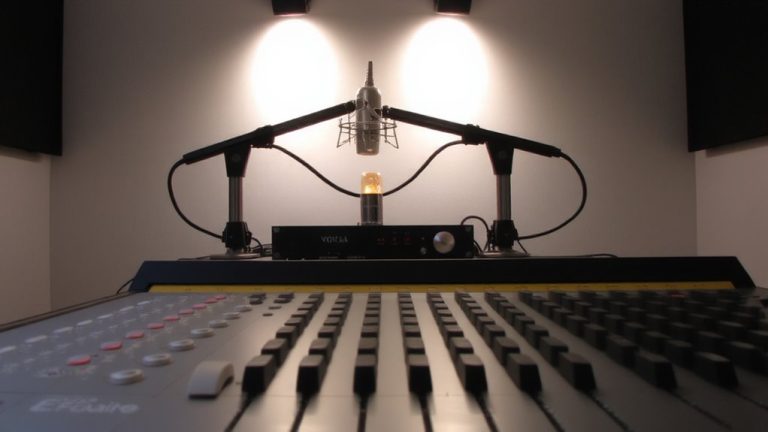
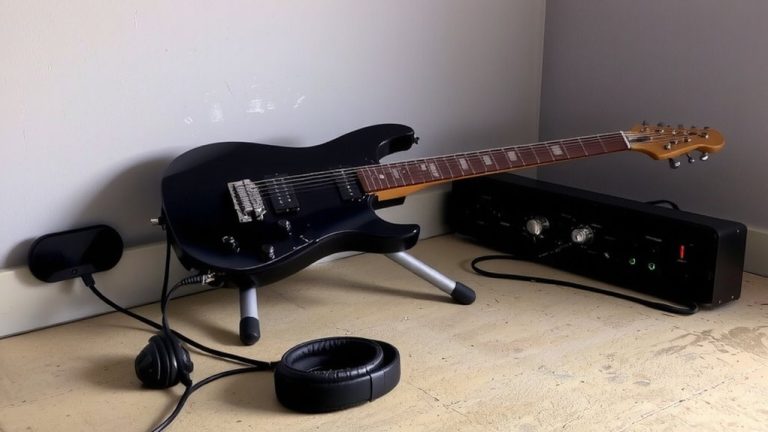
You’ve tested tonal balance, bass, soundstage, imaging, and dynamics using tracks from Radiohead to Gershwin, and now you know: clear mids matter as much as deep bass, and timing precision beats sheer volume. For streaming, pair a calibrated condenser mic with a 24-bit interface, aim speakers at the mix position, and reference with flat-response headphones-like the Beyerdynamic DT 770 Pro-to catch what monitors miss.