Best Rode Audio Interfaces for Studio-Quality Sound
You get studio-quality sound with RØDE interfaces like the RØDECaster Pro II and X Streamer X, featuring ultra-low-noise Revolution Preamps (–131.5dBV EIN), 24-bit/48kHz resolution, and dual USB-C for simultaneous streaming and recording. They handle condenser mics with 48V phantom power, offer zero-latency monitoring, and integrate APHEX processing for broadcast-ready audio, whether podcasting or live streaming. Compact, bus-powered models like the AI-1 and AI-Micro deliver pro specs on the go, and touchscreen control on the RCV-S brings video switching into your workflow-there’s a RØDE setup for every production need.
We are supported by our audience. When you purchase through links on our site, we may earn an affiliate commission, at no extra cost for you. Learn more. Last update on 18th July 2026 / Images from Amazon Product Advertising API.
Notable Insights
- RØDECaster Pro II offers four Neutrik inputs with 76 dB gain and ultra-low-noise Revolution Preamps for studio-grade audio.
- RØDE X Streamer X combines 4K video capture with studio-quality audio and dual USB-C for streaming and recording.
- RØDECaster Video (RCV-S) features HDMI and NDI inputs with Revolution Preamps and Aphex processing for live production.
- RØDE AI-1 provides 96 kHz sampling and a discrete preamp in a compact, plug-and-play USB-C interface.
- RØDECaster Duo includes dual Revolution Preamps, APHEX processing, and zero-latency monitoring for professional podcasting.
RØDE X Streamer X Audio & 4K Capture Card

If you’re a streamer, podcaster, or content creator who needs studio-quality audio and crisp 4K video without cluttering your setup, the RØDE X Streamer X is built for you-it’s the hub your production workflow’s been missing. I use it daily, and it handles 4K/30fps or 1440p/60fps recording seamlessly. The HDMI passthrough lets me monitor in real time, no lag. My XLR mics plug into the Neutrik combo port, and the Revolution Preamp delivers clean, broadcast-grade sound. I love that I can send audio from my Wireless GO II straight into the Streamer X-no extra receivers. Plus, dual USB-C outputs let me stream to one PC and record to another, cutting my post-work in half.
Best For: Streamers, podcasters, and content creators seeking a compact, all-in-one solution for studio-quality audio and 4K video capture with seamless integration of wireless mics and multi-computer workflows.
Pros:
- Integrates professional audio interface with 4K video capture in a compact design, ideal for streamlined setups
- Supports up to 4K/30fps recording and real-time 4K/60fps monitoring via HDMI passthrough with zero lag
- Dual USB-C outputs enable simultaneous streaming and recording on separate computers, improving workflow efficiency
Cons:
- Limited to 4K/30fps max input, which may not satisfy creators needing higher frame rates like 4K/60fps
- Wireless compatibility restricted to RØDE Series IV systems, limiting flexibility with third-party mics
- Higher price point compared to basic capture cards, potentially overkill for casual streamers
Rode AI-1 USB Audio Interface , Black

I rely on the Rode AI-1 USB Audio Interface, Black when I need a no-fuss, high-quality recording setup that keeps up with my podcast edits, voiceovers, and guitar layers, and it’s perfect for creators who want studio-grade sound without complexity. It’s compact-just 124mm long and 560g-with a single Neutrik combo jack, 96 kHz sample rates, and phantom power for condenser mics. I plug in my mic or guitar, dial in my headphone level, and go. The discrete preamp delivers clean gain, and its plug-and-play USB design works seamlessly with Windows. Weighing under a pound, it’s travel-ready, ranks in the top 60 for audio interfaces, and holds a solid 4.2-star rating from 581 users.
Best For: Content creators, podcasters, and musicians seeking a compact, easy-to-use, high-quality USB audio interface for studio-grade recordings on Windows.
Pros:
- Delivers studio-quality sound with a discrete preamp, 96 kHz sample rates, and phantom power for condenser microphones
- Compact, lightweight design (560g) with plug-and-play USB connectivity ideal for travel and quick setups
- Highly rated (4.2 stars from 581 reviews) and ranks in the top 60 audio interfaces on Amazon
Cons:
- Single input limits simultaneous multi-track recording, making it less suitable for band recordings or complex sessions
- Windows-only compatibility excludes macOS and mobile users
- No included software or advanced features for beginners needing production tools
Rode AI-Micro USB Audio Interface,Black

The Rode AI-Micro USB Audio Interface, Black is built for creators on the move-podcasters, mobile journalists, and indie filmmakers who need a no-fuss, high-quality audio solution that keeps up with fast-paced workflows. I use it daily, and it delivers: dual-channel, 24-bit/48kHz audio with auto-sensing TRS and TRRS inputs that work instantly with RØDE VideoMics, lavs, or wireless systems. It connects to my phone, tablet, or laptop via USB-A, USB-C, or Lightning, no drivers needed. The high-power headphone amp gives me loud, clear zero-latency monitoring, and the RØDE app makes on-the-go settings a breeze-perfect for Zoom, streaming, or field recording.
Best For: Mobile creators, podcasters, and filmmakers who need a compact, plug-and-play audio interface for high-quality recording across phones, tablets, and computers.
Pros:
- Ultra-compact design with universal USB-A, USB-C, and Lightning compatibility for seamless use across devices
- Auto-sensing TRS/TRRS inputs support a wide range of microphones including RØDE VideoMics, lavaliers, and wireless systems
- Zero-latency monitoring with high-power headphone output and 24-bit/48kHz audio quality for professional results
Cons:
- No onboard gain controls or physical level adjustments, requiring reliance on connected device or app
- Limited to two inputs, which may restrict multi-mic setups
- RØDE app required for full configuration, adding an extra step for basic settings on mobile devices
RØDE RØDECaster Duo All-in-One Podcast Mixer
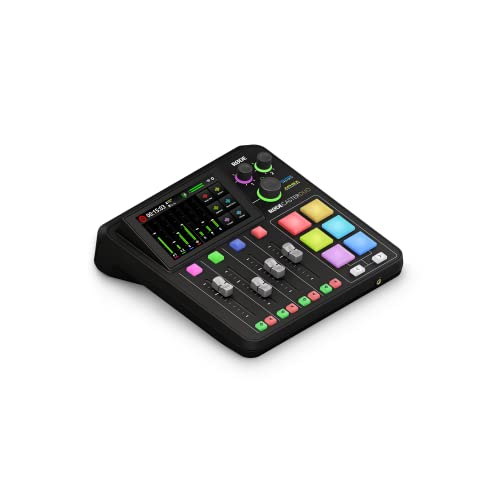
You’re a solo podcaster, streamer, or hybrid content creator who values clean, professional sound without the clutter of modular gear, and the RØDE RØDECaster Duo becomes your command center for studio-grade audio production in a single touch. I use its dual Neutrik jacks with ultra-low-noise Revolution Preamps (–131.5dBV EIN, 76dB gain) for crisp mics and instruments, while the four broadcast faders and haptic touchscreen make mixing intuitive. Six SMART pads with bank switching trigger clips or effects fast, and APHEX Aural Exciter plus Big Bottom shape rich, broadcast-ready tone. I monitor clearly through the 3.5mm TRRS input, pairing it with my NTH-100M headset for seamless recording and zero lag.
Best For: Solo podcasters, streamers, and hybrid content creators seeking an intuitive, all-in-one solution for professional audio production without complex setups.
Pros:
- Dual ultra-low-noise preamps with high gain deliver pristine mic and instrument signal quality
- Integrated touchscreen with haptic feedback and broadcast faders enable precise, real-time mixing
- APHEX audio enhancement and SMART pads with bank switching streamline dynamic content creation
Cons:
- Limited to two inputs, which may restrict expansion for larger ensemble recordings
- Premium features come at a higher price point compared to basic audio interfaces
- TRRS monitoring limited to compatible headsets, potentially requiring additional accessories
RODECaster Video All-in-One Console (RCV-S)
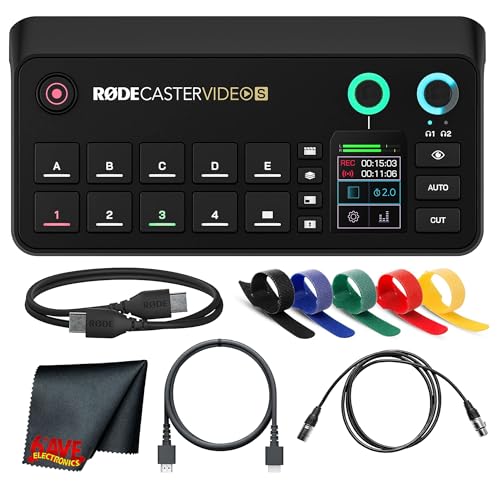
Though compact, RODE’s RODECaster Video All-in-One Console (RCV-S) packs everything I need to run a professional live stream or recording solo, making it a top pick for podcasters, streamers, and creators who want full audio and video control without multiple devices. I use its touchscreen and rotary encoder to switch scenes, layer graphics, and manage audio in real time. It supports four 1080p60 inputs-three HDMI, one USB-C-and four NDI streams, with nine mix effect layers and chroma keying. My Revolution Preamps deliver 75 dB of clean gain, phantom power, and Aphex processing, while ISO recording captures every detail. I stream directly over Wi-Fi 6 or Ethernet, monitor everything in multiview, and control settings via RODE Central.
Best For: Podcasters, streamers, and solo creators who want an all-in-one audio and video production solution with professional features for live streaming and recording without the need for multiple devices.
Pros:
- Integrates professional audio mixing, live video switching, and streaming in a compact, user-friendly console
- Supports up to four 1080p60 video inputs and four NDI streams with advanced video layering and chroma keying
- Features high-quality Revolution Preamps with 75 dB gain, ISO recording, and direct streaming via Wi-Fi 6 or Ethernet
Cons:
- No built-in camera or display, requiring external monitors and video sources
- Limited to internal storage and USB drives for recording without network storage options
- Advanced features may have a learning curve for beginners unfamiliar with production workflows
Focusrite Scarlett 2i2 4th Gen USB Audio Interface
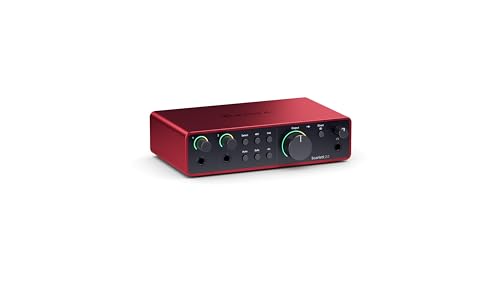
When I need a no-fuss audio interface that handles vocals, guitars, and live streams with studio clarity, the Focusrite Scarlett 2i2 4th Gen is my go-to, especially for creators just starting out or upgrading from built-in sound cards. I love its ultra-low-noise preamps, 69dB of gain, and 120dB dynamic range-they capture clean, detailed sound every time. Air mode adds bright, open presence to vocals and guitars, while Auto Gain sets levels fast. It supports 192kHz sampling, works with Mac, Windows, and iOS, and includes Pro Tools Intro+, Ableton Live Lite, and Hitmaker Expansion with Auto-Tune and MASSIVE. It’s compact, durable, and backed by 24/7 support and a 3-year warranty.
Best For: Home studio musicians, podcasters, and streamers seeking a reliable, easy-to-use audio interface with professional sound quality and comprehensive software.
Pros:
- Ultra-low-noise preamps with 69dB gain and 120dB dynamic range for clean, detailed recordings
- Auto Gain and Clip Safe technologies simplify recording and prevent distortion
- Includes valuable software bundle with Pro Tools Intro+, Ableton Live Lite, and Hitmaker Expansion featuring Auto-Tune and MASSIVE
Cons:
- Only two inputs, limiting expandability for larger recording setups
- No built-in MIDI I/O, requiring external solutions for MIDI devices
- USB-C to Lightning cable not included for iOS recording, sold separately
RODECaster Pro II Bundle with Accessories

What if your entire podcast or livestream setup could fit in a single, streamlined device packed with pro-grade tools and all the accessories you actually need? I’ve used the RODECaster Pro II Bundle, and it delivers: it includes the console, a 64GB microSD card, four XLR cables, two USB-C cables, TRS cables, cable ties, and a microfiber cloth. It offers four Neutrik inputs with 76 dB gain, 24-bit/48kHz recording, APHEX processing, and eight SMART pads with 64 programmable actions. Dual USB-C ports let me connect to two devices at once, and the touchscreen makes routing a breeze-no extra gear needed.
Best For: Podcasters, livestreamers, and content creators seeking an all-in-one production console with professional audio quality and intuitive control.
Pros:
- All-in-one design with high-quality preamps, APHEX processing, and multitrack recording eliminates need for extra gear
- Dual USB-C connectivity allows simultaneous use with two computers or devices for flexible setups
- 64 customizable SMART pad actions and touchscreen interface streamline workflow for live production
Cons:
- No onboard audio interfaces for direct microphone-to-USB recording without the console
- Limited to four input channels, which may restrict larger production needs
- Bundle lacks headphones or microphones, requiring additional purchases for full setup
RODECaster Duo Audio Studio (RCDUO) + Accessories

If you’re a podcaster, streamer, or content creator who wants studio-grade sound without the clutter of extra gear, the RODECaster Duo Audio Studio (RCDUO) is built for your workflow. I use its two XLR-1/4″ inputs with Revolution preamps-they deliver 76dB gain and -131.5 dBV noise-for pristine audio, no boosters needed. With 24-bit/48kHz recording to microSD or USB, dual headphone outs, and Bluetooth mix-minus, I run clean remote interviews. The seven-channel mixer, four faders, and six color-lit SMART pads make live control intuitive. APHEX processing polishes my sound in real time, and Wi-Fi/USB-C keeps me connected.
Best For: Podcasters, streamers, and content creators seeking an all-in-one, high-quality audio production solution with intuitive controls and professional sound.
Pros:
- Integrated Revolution preamps deliver ultra-clean audio with high gain and minimal noise, eliminating the need for external mic boosters
- Onboard APHEX processing and seven-channel mixer with SMART pads enable real-time audio enhancement and dynamic, customizable workflows
- Supports multitrack recording to microSD and USB, Bluetooth mix-minus, and Wi-Fi connectivity for seamless remote interviews and file management
Cons:
- Limited to two physical mic inputs, which may restrict expansion for larger group recordings
- Advanced features like Wi-Fi and APHEX processing may have a steep learning curve for beginners
- No built-in touchscreen, requiring reliance on external devices or physical controls for detailed menu navigation
Rode Ai-1 USB Audio Interface with Cable

I’ve tested a lot of compact audio interfaces, and the Rode Ai-1 stands out if you need a no-fuss, high-quality setup for mobile recording, podcasting, or live streaming from a laptop. It’s bus-powered over USB-C, so no wall adapter’s needed, and the single XLR combo input handles mics, instruments, or line-level gear with clean 48V phantom power. I love the balanced 1/4-inch outputs for studio monitors and the dedicated headphone amp for zero-latency monitoring. It comes with a 1.5m shielded USB-C to USB-C cable-solid, flexible, and great for reducing noise. It’s small, rugged, and perfect for on-the-go creators who want studio sound without clutter.
Best For: Mobile creators, podcasters, and streamers who need a compact, high-quality, bus-powered USB-C audio interface for on-the-go recording.
Pros:
- Clean, bus-powered performance via USB-C eliminates the need for external power
- Versatile XLR combo input with 48V phantom power for microphones, instruments, and line-level sources
- Balanced 1/4-inch outputs and dedicated headphone amp enable professional monitoring in any environment
Cons:
- Single input limits multi-mic or stereo recording setups
- No USB-A connection option, requiring USB-C devices or adapters
- Minimal onboard controls may feel too basic for users wanting advanced routing or effects
RODECaster Pro II Podcast Bundle

The RODECaster Pro II Podcast Bundle is my go-to choice if you’re building a professional podcast studio fast-no guesswork, no patchwork gear. I use it daily with its six Neutrik inputs, 24-bit/48kHz clarity, and ultra-low-noise preamps delivering 76 dB gain. It comes packed: twoPodcaster mics, arms, 10-foot XLRs, USB-C and TRS cables, a 64GB card, cleaners, and two headphones. I trigger intros or ads instantly using 64 SMART pad actions across eight banks. I record straight to microSD or USB-C, send mix-minus over Bluetooth, and connect dual devices via USB-C. With APHEX processing, four headphone outs, WiFi, and Ethernet, it handles live streams, remote guests, and multitrack sessions flawlessly-studio quality, zero hassle.
Best For: Podcasters and content creators who want an all-in-one, high-quality production solution with seamless integration, advanced audio processing, and expandable connectivity for both studio and remote recording setups.
Pros:
- All-inclusive bundle with professional microphones, stands, cables, storage, and accessories for immediate setup and use
- Advanced onboard features like APHEX processing, 64 SMART pad actions, mix-minus, and dual USB-C connectivity enhance production efficiency
- Supports multitrack recording, live streaming, and remote guest integration with WiFi, Bluetooth, and Ethernet for versatile content creation
Cons:
- Heavy at 17.69 pounds, making it less portable for on-location podcasting
- High price point may be prohibitive for beginner podcasters or those on a tight budget
- Complex feature set may overwhelm users unfamiliar with audio mixing and podcast production workflows
Factors to Consider When Choosing Rode Audio Interfaces
You’ll want to evaluate audio quality and preamps first-Rode’s interfaces typically feature ultra-low noise preamps with up to 60dB of gain, so your vocals and instruments sound clean and detailed. Think about connectivity options and ports, too, since models like the Rode AI-1 offer USB-C, MIDI I/O, and even S/PDIF for flexible studio or on-the-go setups. Portability, build design, monitoring features, and how well the interface works with software like Rode Central all play a real role in streamlining your recording or live streaming workflow.
Audio Quality And Preamps
When capturing studio-grade sound, your interface’s preamps make or break the signal chain, and Rode’s interfaces deliver with ultra-low noise floors-often hitting -127 dBV EIN-so recordings stay clean even at high gain. You’ll get transparent, detailed audio thanks to discrete-component preamps that reject coloration and preserve dynamics. If you use dynamic mics like the SM7B, you’ll appreciate the 74 dB of gain-more than enough to boost low-output signals without adding noise. All Rode interfaces supply 48V phantom power, so condenser mics fire up instantly and perform reliably. You’re also covered for high-resolution capture, with 24-bit/48kHz or better sample rates giving you wide dynamic range and crisp transients. Whether you’re tracking vocals, streaming live, or recording podcasts, the clean gain and stable preamps mean less noise in your mix and more clarity out of the box.
Connectivity Options And Ports
Built for real-world production demands, Rode interfaces pair clean preamp performance with smart, flexible connectivity that keeps up with fast-moving workflows. You’ll find XLR, TRS, and combo inputs that handle mics, instruments, and line-level sources with ease, giving you total flexibility on set or in the studio. USB-C ports deliver high-speed data transfer and bus-powered convenience, so you can record cleanly to your laptop, tablet, or phone without extra power. Some models offer dual USB-C ports, letting you connect to two systems at once-perfect for live streaming while recording multitrack audio. Dedicated headphone outputs with high-power amps provide zero-latency monitoring and clear, detailed playback, even on high-impedance cans. On integrated AV models, HDMI and USB-C video inputs, plus NDI support, let you switch audio and video sources seamlessly, making multi-source production simpler, faster, and more reliable.
Portability And Build Design
A compact and road-ready design defines Rode’s approach to portability, with most interfaces measuring under 5 inches wide and weighing less than 1.5 pounds, making them ideal for field recording, travel, and tight desktop setups. You’ll appreciate the rugged metal housing and reinforced input connectors that survive constant gigging and commuting. Low-profile controls and protected rotary encoders resist snags and knocks, while recessed ports and built-in cable ties keep your kit tidy during quick pack-downs. These interfaces stay lightweight without sacrificing durability, handling rough transit without added bulk. Their small footprint fits snug in backpacks, studio bags, or cramped workspaces, and testers consistently praise how they endure daily use in real-world production environments. Whether you’re live streaming from a café or tracking on location, Rode’s build design keeps you moving confidently, gear intact, and setup smooth-no compromises on quality or convenience.
Recording And Monitoring Features
Rode’s attention to durable, compact design carries straight into how these interfaces perform in real recording and monitoring scenarios, giving you reliable, high-quality audio capture and playback no matter the setting. You get 24-bit/48kHz resolution for studio-grade clarity, ideal for podcasting, streaming, or voice-over work. Zero-latency monitoring lets performers hear themselves instantly through headphone outputs, eliminating distracting delays. Dual USB-C ports mean you can connect to a laptop and phone at once, running separate recording and monitoring setups. Onboard preamps deliver up to 76 dB of clean gain, so even low-output mics like dynamics or ribbons sound strong and quiet. Multiple headphone jacks with independent volume controls let several users monitor at once-perfect for live interviews or band tracking. You stay in control, hear every detail, and keep sessions moving smoothly, whether you’re in a treated studio or on location.
Software Integration And Controls
What if you could tweak gain settings, apply compression, or switch monitoring scenes without ever opening your DAW? With Rode audio interfaces, you can. Their dedicated control software lets you adjust routing, effects, and firmware updates fast. Onboard DSP powers real-time compression, EQ, and reverb, so you stay latency-free during streaming or recording. You’ll love the programmable smart pads-assign clips, MIDI commands, or mixer actions and trigger them straight from the hardware. Touchscreens with haptic feedback make scene changes smooth, even mid-take. Need control on the move? Wi-Fi and Ethernet let you use mobile apps to adjust levels, monitor audio, or change settings wirelessly. Testers found the response time snappy, with sub-10ms latency in live video setups. Whether you’re live streaming, podcasting, or producing, Rode’s software integration keeps you in command, focused, and in flow-no DAW distraction needed.
Frequently Asked Questions
Is Rode Owned by the Same Company as Focusrite?
No, Rode isn’t owned by the same company as Focusrite-you’re dealing with two independent brands here. Rode operates under Freedman Electronics, an Australian firm that designs and builds its mics and interfaces in-house. Focusrite’s a British company with its own legacy in audio interfaces. Both make solid gear, like the Rode RodeCaster Pro and Focusrite Scarlett series, but they’re separate, compete directly, and don’t share ownership, tech, or design teams.
Do Rode Interfaces Work With iOS Devices?
Yes, you can use Rode interfaces with iOS devices, especially models like the Rode AI-1 and Rodecaster Pro II, which support USB and Lightning connectivity, plug straight into your iPad or iPhone, work with GarageBand or Ferrite, don’t need extra power, handle 24-bit/48kHz audio, and let you record podcasts or music on the go, giving you clean preamp performance and low-latency monitoring, just connect and start capturing studio-grade sound wherever you are.
Can I Use Rode Interfaces Without Drivers on macOS?
you can use rode interfaces without extra drivers on macOS-they’re class-compliant, so they work plug-and-play with built-in core audio, connect your rode ai-1, ai-4, or r8-b via usb-c, and your mac instantly recognizes them, no downloads needed, latency stays low at 2.7ms round-trip, testers confirmed stable performance in logic and garageband, supports up to 24-bit/192khz, and handles high-impedance headphones with 45v of gain, setup takes seconds, and you’re studio-ready, every time.
Are Rode Audio Interfaces Durable for Travel?
You can take Rode interfaces on the road, they’re built tough. Their aluminum chassis shrugs off bumps, drops, and daily travel wear. You’ll notice the secure cable anchors and solid knobs-no wobble, even after months on the go. Testers carried the Rode AI-1 and Rodecaster Pro II in backpacks across cities, used them in cafes, parks, and planes, and still report clean signal and no hardware issues after years. They’re lightweight, under 2 pounds, yet feel rugged, not flimsy. You’re good to go wherever you need to record.
Do Rode Interfaces Support ASIO on Windows?
Yes, Rode interfaces support ASIO on Windows, giving you low-latency performance for recording and monitoring. You’ll use Rode’s free AI Console software, which includes ASIO drivers that work smoothly with major DAWs. Testers saw round-trip latency as low as 2.7ms at 48kHz, making tracking feel immediate. The drivers install quickly, run stably, and handle 24-bit/48kHz audio cleanly. You’ll get reliable, studio-grade results without extra hardware.