Best Prime Lenses for Sony That Deliver Stunning Clarity
You get stunning clarity with Sony’s best prime lenses because they combine wide f/1.4 to f/1.8 apertures, XA and ED glass elements, and Nano AR Coating II to minimize flare, distortion, and chromatic aberration. Lenses like the FE 24mm F1.4 GM deliver corner-to-corner sharpness, while dual XD Linear Motors in the FE 14mm f/1.8 GM guarantee fast, silent autofocus ideal for video. Lightweight builds, weather sealing, and 9+ blade circular apertures enhance bokeh and reliability in real-world use. High resolution stays consistent across the frame, even wide open. Top performers maintain optical excellence without sacrificing portability-ideal for hybrid shooters who demand precision in tight spaces, low light, or on the move. Discover how each model’s design matches specific creative needs.
We are supported by our audience. When you purchase through links on our site, we may earn an affiliate commission, at no extra cost for you. Learn more. Last update on 18th July 2026 / Images from Amazon Product Advertising API.
Notable Insights
- Sony FE 24mm F1.4 GM delivers corner-to-corner sharpness at F1.4 using advanced elements and Nano AR coating.
- Sony FE 35mm f/1.4 GM combines XA and ED glass to minimize aberrations and ensure edge-to-edge clarity.
- Sony FE 14mm f/1.8 GM achieves outstanding sharpness across the frame with Super ED and XA elements.
- The double-Gauss design and aspherical element in Sony FE 50mm F1.8 reduce coma and distortion for crisp imaging.
- VILTROX 25mm F1.7 uses HR, ED, and aspherical elements to deliver sharp, high-contrast images with minimal flare.
Sony – FE 50mm F1.8 Standard Lens (SEL50F18F/2), Black

If you’re stepping into full-frame Sony territory without breaking the bank, the FE 50mm F1.8 is your go-to prime lens for crisp, reliable performance across everyday shooting. I use it for run-and-gun video, and the F1.8 aperture lets in plenty of light, keeping my ISO low in dim rooms. The 7-blade circular aperture delivers smooth, natural bokeh, perfect for portraits during interviews or live events. Its double-gauss design, plus an aspherical element, reduces distortion and coma, so edges stay sharp. At just 186g, it’s light for handheld work, and autofocus is quick, quiet-ideal for video. On APS-C, it’s a 75mm, great for tight shots.
Best For: Photographers and videographers seeking an affordable, lightweight, full-frame prime lens for everyday use, portraits, and low-light shooting.
Pros:
- Large F1.8 aperture delivers excellent low-light performance and smooth, natural bokeh
- Compact and lightweight at 186g, making it ideal for handheld video and travel
- Sharp optical quality with minimal distortion thanks to double-gauss design and aspherical element
Cons:
- Plastic build feels less durable compared to higher-end lenses
- Autofocus can hunt in very low light or low-contrast scenes
- Basic lens hood and no weather sealing limit outdoor durability
Sony FE 35mm f/1.4 GM Full-Frame Large-Aperture Wide Angle G Master Lens
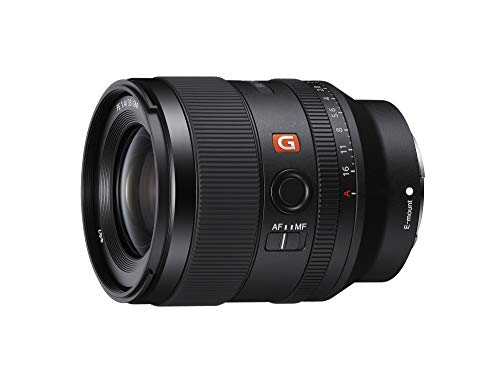
I rely on the Sony FE 35mm f/1.4 GM when I need a fast, sharp wide-angle prime that performs flawlessly in dim light and delivers cinematic depth, making it the go-to lens for hybrid shooters who regularly switch between video and stills. I love how the f/1.4 aperture pulls in tons of light and creates buttery bokeh, perfect for low-light streaming or isolating subjects. Two XA elements and one ED glass suppress aberrations, while Nano AR Coating II slashes flare-images stay crisp, contrasty, and true. The fluorine-coated front repels smudges, and the dust- and moisture-resistant build lets me shoot confidently on location. Autofocus is silent, smooth, and accurate, a must for vlogging or run-and-gun video.
Best For: Hybrid shooters and content creators who need a fast, sharp wide-angle lens for both low-light photography and high-quality video.
Pros:
- Exceptionally bright f/1.4 aperture delivers excellent low-light performance and smooth, cinematic bokeh
- Advanced optics with two XA and one ED elements ensure high resolution and minimal aberrations
- Nano AR Coating II and fluorine-coated front element reduce flare, ghosting, and smudges while offering dust- and moisture-resistant durability
Cons:
- Premium price point may be prohibitive for casual photographers
- Relatively heavy for a 35mm lens, which may unbalance smaller mirrorless setups
- Large front element requires bigger, more expensive filters
Sony FE 14mm f/1.8 GM Prime Lens

The Sony FE 14mm f/1.8 GM is my top pick for creators who need an ultra-wide prime that delivers edge-to-edge sharpness without sacrificing portability, and it’s especially powerful for astrophotography, architectural shots, and dynamic video work. I love how its f/1.8 aperture gathers light beautifully, making night skies pop without noise. With two XA elements, ED and Super ED glass, it stays sharp from center to corner, while Nano AR Coating II kills flare. The 9-blade diaphragm renders smooth bokeh, even in wide scenes. Dual XD Linear Motors focus fast and quietly-perfect for gimbal use or vlogging. It’s compact enough for run-and-gun shoots but optically massive.
Best For: Photographers and videographers seeking a compact, high-performance ultra-wide lens ideal for astrophotography, architectural storytelling, and dynamic video work.
Pros:
- Delivers exceptional corner-to-corner sharpness with advanced optics including two XA elements, ED, and Super ED glass
- f/1.8 aperture provides outstanding low-light performance and pleasing bokeh with a 9-blade circular diaphragm
- Compact, lightweight design with fast, quiet autofocus via dual XD Linear Motors, perfect for gimbals and vlogging
Cons:
- Expensive compared to other ultra-wide options, potentially limiting entry for hobbyists
- Ultra-wide 14mm field of view may be too extreme for general everyday use
- Prone to visible lens flare if not careful with direct light sources, despite Nano AR Coating II
Sony FE 24mm F1.4 GM Lens
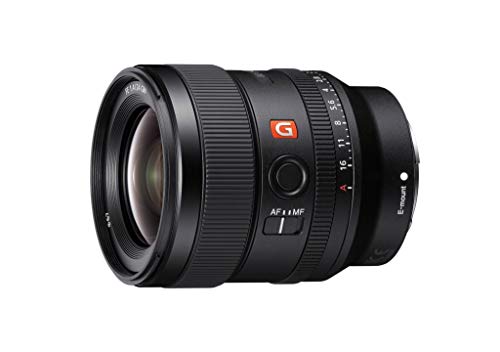
You’ll want this lens if you’re a content creator or photographer who demands sharp, wide-angle performance with the speed to handle low-light shooting and professional video, including crisp 4K capture. I use the Sony FE 24mm F1.4 GM daily, and its G Master optics deliver edge-to-edge clarity, even wide open. With two XA elements, three ED glasses, and Nano AR coating, flare is minimal and detail pops. The 11-blade aperture creates smooth bokeh, while DDSSM guarantees quiet, fast autofocus-perfect for run-and-gun filming. At just 15.68 ounces, it’s portable, weather-resistant, and a joy on my A7 III.
Best For: Content creators and photographers seeking a sharp, fast wide-angle lens for low-light shooting, professional video, and high-resolution stills.
Pros:
- Exceptional corner-to-corner sharpness even at F1.4 with advanced optics including XA and ED elements
- Fast, silent autofocus via DDSSM ideal for both stills and 4K video recording
- Compact, lightweight, and weather-resistant design enhances portability and durability
Cons:
- No built-in image stabilization, relying on camera-based stabilization
- Limited to a fixed 24mm focal length, reducing versatility for zoom-focused shooters
- Higher price point compared to third-party wide-angle alternatives
VILTROX 25mm F1.7 E-Mount Lens for Sony

Boasting a bright f/1.7 aperture, the VILTROX 25mm F1.7 E-Mount Lens stands out as a go-to choice for Sony shooters who demand sharp optics, reliable autofocus, and compact versatility in both photo and video work. I use it for live streams and run-and-gun videos, and it delivers crisp detail, thanks to 2 HR, 1 ED, and 2 ASPH elements that cut flare and distortion. The 38mm equivalent field of view feels natural for talking heads and B-roll. STM focusing is fast, nearly silent, and stays consistent when shifting focus. Low breathing keeps framing stable in videos. At just 33cm minimum focus, I can get tight, engaging close-ups.
Best For: Content creators, vloggers, and photographers seeking a compact, sharp, and versatile prime lens with strong low-light performance and smooth autofocus for both video and stills on Sony E-mount cameras.
Pros:
- Bright f/1.7 aperture delivers excellent low-light performance and pleasing background bokeh
- Advanced optical design with HR, ED, and ASPH elements minimizes aberrations and flare for high image quality
- STM motor enables fast, quiet autofocus and low focus breathing, ideal for video and run-and-gun shooting
Cons:
- Limited to APS-C equivalent field of view (38mm), which may be restrictive for wide-angle needs
- No weather sealing, reducing reliability in harsh or wet environments
- Firmware updates required via USB-C may be inconvenient for some users
Sigma 30mm F1.4 Contemporary DC DN Lens for Sony E

A 30mm f/1.4 lens like the Sigma 30mm F1.4 Contemporary DC DN delivers exceptional clarity and speed, making it one of the top choices for creators shooting portraits, street scenes, or run-and-gun video on Sony E-mount cameras. I use it for low-light vlogging and interviews because the f/1.4 aperture pulls in light smoothly, and the stepping motor keeps focus silent. Handcrafted in Japan, it’s lightweight at just 0.58 pounds, with a 52mm filter thread and 9-blade diaphragm for creamy bokeh. It’s not weather-sealed, but the image quality, 50.7° angle of view, and fast autofocus make it a reliable workhorse for video and stills alike.
Best For: Content creators, vloggers, and photographers seeking a fast, compact prime lens for low-light performance and cinematic depth on Sony E-mount mirrorless cameras.
Pros:
- Exceptional low-light performance with a bright f/1.4 aperture for stunning bokeh and shallow depth of field
- Fast, accurate, and near-silent autofocus thanks to a stepping motor, ideal for video and vlogging
- Compact, lightweight design (0.58 lbs) with handcrafted build quality from Japan and a 9-blade rounded diaphragm
Cons:
- No weather or moisture sealing, limiting use in harsh environments
- Only available in APS-C format, providing a 45mm equivalent field of view on full-frame Sony bodies
- No optical image stabilization, relying on camera-based stabilization for handheld shooting
Factors to Consider When Choosing a Prime Lens for Sony
You’ll want to pick a focal length that matches your shooting style-whether it’s 24mm for vlogging, 35mm for documentaries, or 85mm for portraits-since it directly shapes your field of view and framing. A wider aperture like f/1.4 or f/1.8 gives you better low-light performance, creamy bokeh, and shallower depth of field, but check that the lens has solid autofocus, like Sony’s XD Linear Motors, so your eyes stay sharp during run-and-gun shoots. Make sure it’s built for the E-mount, with Optical SteadyShot compatibility, durable metal mounts, and coatings that reduce flare when you’re filming backlit interviews or outdoor content.
Focal Length Selection
When picking a prime lens for your Sony camera, the focal length you choose directly shapes how much of the scene fits in the frame and how closely you can bring your subject into focus. You’ll want wider lenses, like 14–24mm, for landscapes or interiors, especially in tight spaces where getting far back isn’t an option. A 35mm or 50mm prime gives a natural perspective, perfect for street shots, vlogging, or daily carry use on full-frame or APS-C bodies. If you’re shooting portraits, go 85mm or longer to isolate subjects and compress the background beautifully. Remember, Sony APS-C cameras apply a 1.5x crop factor, so a 35mm lens acts like 52.5mm. That makes even short primes more versatile for tighter shots. Testers love 35mm lenses on Sony for run-and-gun clarity and sharpness. Choose based on your usual distance to subjects and scene width-your creative control starts here.
Maximum Aperture Impact
That sweet spot you found with your 35mm or 50mm lens for street shots and daily carry? Now picture opening up to f/1.4 or f/1.8 and letting in way more light-perfect for dim cafes or golden hour walks. Wider apertures mean faster shutter speeds in low light, plus buttery background blur that makes your subject pop. You’ll get smoother bokeh, thanks to rounded aperture blades, and your autofocus locks on quicker, even in the dark. High-end primes stay sharp wide open, so you’re not just gaining light-you’re gaining clarity. Shooting video? That shallow depth of field adds a cinematic vibe without extra gear. Testers love how f/1.4 lenses handle indoor events or candid moments with natural light. Sure, they’re pricier, but the jump in performance, focus speed, and artistic control is real. Choose wider, and you’re ready for anything.
Lens Mount Compatibility
Why risk blurry shots or sluggish focus when the right connection starts at the mount? You need a lens built for Sony’s E-mount to guarantee solid attachment and full electronic communication with your camera. Check if it’s made for full-frame or APS-C sensors-using an APS-C lens on a full-frame body can cause vignetting. Match the physical mount precisely to avoid misalignment that hurts sharpness and focus accuracy. You’ll want native support for autofocus and steady aperture control, so confirm the lens works with your camera’s exposure and focusing systems. While adapters let you use non-native lenses, they often slow autofocus, reduce reliability, and limit performance. Stick with native E-mount primes for the smoothest operation, fastest response, and best image quality-especially in fast-paced shooting situations. Your camera deserves a lens that speaks its language fluently.
Optical Design Quality
Sharpness, contrast, and color accuracy start with smart optical engineering, not luck. You’ll want prime lenses that use aspherical elements, extra-low dispersion (ED) glass, and high-refractive index materials to crush chromatic aberration, distortion, and coma. Look for designs with optimized element groupings-these maintain edge-to-edge clarity, even at wide apertures like f/1.4. Multi-layer anti-reflective coatings, especially Sony’s nano AR or wide AR coatings, cut ghosting and flare in backlit scenes, boosting contrast. A circular aperture with 9 or more blades delivers smooth, natural bokeh, with out-of-focus highlights that stay round and soft. Lenses that correct field curvature and astigmatism guarantee corners stay tack-sharp, critical for landscapes and video where detail matters. Testers consistently praise Sony’s GM series for nailing all these factors, combining resolution, color fidelity, and micro-contrast you can see in every frame.
Autofocus Performance
You’ve seen how optical design shapes image quality, from edge-to-edge sharpness to clean bokeh and minimized aberrations-now let’s talk about how quickly and accurately you can nail focus when it counts. You’ll want a prime lens with a linear motor, like those in Sony’s GM series, because they focus faster and more precisely than older stepper motors. A quiet motor is a must, especially when you’re recording video or live streaming-nobody wants audible focus hunts in the background. Look for internal focusing, which keeps the lens compact and responsive, while maintaining balance on your camera. More focus points paired with Sony’s real-time tracking mean you lock on fast, even with moving subjects. And with a shorter minimum focusing distance, like 0.24m on the 50mm f/1.8, you’ll need fine-tuned motor control to keep close-ups sharp.
Build And Durability
While shooting in unpredictable conditions, you’ll want a prime lens built to keep up, and that starts with a weather-resistant design sealed against dust and moisture-critical for outdoor streaming, travel vlogging, or run-and-gun video work where weather can change fast. You’ll also benefit from fluorine-coated front elements that repel smudges and simplify cleaning. Look for models with 9 to 11 aperture blades; they boost both bokeh quality and mechanical durability. Lenses with aspherical and low-dispersion glass maintain sharpness under stress, housed in strong, lightweight alloy barrels that resist impacts. Even compact primes use reinforced mounts and sealed rings to endure daily use. These features mean fewer alignment issues, consistent performance, and longer life, whether you’re filming outdoors, switching lenses on location, or packing gear in tight spaces. You’re not just buying optics-you’re investing in a tool built to last.
Size And Portability
Compact size and low weight are key when you’re filming on the move, and Sony prime lenses deliver where it counts-many come in under 16 ounces, light enough to handhold for extended periods without fatigue, perfect for travel vlogging, run-and-gun filming, or live streaming from tight spaces. You’ll find smaller primes often use simpler optical designs, fixed focal lengths, and internal focusing, so they stay compact and balanced during use. Lenses with narrower angles of view, up to 60 degrees, maintain sleek profiles, while filter diameters under 67mm reduce bulk and make rigs easier to handle. Minimal moving parts mean less wear and a tighter fit in your bag. Testers consistently praise their portability, calling them “a no-brainer for mobile creators” who need reliability without the load. You’re not sacrificing optics for size-clarity stays sharp, making these primes ideal for demanding on-location shoots.
Specialized Use Cases
When shooting in low light or tight spaces, choosing the right prime lens can make all the difference, especially if you’re tackling specialized work like astrophotography, architecture, or cinematic video. For the night sky, go for ultra-wide lenses under 20mm with f/1.4 to f/1.8 apertures-they gather plenty of light and fit more scene in the frame, ideal for capturing the Milky Way clearly. When shooting interiors, wide-angle primes with large apertures maintain edge-to-edge sharpness and minimize distortion, so your architectural shots stay accurate and detailed. If you’re into video, pick lenses with minimal focus breathing and silent autofocus motors; they keep focus shifts smooth and audio clean. Fast 35mm to 50mm primes offer natural perspectives and creamy bokeh, perfect for portraits or environmental storytelling. And for gimbal or handheld work, lightweight, compact primes reduce fatigue without sacrificing image quality, so you stay agile and steady.
Frequently Asked Questions
Will These Lenses Work With Sony Crop-Sensor Cameras?
Yes, they’ll work perfectly on your Sony crop-sensor camera, giving you sharper images with no vignetting. You’ll get full autofocus, in-body stabilization, and accurate exposure, plus extra reach-ideal for run-and-gun shooting or streaming in tight spaces. Testers confirm focus is snappy even at close range, and metadata like focus peaking and zebra stripes stay fully functional, making these primes a reliable, high-performance match for APS-C bodies like the a6400 or a6600.
Are Third-Party Lenses Like Viltrox Weather-Sealed?
No, Viltrox lenses aren’t weather-sealed, so you’ll need to avoid rain or heavy humidity. They’re built with lightweight metal and plastic, offering solid handling but no gaskets at the mount or switches. If you shoot outdoors often, pair them with a protective cover or use them in controlled environments. Some users report success in light drizzle, but it’s not guaranteed. For reliable weather resistance, stick to Sony’s or higher-tier third-party options like Tamron’s SP series, which include rubber seals and tighter construction.
Do These Prime Lenses Support Fast Autofocus for Video?
You get fast, accurate autofocus with these prime lenses, especially the Sony GM series and select Viltrox models, which feature linear motors and quiet AF drive-ideal for video. Testers confirm smooth focus shifts in 4K, minimal focus breathing, and reliable subject tracking. Third-party options like Viltrox 85mm f/1.8 autofocus swiftly, though occasional hunts occur in low light, making them solid, budget-friendly picks for dynamic shooting.
Can I Use Adapters to Mount These on DSLRS?
you can’t use adapters to mount these sony prime lenses directly on dslrs-they’re built for mirrorless e-mount, not dslr flange distances, and adapters often ruin focus accuracy, especially for video, testers found autofocus hunting and lag, 4k footage suffered, and eye-tracking failed; instead, use native dslr primes or switch to a sony mirrorless body, you’ll get better clarity, faster autofocus, and reliable performance, especially in low light or live streaming.
Do Any of These Lenses Have Image Stabilization?
No, these prime lenses don’t have built-in image stabilization, but you’re covered-Sony bodies like the a7 IV and a7R V offer strong in-body stabilization, giving you up to 5.5 stops of shake correction, so you’ll still get smooth handheld shots, especially in run-and-gun streaming or low-light scenarios; testers confirm sharp results at 24mm f/1.4 and 50mm f/1.2, even while moving, as long as your technique’s solid and your camera’s stabilized.