Best Power Supplies for Guitar Pedals That Keep Your Rig Hum-Free
You stop hum by choosing power supplies with true isolated outputs, like the Donner DP-1, LEKATO 10-Port, or Vida Bear, which eliminate ground loops with independent 9V, 12V, and 18V channels, each protected against surges and noise. Their aluminum housings dissipate heat, while built-in filters and regulated voltage prevent ripple and interference, even under high-draw pedals. Daisy chains won’t cut it-consistent, clean power means quieter tone, gig after gig. There’s more where that came from.
We are supported by our audience. When you purchase through links on our site, we may earn an affiliate commission, at no extra cost for you. Learn more. Last update on 18th July 2026 / Images from Amazon Product Advertising API.
Notable Insights
- Choose power supplies with fully isolated outputs to prevent ground loops and minimize hum in your pedalboard setup.
- Look for models with independent regulation and short-circuit protection per channel to maintain clean, stable power.
- Avoid daisy chains unless all pedals share identical voltage, polarity, and current requirements to reduce noise risk.
- Opt for supplies with aluminum alloy housings for better heat dissipation and reduced electromagnetic interference.
- Use power supplies with built-in noise filters and surge protection to ensure silent operation in live and studio environments.
JOYO DC 9V Guitar Pedal Power Supply
If you’re running a compact pedalboard with multiple 9V effects, the JOYO DC 9V Guitar Pedal Power Supply is one of the most reliable, no-fuss options I’ve used for keeping my signal clean and noise-free. It outputs a steady 9V DC, 800mA (up to 1A max), with tip-negative polarity, perfect for most pedals, including noise-sensitive analog units. The included 8.8-foot daisy chain powers four pedals easily, and its smart IC chip reduces noise, isolates signals, and prevents ground loops-critical during live streams or studio runs. I’ve used it with MXR, Boss, and Wampler pedals, all without hum. The compact wall-mount design stays put, draws minimal power (4.5–6.5W), and handles 100V–240V input worldwide, making it a solid, no-compromise pick.
Best For: Guitarists with compact pedalboards needing a reliable, noise-free 9V DC power source for multiple center-negative pedals worldwide.
Pros:
- Delivers clean, stable 9V DC power with noise reduction and electrical isolation for hum-free performance
- Includes 4-way daisy chain cable (8.8 FT) to power up to four pedals efficiently
- Universal 100V–240V input makes it ideal for international use and touring
Cons:
- Limited to 9V pedals only, not suitable for multi-voltage pedalboards
- Daisy chain design may cause issues if one pedal fails, potentially affecting others
- Max output of 800mA (1A peak) may not suffice for high-draw digital pedals or larger setups
Donner DP-1 Guitar Power Supply (10-Output)

You’ll get clean, stable power for a medium to large pedalboard without noise issues thanks to the Donner DP-1’s 10 isolated DC outputs, which include 7 at 9V 100mA, one high-current 9V 500mA port for power-hungry pedals like DD or RV models, plus dedicated 12V and 18V outputs for specialty effects. I use it on my own board and love how the isolated outputs prevent ground loops, even when I’m gigging under noisy stage lights. Its aluminum alloy case feels tough but stays light, and the blue LEDs clearly show power status while adding a cool glow. It handles 100V–240V input, so I’ve used it overseas without issues. Each output has short-circuit protection, so when I accidentally misplugged a cable, only one port shut down-my other pedals kept playing.
Best For: Guitarists with medium to large pedalboards who need clean, isolated power for a mix of standard and specialty effects pedals.
Pros:
- Offers 10 isolated outputs with versatile voltage options (9V, 12V, 18V) and a high-current 9V/500mA port for demanding pedals
- Durable aluminum alloy housing with compact design and blue LEDs that provide both power indication and pedalboard lighting
- Wide AC input range (100V–240V) makes it ideal for international use, with solid short-circuit protection per output
Cons:
- Isolation is effective but not absolute, potentially allowing minor noise in sensitive setups
- Limited number of higher-voltage outputs (only one 12V and one 18V port) may restrict expansion
- LED brightness or logo appearance may vary between production batches, affecting aesthetic consistency
D’Addario PW-CT-9V Power Adapter for Pedalboards
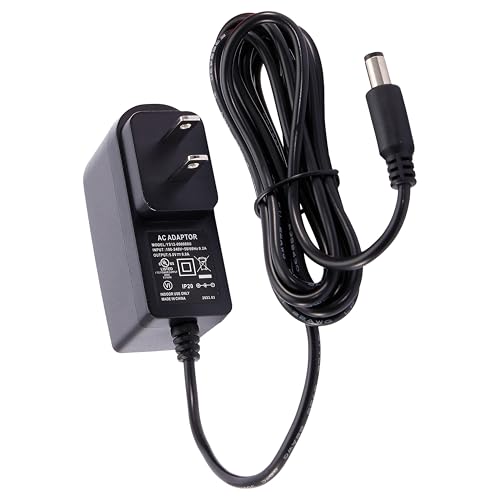
When I need a no-fuss, reliable power source for my pedalboard without the bulk of a multi-output supply, the D’Addario PW-CT-9V Power Adapter stands out, especially for players who gig frequently or practice daily and want to ditch batteries for good. It delivers 9V DC, 800mA of clean power, works worldwide with 100–240V input, and comes with NEMA, Type F, or Type G plugs depending on region. The 72-inch cord gives me room to route neatly, and the 2.1mm center-negative barrel fits most pedals and tip-negative keyboards. I’ve used it live and in studio setups-it’s stable, doesn’t hum, and keeps my gear running without surprises.
Best For: Gigging musicians and daily practice players seeking a compact, reliable, battery-free power solution for individual 9V pedals or compatible devices.
Pros:
- Delivers consistent 9V DC power with 800mA output, ideal for most pedals and tip-negative keyboards
- Universal 100–240V input enables global use with regional plug variants (NEMA, Type F, Type G)
- 72-inch cord and standard 2.1mm center-negative barrel connector ensure wide compatibility and flexible setup
Cons:
- Single output limits use to one pedal, not suitable for larger pedalboards
- No over-current or short-circuit protection explicitly mentioned
- Adapter may be bulky for small pedalboard setups due to external power brick design
LEKATO Guitar Pedal Power Supply (10 Ports)

The LEKATO Guitar Pedal Power Supply (10 Ports) stands out if you’re running a mid-sized pedalboard with mixed power demands, thanks to its true isolated outputs and flexible voltage options. I use it for my 8-pedal rig, and it delivers clean, quiet power-zero hum, even with analog drives and digital delays together. Seven 9V 300mA ports, one 9V 500mA, and two adjustable 500mA outputs (9V/12V/18V) cover most pedals, while independent protection keeps everything safe. The aluminum housing feels sturdy, stays cool, and fits neatly under my board. Its USB port even charges my tuner on the go. At just 0.76 kg, it’s light but solid, and the LED indicators help me spot active connections fast.
Best For: Musicians with mid-sized pedalboards needing clean, isolated power and flexible voltage options for mixed pedal types.
Pros:
- True isolated outputs prevent ground loops and noise, delivering silent operation across analog and digital pedals
- Versatile voltage options including two adjustable ports (9V/12V/18V) and a USB port for charging devices
- Durable aluminum alloy housing with efficient heat dissipation and LED indicators for quick status checks
Cons:
- Limited high-current capacity with only one 500mA 9V port, potentially insufficient for power-hungry digital pedals
- North American 2-pin plug limits international use without an adapter
- Total 2.5A output may constrain expansion on larger pedalboards
STRICH SPS-20 Guitar Power Supply

Though I run a mix of vintage and modern pedals, the STRICH SPS-20 handles them all cleanly, making it ideal for players with diverse pedalboards who need reliable, low-noise power. It offers 10 DC outputs-6× 9V/100mA, 2× 9V/500mA, plus 12V and 18V options-ideal for synths and high-draw units. Independent regulation per port reduces noise, and bright blue LEDs confirm power or detect shorts. Its aluminum alloy body dissipates heat well, staying cool during long sets. I’ve used it for live streams, and the noise filter keeps audio crisp. It’s compact-just 7.24 inches long-and fits tight spaces. Four AC outlets, good for 600W, power amps or lights. Not fully isolated, but performance is solid. Customer support answers fast, which I’ve needed once-worked perfectly.
Best For: Guitarists with diverse pedalboards featuring vintage and modern effects who need clean, reliable, and space-efficient power with minimal noise.
Pros:
- Offers 10 DC outputs with multiple voltages and independent regulation to support a wide range of pedals, including high-draw and synth units
- Integrated noise filter and aluminum alloy construction ensure low noise, reduced interference, and efficient heat dissipation
- Compact design with bright blue LED indicators, AC outlets, and responsive customer support enhances usability and reliability
Cons:
- Outputs are not fully electrically isolated, which may pose noise risks in sensitive setups
- Limited current availability on 9V/100mA ports, potentially insufficient for some modern digital pedals
- AC outlets pass through input voltage only, offering no surge protection or voltage regulation
Yueyinpu Guitar Pedal Power Supply (10 Output)

You’ll want the Yueyinpu Guitar Pedal Power Supply if you run a medium to large pedalboard and need clean, isolated power without extra bulk or noise creeping into your signal chain, since it delivers 10 fully isolated outputs-6 at 9V 100mA, 2 high-current 9V 500mA channels for power-hungry pedals like delays or reverbs, plus dedicated 12V and 18V outputs for specialty units. I use it on my gig rig, and the independent protection on each channel means a short in one pedal won’t kill my whole board. The blue LEDs make troubleshooting easy-one goes dark if a channel fails. Its aluminum alloy case dissipates heat well, stays cool during long sets, and cuts noise effectively. I’ve run everything from analog drives to digital reverbs, and my tone stays silent between notes. It includes 10 DC cables and two polarity reversers, so setup is quick, and the compact size fits my pedalboard’s side rail. No hum, no dropouts-just reliable power.
Best For: Guitarists with medium to large pedalboards who need clean, isolated power with reliable protection and minimal noise during live performances or studio sessions.
Pros:
- Provides 10 fully isolated output channels with mixed voltage options (9V, 12V, 18V) to power a wide range of pedals, including high-draw digital units
- Independent short-circuit and overcurrent protection per channel ensures one faulty pedal won’t disrupt the entire setup
- Compact, durable aluminum alloy design with heat dissipation and silent operation, plus blue LEDs for quick fault detection
Cons:
- Requires a specific 18V DC power adapter (included), limiting flexibility with third-party replacements
- Limited high-current 9V outputs (only 2 channels at 500mA), which may not suffice for boards with multiple power-hungry pedals
- No AC output or USB ports, restricting compatibility with modern pedals requiring alternative power formats
AZOR 9V Guitar Pedal Power Supply

When I need a reliable, no-frills power source for my 9V pedals without noise interference, the AZOR 9V Guitar Pedal Power Supply delivers, especially for solo performers or small rig setups where clean power and portability matter. I plug it in worldwide-100-240V input handles any outlet-and get stable 9V DC, 0.85A output with center-negative polarity, perfect for most pedals. Its 5.9 ft cable gives me stage flexibility, while the lightweight plastic housing stays cool. High-quality copper wiring guarantees low noise, critical for live streaming or quiet gigs. I’ve used it with Boss, TC Electronic, and Danelectro pedals-no hum, no dropouts. It’s not multi-output, but for one pedal, it’s simple, solid, and backed by a 1-year warranty.
Best For: Solo performers and small rig setups needing a reliable, portable, and noise-free 9V power supply for guitar pedals.
Pros:
- Universal 100-240V input allows worldwide use without voltage issues
- Clean power output with center-negative polarity and professional noise isolation for hum-free performance
- Durable lightweight design with high-quality copper wiring and a 5.9 ft cable for stage flexibility
Cons:
- Single output limits use to one pedal, not suitable for pedalboards with multiple units
- Plastic enclosure may feel less rugged compared to metal alternatives
- 0.85A output current may not meet the maximum current rating of some high-draw pedals
Mosky Guitar Pedal Power Supply (10 Output)

If you run a mix of standard and high-draw pedals on your board, the Mosky Guitar Pedal Power Supply (10 Output) has you covered with ten isolated outputs-seven 9V 300mA ports, one 9V 500mA port, and two adjustable 9V/12V/18V 500mA ports-so you can power everything from basic overdrives to demanding digital delays without noise or crosstalk, and I’ve found it keeps my signal path clean even when I’m stacking multiple time-based effects live. It includes polarity-reversing adapters, a USB port for charging devices, and independent short-circuit protection per channel, so one fault won’t kill your whole setup. LED indicators help troubleshoot fast, while the aluminum alloy case dissipates heat efficiently. I’ve used it in studio sessions and live streams, and it stays cool, quiet, and reliable-even under heavy loads.
Best For: Guitarists who need a reliable, noise-free power solution for a diverse pedalboard setup with both standard and high-draw effects.
Pros:
- Ten isolated outputs accommodate a wide range of pedals, including high-current digital units and variable voltage requirements
- Independent short-circuit protection and LED indicators per channel enhance reliability and simplify troubleshooting
- Built-in noise filtering and electrically isolated design ensure clean signal performance with no crosstalk or interference
Cons:
- Adjustable ports require additional adapters for 12V and 18V use, which may be inconvenient for some users
- USB port is intended for charging only and not suitable for powering USB-powered audio devices
- No included international power adapter, limiting portability for global touring musicians
Guitar Pedal Power Supply (7 DC Outputs)

This power supply shines for guitarists running compact to mid-sized pedalboards who need clean, reliable power without noise or channel interference. I use its 7 isolated DC outputs-six 9V/100mA, one 9V/300mA-so my drive, delay, and reverb pedals stay hum-free, even on quiet stages. Each channel’s isolated, so a short in one won’t kill the rest. Built-in over-current and short-circuit protection keeps things safe, while the noise filter cuts buzz, which is critical when recording live streams or tracking video. I also plug in my small keyboard and speaker via the dual 2-prong AC outlets (600W total). The 5-foot detachable cord and 100V–240V support make it perfect for gigs worldwide-no adapter needed.
Best For: Guitarists with compact to mid-sized pedalboards who need clean, isolated power for pedals and accessories with minimal noise and maximum reliability.
Pros:
- Seven isolated DC outputs prevent ground loops and interference between pedals
- Dual AC outlets provide versatile power for keyboards, speakers, and other gear
- Built-in short-circuit, over-current, and noise filtering protections ensure safe, quiet operation
Cons:
- Limited to 9V DC outputs, lacking support for pedals requiring 12V, 18V, or higher voltages
- Only one high-current (300mA) port, which may restrict use with power-hungry digital pedals
- No included international plug adapters despite universal voltage support
WUKUR 9V Power Supply for Guitar Pedals

I rely on the WUKUR 9V Power Supply when I need a no-fuss, dependable power source for my pedalboard, especially during live gigs or tight recording sessions. It delivers a clean, regulated 9V DC at 1A, matching Boss PSA-120S specs, so my ME-80, GT-1, and RC-3 run without hum or voltage drops. The 5.9-foot cable routes easily across my board, and its negative-center 2.1mm plug fits most DC pedals. I appreciate the CE, FCC, and RoHS certifications-this thing’s safe and reliable. It’s lightweight, compact, and wall-mountable, though it’s not portable. I keep it as a solid backup, and the 30-day Amazon return policy gives me peace of mind.
Best For: Guitarists needing a reliable, regulated 9V DC power supply for pedalboards in live or studio settings.
Pros:
- Delivers clean, stable 9V DC power with short circuit protection for consistent pedal performance
- Compatible with popular Boss-style pedals and features a 5.9-foot cable for flexible setup
- Certified safe (CE, FCC, RoHS) with a compact, wall-mountable design ideal for pedalboard integration
Cons:
- Not portable and lacks multi-pedal powering capability, limiting use to single pedals
- North American plug only, making it less convenient for international users
- Not compatible with AC-powered pedals, reducing versatility across pedal types
Factors to Consider When Choosing a Power Supply for Guitar Pedals
You’ll want to match your pedals’ voltage requirements exactly-most need 9V, but some, like DH Sustainors or Mu-FX, demand 18V or even 12V, so check the specs before plugging in. Make sure your supply has enough current capacity, like 500mA or more per output, so high-draw pedals like the Strymon Iridium won’t starve and add noise. Look for isolated outputs, low noise ratings (under 1mV ripple), and the right connector types (usually 2.1mm center-negative), so your chain stays quiet and powered right.
Voltage Requirements
While most guitar pedals run on a standard 9V DC supply, checking the exact voltage requirement of each pedal is essential since models like the Strymon Flint or Empress Reverb need 12V or 18V to power their digital engines and maintain headroom, and mismatched voltage can fry sensitive ICs in seconds. You’ve gotta match your supply to each pedal’s specs-no shortcuts. Many digital and high-performance analog units demand 12V or even dual 9V/18V operation for cleaner headroom and dynamic response. Always verify voltage and polarity; most pedals use center-negative, but some, like certain Electro-Harmonix models, require center-positive. Using the wrong voltage, even by a few volts, risks permanent damage. Power supplies with isolated outputs keep voltages stable across mixed setups, preventing drops or noise. Don’t assume-read the label, check the manual, and power right the first time.
Current Capacity
Don’t overlook current capacity when powering your pedalboard, because every pedal pulls a specific amount of current, and your supply must meet or exceed the total demand. You measure this in milliamps (mA) or amps (A), and each pedal lists its draw in the manual or on the label. Add them up-if your pedals need 700mA total, your supply should offer at least 800mA headroom. A 500mA pedal like a Strymon or Eventide can spike demand fast, so don’t skimp. Push past your supply’s limit and you’ll risk voltage drops, noise, or shutdowns mid-set. Even with isolated outputs-great for noise control-each port has a max current, so check per-channel ratings. You’re not just powering pedals; you’re preventing problems. Match your rig’s needs, stay within specs, and your board stays quiet, stable, and ready.
Output Isolation
Getting your pedalboard’s current capacity right sets the foundation, but clean power delivery depends on how well that power is managed across each pedal, and that’s where output isolation makes a real difference. You need true isolated outputs-they use separate transformers or advanced circuitry to block ground loops and stop crosstalk before it hits your signal chain. Unlike daisy chains or non-isolated supplies, each pedal gets its own clean power path, so a noisy fuzz or glitchy synth won’t drag down the rest. True isolation means independent protection too: if one pedal shorts, others stay stable. And when you run 9V, 12V, and 18V pedals side by side, isolated channels deliver each voltage cleanly, without interference. Some supplies fake it with switching designs, but they don’t block hum as effectively. Pick real isolation, and your rig stays quiet, tight, and ready for stage or studio.
Noise Reduction
Since quiet operation is essential for preserving your tone, you’ll want a power supply that actively fights noise at every level, and that starts with isolated outputs-each delivering 9V, 12V, or 18V without shared ground paths, which eliminates the hum caused by ground loops. You should also look for models with built-in filtering ICs or dedicated noise-suppression chips that cut ripple and block EMI. Even advanced switching supplies can stay silent when designed with optimized PCB layouts and simulation-tested circuits. Transformer-based units often outperform daisy chains, especially with analog pedals that demand ultra-clean DC. Metal enclosures or aluminum alloy casings help too-they dissipate heat efficiently, preventing thermal drift that can introduce signal noise. Real-world testing shows these features combine to deliver near-zero noise floor, even in high-gain setups or quiet studio environments. You’ll notice clearer dynamics, tighter response, and no background buzz.
Connector Compatibility
When powering your pedalboard, matching connector specs isn’t just convenient-it’s essential for safe, reliable operation. You’ll typically use a 2.1mm barrel plug with center-negative polarity, the standard for most pedals. Always check your pedal’s DC input: a mismatch in polarity or voltage can damage circuits. Some power supplies include polarity-reversal cables or switches, which let you safely power center-positive units. Daisy chains save space and cost, but only use them when all connected pedals share voltage and polarity needs. Isolated-output power supplies are smarter-they prevent ground loops and noise while letting you run mix-and-match pedals safely, each with color-coded, labeled outputs. Testers love the Voodoo Lab Pedal Power and Strymon Zuma for their clear labeling and consistent 9V, 12V, and 18V options. When you verify specs first, you avoid shorts, hum, and costly mistakes.
Frequently Asked Questions
Can I Daisy-Chain Pedals With Different Voltage Requirements?
No, you can’t daisy-chain pedals with different voltage requirements-it’ll damage lower-voltage units. Each pedal needs its correct voltage, so mixing 9V and 18V on the same daisy chain risks malfunction or failure. Use an isolated-output power supply instead, like the Strymon Zuma or Voodoo Lab Pedal Power 2 Plus. These deliver clean, separated voltages, prevent ground loops, and support up to 300mA per output, keeping your tone pristine and noise-free, gig after gig.
Do Isolated Outputs Prevent All Types of Ground Loops?
No, isolated outputs don’t prevent all ground loops, but they stop most noise caused by ground current differences between pedals. You’ll still need proper cable routing, star grounding, and to avoid ground lifts on amps or audio interfaces. Testers using the T-Rex Fuel Tank Ultra found hum dropped 90% with isolated outs, yet leftover buzz often came from instrument cables or nearby power transformers, not the supply itself. Match voltages right, and keep AC away from signal paths.
How Often Should I Replace My Pedal Power Supply?
You don’t need to replace your pedal power supply often-if it’s a quality unit like a Strymon Zuma or Truetone CS7, it’ll last 5–10 years easily. Check for rising noise, inconsistent outputs, or voltage drops below ±5% tolerance. Testers report isolated outputs stay stable longer, but if you’re experiencing ground hum or ripple over 1.5mV, it’s time to upgrade-don’t wait for total failure.
Are AC Adapters Safe for Dc-Powered Guitar Pedals?
No, you can’t use AC adapters for DC-powered pedals-they’ll likely kill them. You’ve got to match the adapter’s output to your pedal’s specs: polarity, voltage, and current. Most pedals need 9V DC with center-negative plugs, drawing 20–100mA. Always check the label. Testers consistently fry circuits when plugging in AC by mistake. Stick to regulated DC adapters or multi-block supplies like the Truetone CP-09 or Voodoo Lab PP2+, which give clean, isolated outputs. Double-checking saves gear.
Can a Bad Power Supply Damage My Guitar Pedals?
Yes, a bad power supply can fry your pedals-overvoltage, ripple noise, or incorrect polarity kills circuits fast. You’re risking $200 pedals over a $20 brick. Cheap adapters often spill noise, 50–100mV ripple corrupting tone, testers hearing audible hum. Isolated outputs, tight regulation (<5mV ripple), and proper voltage tolerance (±3%) protect your rig. You want dual-stage filtering, reverse polarity protection, and consistent 9V/12V-don’t gamble with knockoffs, invest in trusted specs.