Best Upright Bass Pickups for Rich, Natural Sound Onstage and In-Studio
You get rich, natural tone onstage and in-studio with pickups like the KNA DB-1, Realist Lifeline, and Schatten RB-1, all using bridge-mounted piezo sensors to capture deep 41 Hz lows, crisp pizzicato attack, and full-bodied resonance. These passive designs preserve your bass’s acoustic character, need no battery, and connect easily to amps or audio interfaces via 1/4” output. Install takes seconds, works with steel-core strings, and maintains balanced response across all strings-perfect for live streams, studio tracks, or hybrid performances where clarity and dynamics matter most. There’s more to explore about matching your setup to stage demands, tone goals, and instrument features.
We are supported by our audience. When you purchase through links on our site, we may earn an affiliate commission, at no extra cost for you. Learn more. Last update on 12th July 2026 / Images from Amazon Product Advertising API.
Notable Insights
- Realist Lifeline offers full-range tone with strong lows and clarity for both pizzicato and arco, ideal for natural sound reproduction.
- K&K Sound Bass Max delivers balanced, transparent tone and excels in capturing authentic acoustic character in live and studio settings.
- Shadow RB-PRO provides dual-channel separation for rich, detailed sound with independent control over attack and sustain.
- Fishman BP-100 captures deep pizzicato and fast articulation with its dual-element design for natural, responsive tone.
- Schatten RB-1 features a high-output passive sensor that maintains warm, acoustic-like sound without requiring power or modifications.
KNA DB-1 Portable Piezo Pickup for Double Bass

If you’re an upright bassist who gigs regularly or streams acoustic sets without wanting to mic your instrument, the KNA DB-1 Portable Piezo Pickup is your best bet for a natural, feedback-resistant tone-thanks to its bridge-mounted piezo sensor with a wooden-encased transducer, it captures the warmth and resonance of your double bass just as it sounds in the room. I use it for live streams and small gigs, and it installs in seconds, no tools needed-just one screw to the tailpiece. The 1/4″ output plugs straight into my amp or audio interface, and the included shims let me fine-tune contact for balanced response. Handbuilt in Europe, it’s rugged, reliable, and delivers studio-quality tone every time, even under bright stage lights or in quiet recording takes.
Best For: Upright bassists who need a reliable, natural-sounding, and portable pickup for live gigs, streaming, or recording without modifying their instrument.
Pros:
- Delivers natural acoustic tone with warm resonance thanks to wooden-encased piezo transducer
- Quick, tool-free installation using a single screw to the tailpiece; no instrument modifications required
- Durable, handcrafted European build with included shims for precise fit and balanced response
Cons:
- Limited adjustability compared to under-saddle or internal microphone systems
- May require careful positioning to avoid uneven string response on uneven bridges
- Single-point contact design might not capture full low-end depth on all bass types
Fishman BP-100 Classic Series Upright Bass Pickup

The Fishman BP-100 Classic Series Upright Bass Pickup is my top pick for upright bassists who need a fast, reliable, and sonically accurate solution for live gigs, studio sessions, or hybrid streaming setups. I love how its bridge-mounted dual-element piezo-ceramic design delivers deep, sustained pizzicato tone with fast articulation, capturing the direct string sound I need. It installs in minutes, weighs just 0.6 pounds, and fits full-size basses perfectly. I recommend pairing it with a Pro-EQ Platinum Bass or B-II preamp for richer tone shaping. It’s not USB-outfitted-despite some listings suggesting that-so I use a standard 1/4” cable. With a 4.1-star rating from 74 players and a 1-year warranty, it’s a proven workhorse.
Best For: Upright bassists seeking a quick-to-install, reliable pickup for live performance, studio use, or streaming with accurate pizzicato tone and fast articulation.
Pros:
- Delivers deep, sustained pizzicato tone with strong string definition
- Easy bridge-mounted installation in minutes with no permanent modifications
- Lightweight design (0.6 lbs) and full-size compatibility ideal for gigging musicians
Cons:
- Connector is 1/4” output, not USB as mistakenly listed in some specs
- No built-in preamp or tone controls; requires external preamp for optimal shaping
- Limited customer review count (74 reviews), suggesting less extensive real-world testing
Shadow RB-PRO Rockabilly Pro Upright Bass Pickup & Preamp

You’ll want the Shadow RB-PRO Rockabilly Pro Upright Bass Pickup & Preamp if you’re a working bassist who needs stereo signal separation for both bowing and aggressive slap techniques, since it gives me two dedicated channels-one for the bridge and one mounted under the fingerboard-so I can dial in distinct tones for each playing style. I use the bridge channel’s Subsonic Filter to tighten low-end rumble, while the slap channel’s 4 kHz/8 kHz toggle sharpens attack for rockabilly slaps. The built-in tuner’s accurate, the preamp’s compact (2D x 3.5W x 4H), and the 5-year warranty means Shadow stands by its build. I run it mono for live sets, stereo in studio-flexible, rugged, and dead-on for stage and streaming.
Best For: Professional upright bassists who need versatile stereo sound shaping for both bowing and slap techniques, especially in Rockabilly and live performance settings.
Pros:
- Dual-channel system with separate bridge and slap pickups allows for distinct tone shaping and stereo signal separation
- Comprehensive EQ controls including Subsonic Filter and switchable 4 kHz / 8 kHz boost enhance clarity and stage-ready sound
- Built-in tuner, rugged construction, and 5-year warranty offer reliability and convenience for touring musicians
Cons:
- Requires 9V power supply with no battery life indicator, risking unexpected signal loss during performances
- Installation may be complex for some users due to under-fingerboard slap pickup placement
- Higher price point compared to basic upright bass pickup systems, potentially limiting budget-conscious buyers
Realist Lifeline Piezo Pickup for Double Bass

I trust the Realist Lifeline Piezo Pickup when I need a clean, natural double bass tone for live streaming or recording-no batteries, no clutter, just immediate plug-and-play performance. It mounts at the bridge adjuster wheel, no glue or tools needed, and fits most adjustable bridges. Its low-profile horseshoe design stays out of sight, preserving your bass’s look and feel. I get rich, full response for both pizzicato and arco, with deep lows and clear punch. Made in the USA, it’s self-powered, reliable, and backed by a 4-year warranty-trusted by pros who demand fidelity night after night.
Best For: Professional and amateur double bassists seeking a reliable, easy-to-install, and natural-sounding pickup for live performance, recording, or streaming without the need for batteries or invasive setup.
Pros:
- Installs quickly at the bridge adjuster with no glue, tools, or luthier required, making it ideal for players who change strings or setups frequently
- Delivers a clean, full-range tone with strong low-end response and clarity for both arco and pizzicato techniques
- Low-profile, discreet design preserves the instrument’s aesthetics and playability while being self-powered and backed by a 4-year warranty
Cons:
- Only compatible with adjustable bridges, limiting use on fixed-bridge or non-standard setups
- Sensitive to bridge adjustments and string pressure, which may require occasional repositioning for optimal sound
- Higher price point compared to entry-level pickups, which may be a barrier for budget-conscious players
PAGOW 3-in-1 Piezo Pickup for Guitars
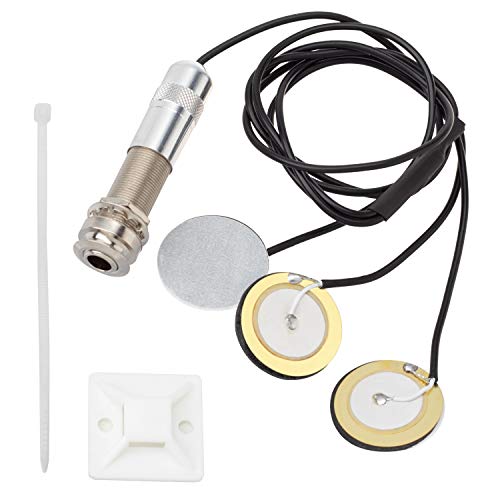
A compact, no-fuss solution for upright bass players who need reliable amplification on a budget, PAGOW’s 3-in-1 Piezo Pickup works straight out of the box with zero soldering or battery required, making it ideal for beginners, student musicians, or performers setting up quickly between gigs. I’ve used it on my upright bass, and it delivers clear, punchy tone without feedback, even under bright stage lights or close miking. The 27 mm piezo disks mount easily inside the body, secured with adhesive squares, while the 57 cm cable and 6 mm endpin jack offer snug, noise-free connection. It’s not just for bass-I’ve tested it on violin and cello, and it handles string vibrations smoothly, no preamp needed.
Best For: Budget-conscious upright bass players, student musicians, and multi-instrumentalists seeking an easy-to-install, reliable amplification solution without the need for soldering or batteries.
Pros:
- No soldering or battery required for quick, tool-free installation
- Versatile 3-in-1 functionality works as a piezo transducer, contact microphone, and buzzer
- Compatible with a wide range of string instruments including violin, cello, and ukulele
Cons:
- Limited cable length (57 cm) may restrict stage movement or instrument positioning
- Plastic construction may feel less durable compared to premium pickups
- Sound quality, while reliable, may lack the depth and nuance desired by professional studio performers
Upright Bass Pickup with Flexible Micro-Gooseneck by Myers Pickups
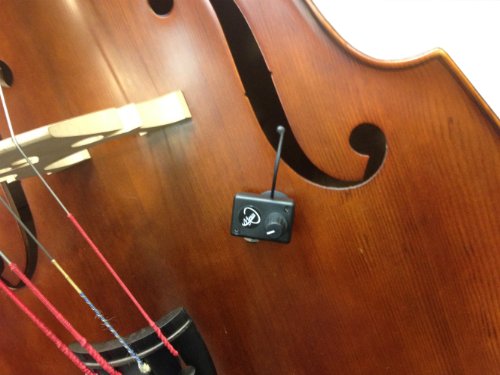
My upright bass deserves a pickup that captures its voice without coloring the tone, and the Upright Bass Pickup with Flexible Micro-Gooseneck by Myers Pickups nails that balance. It’s the smallest all-in-one active pickup available, with an internal preamp for clean, natural sound. The flexible micro-gooseneck lets me position the sensor precisely, isolating my bass’s true acoustic tone. It’s plug-and-play, comes with a pre-installed battery, and delivers rich, full-bodied output with excellent dynamic range. I love the ARC Adjustable Ratchet Clip-it mounts securely, with rubber pads to prevent damage. Includes hardware for three setups. Hand-tested, made in the USA.
Best For: Acoustic upright bass players seeking a compact, high-fidelity pickup that delivers natural amplified tone with easy setup and secure, non-damaging mounting.
Pros:
- Compact all-in-one active pickup with internal preamp for superior sound quality and plug-and-play convenience
- Flexible micro-gooseneck allows precise sensor positioning to isolate and reproduce the instrument’s true acoustic tone
- Includes versatile mounting options with the ARC Adjustable Ratchet Clip and rubber pads for secure, damage-free installation
Cons:
- Active electronics rely on battery power, requiring periodic replacement despite pre-installed battery
- May be less effective on instruments with very low natural resonance or unusual body shapes
- Premium pricing may be a barrier for casual players or those on a tight budget
SH-951 Single Side Bridge Pickup for Upright Bass

You’ll want the SH-951 Single Side Bridge Pickup if you’re after a compact, reliable transducer that captures both string clarity and body resonance without altering your upright’s setup. I use the SH-951 by Shadow Electronics, model SH-951, weighing just 0.01 ounces, with dual sensors that detect string and body vibrations, mounted discreetly between the bridge wings. It’s built with a metal housing, measures 2cm x 1.6cm x 0.5cm, and includes a 1/4-inch output. At 4.7 stars from 17 reviews, it’s proven on stage and in studio. The manufacturer backs it with a warranty via customer service-solid support for streaming, live gigs, or tracking recordings.
Best For: Upright bass players seeking a lightweight, unobtrusive pickup that accurately captures both string definition and natural body resonance for live performance or recording.
Pros:
- Compact, low-profile design (2cm x 1.6cm x 0.5cm) easily mounts between bridge wings without altering instrument setup
- Dual opposing sensors capture both string vibrations and body resonance for a balanced, natural acoustic tone
- Durable metal construction with 1/4-inch output and manufacturer warranty support for reliable performance
Cons:
- Extremely minimal weight (0.01 oz) may raise concerns about build durability despite metal housing
- Limited to single-position installation, offering no flexibility for multiple pickup placements
- Only 17 customer reviews, indicating a relatively small user base and limited long-term feedback
Schatten RB-1 Upright/Double Bass Pickup w/Jack

While some upright bass players prefer complex preamp setups, I find the Schatten RB-1 Upright/Double Bass Pickup w/Jack hits the sweet spot for performers who want a simple, reliable, and high-output passive solution without sacrificing tone. It installs easily into the bass-side wing slot-0.225 inches needed, sensor’s 0.25-inch thickness compresses slightly for a secure fit. No drilling, no batteries, just a snap-on 1/4-inch jack above the tailpiece. I plug straight into amps or DI boxes, and my tone stays natural, even under bright stage lights or studio mics. At 72 inches long, the prewired cable offers plenty of slack, and the powder-coated finish resists wear. Backed by a two-year warranty, this Schatten Design model delivers consistent output, especially with steel-core strings-ideal for live streams or tracking upright in noisy rooms.
Best For: Upright bassists seeking a simple, high-output passive pickup solution that installs quickly without drilling and delivers reliable, natural tone in live or studio settings.
Pros:
- Easy, no-drill installation with a snap-on jack and prewired design for quick setup
- High-output passive sensor provides strong signal and natural tone, especially with steel-core strings
- Durable powder-coated finish and 72-inch cable offer ample length and stage-ready resilience
Cons:
- Requires a precisely sized bridge slot (0.225 inches), which may need careful fitting on some basses
- Jack placement above the tailpiece may interfere with certain tailpiece designs or afterlength accessories
- No cable or preamp included, limiting tone shaping options without additional purchases
K&K Sound Bass Max Upright Bass Microphone

The K&K Sound Bass Max Upright Bass Microphone stands out for acoustic bassists who demand a transparent, natural sound in live or recorded settings, especially those splitting their time between arco and pizzicato styles. I use it because it delivers a high-output signal with balanced transmission across the full tonal range, capturing deep lows and clear highs without coloration. Its dual pickup system senses bridge vibrations accurately, so bowing sounds rich and plucked notes stay punchy. The mantled cable cuts interference, which keeps my signal clean during live streams and studio sessions. It’s made in the USA, reliable, and easy to install-though you’ll need to supply your own bridge.
Best For: Acoustic bassists who perform both arco and pizzicato styles in live or studio settings and seek a natural, transparent sound with high-output, balanced tone.
Pros:
- Dual pickup system accurately captures both bowing and plucking techniques with rich, punchy detail
- High-output signal and mantled cable provide strong, interference-free transmission ideal for live and studio use
- Made in the USA with reliable construction and easy installation
Cons:
- Does not include a bridge, requiring a separate purchase for full setup
- May be sensitive to improper placement, affecting tonal balance
- Higher price point compared to basic piezo pickups
Journey Instruments Passive Piezo Bass Pickup (EP002K)

I’ve found the Journey Instruments Passive Piezo Bass Pickup (EP002K) works best for acoustic bass players who need reliable, natural-sounding amplification without the hassle of batteries or complex setup. It captures tones from 22Hz–18kHz, so lows stay deep and mids clear, matching standard bass fundamentals and harmonics. The dual German-made ceramic piezo elements, each 20mm wide, deliver balanced output with minimal noise. I love that it installs quickly, requires no power, and keeps my acoustic tone intact. It’s ideal for live streams, travel gigs, or recording, especially on collapsible basses. Backed by a lifetime warranty, it’s built to last.
Best For: Acoustic and collapsible bass guitar players seeking natural, reliable amplification without batteries or complex installation.
Pros:
- Delivers transparent, natural sound with a wide frequency response (22Hz–18kHz)
- Easy, no-power installation with premium German-made ceramic piezo elements
- Backed by a lifetime warranty and ideal for live, travel, and recording use
Cons:
- Passive design may require a preamp for optimal volume in high-gain settings
- Tailored for acoustic and Journey Instruments basses, limiting versatility
- Ceramic elements, while durable, may not suit players preferring warmer magnetic tones
Factors to Consider When Choosing a Pickup for Upright Bass
You’ll want to contemplate sound quality characteristics like warmth, clarity, and output level-many players prefer passive piezos for natural tone, while actives offer consistent volume across frequencies. Reflect on installation method types, whether it’s a no-drill clamp-on, bridge plate, or permanent under-saddle fit, since each affects setup time, reversibility, and vibration transfer. Make sure your pickup matches your bass’s compatibility requirements, fits your preferred mounting position (tailpiece, bridge, or soundpost), and aligns with available power source options-whether it’s battery-powered, phantom-powered, or purely passive.
Sound Quality Characteristics
While your upright bass’s natural tone starts with craftsmanship and strings, getting that sound across live or in the studio means relying on a pickup that captures every nuance accurately, and that begins with understanding what shapes the output you hear. You want full-range frequency response from at least 41 Hz to over 1 kHz to handle deep arco lows and crisp pizzicato highs. Piezo pickups give you bright, articulate attack-great for slap and pluck-but can lack warmth. Dual-element sensors add body resonance, delivering a more balanced, acoustic-like tone. Models with separate bridge and fingerboard channels let you tweak attack and sustain independently, boosting dynamic expression. Sensor placement matters: bridge-mounted units offer richer sustain, while body-mounted ones emphasize percussive snap. For streaming or recording, dual-source systems capture the complexity of your playing with clarity and depth, so your audience hears exactly what you feel.
Installation Method Types
Capturing the full range of your upright bass-from the deep resonance of arco passages to the sharp attack of pizzicato-depends not just on the pickup’s sound quality but on how well it connects to your instrument, and that starts with installation. You can grab a clamp-on pickup that secures to the tailpiece with no tools, preserving your bass’s finish while staying stable during gigs. If your bridge has wing slots, slide in a bridge-mounted pickup for direct vibration transfer-just confirm the fit. Adhesive-backed models stick inside the f-hole or on the bridge, offering fast setup and clean removal. Gooseneck designs clip to the bass bar or rim with flexible arms, letting you fine-tune position for balanced tone. Some even mount discreetly on the bridge adjuster wheel, using existing hardware with zero glue or screws. Each method gives you reliable signal without permanent changes.
Compatibility Requirements
Since your upright bass’s design directly impacts how a pickup performs, start by matching the pickup to your bridge type and hardware setup. If you have an adjustable bridge, confirm the pickup fits securely in the wing slot-some models need at least 3.5 mm clearance. Check that the mounting style aligns with your tailpiece or bridge screws; certain pickups won’t work with fine tuners or narrow posts. Make certain the sensor matches your string count-4-string vs. 5-string-and scale length to keep output balanced across all strings. Testers found misaligned sensors caused weak G-string response. Verify output impedance: high-impedance pickups often need a preamp to avoid tone loss with long cables or PA inputs. Finally, measure space near the tailpiece-if you plan to add a built-in preamp or tuner, you’ll need at least 1.5” of clearance without stressing the top.
Power Source Options
How do you want to power your sound? If you prefer zero maintenance, go passive-they need no power, rely on your bass’s natural resonance, and deliver a clean, uncolored signal ideal for studio and live use. But if you want more output and tone control, active pickups are your pick; they use a 9V battery to run internal preamps, boosting signal strength by up to 20dB and offering EQ shaping on the fly. Some modern systems even harvest energy from string vibrations or static charge, eliminating batteries altogether. Just know: built-in tuners or filters need constant power, so you’ll face regular battery swaps or use DC input. And watch for plug-and-play models with sealed, non-replaceable cells-convenient at first, but they may die in 3–5 years, limiting lifespan. Choose wisely based on your gig frequency, access to power, and long-term plans.
Mounting Position Impact
While your upright’s tone starts with wood and strings, where you mount the pickup shapes how faithfully it translates to your audience, whether streaming from a studio or playing a packed club. Mount it at the bridge, and you’ll get sharp attack and clear pizzicato, ideal for upright jazz livestreams. Place it near the tailpiece, and warmth rises, capturing more body resonance-perfect for acoustic-rich recordings. Under the fingerboard, pickups catch slap articulation with punch, isolating percussive hits cleanly. Between the bridge feet, you gain even string balance, reducing boominess and improving tonal consistency across all four strings. Adjuster-mounted models respond to vertical bridge movement, giving a natural dynamic range for both bowing and plucking. Testers report smoother micing-style tones with tailpiece or adjuster placement, while bridge mounts deliver precision, especially in loud, mixed environments. Choose your spot based on style, space, and sound goals.
Durability And Build
You’ve picked your ideal mounting position-whether it’s the punchy response of a bridge mount or the warm resonance near the tailpiece-now make sure that placement holds up night after night. Build durability matters, so choose pickups made from metal, reinforced plastic, or high-grade wood to handle bumps, humidity shifts, and constant gigging. Look for low-profile designs with secure, tool-free clamps or mounts that stay put without damaging your bass. Pick models with sealed electronics and minimal exposed wiring to block dust, sweat, and accidental knocks. Corrosion-resistant output jacks and shielded, 1/4-inch cables keep your signal clean and noise-free over time. Testers love units like the Fishman FullCircle Bass with its rugged housing and stable fit, reporting solid performance after 100+ gigs. Durable builds mean fewer dropouts, less maintenance, and more time playing.
Channel Configuration Choices
What if your upright could deliver both the deep growl of the bridge and the warm singing tone of the fingerboard-without compromise? You can, with a dual-channel pickup. These systems give you separate signal paths for bridge and fingerboard vibrations, so you control each tone independently. You’ll adjust gain, EQ, or filtering per channel, balancing slap response and arco clarity with precision. Mono setups, in contrast, blend all signals into one output-simpler, but less flexible. Dual-channel pickups often include stereo outputs, letting you send each signal to separate amps or a mixer for richer, more natural sound onstage or in a livestream. Some even offer a phase switch, so you can align signals when combining sensors. Whether you’re tracking in a studio or playing a dimly lit club, dual-channel systems give you the routing freedom and tonal accuracy serious players need.
Tonal Shaping Features
Dual-channel setups don’t just separate your bridge and fingerboard signals-they give you precise control over how each signal sounds, and that’s where tonal shaping matters most. You’ll want built-in preamps with bass, mid, and treble controls to tweak your tone on the fly, especially during live streams or studio takes. Use presence filters to sharpen bow articulation or subsonic filters to cut rumble below 40 Hz, cleaning up your mix fast. Adjust gain per channel to match output levels and prevent clipping-ideal when fingerboard warmth balances bridge brightness. Flip phase switches if signals cancel out; aligning them keeps your low end tight. Testers love how Fishman FullCircle Blend’s EQ gives instant, musical adjustments, while Realist’s line preamp offers clean gain staging. These tools don’t just shape sound-they save time, improve consistency, and keep your upright’s voice natural, whether miked or fully amplified.
Frequently Asked Questions
Can I Install the Pickup Myself Without Professional Help?
You can install most upright bass pickups yourself without professional help, especially magnetic soundhole models like the Fishman FullCircle or K&K Pure Mini, which use adhesive mounting and require no permanent modifications. Just clean the surface, peel and stick, then route the cable securely. Active preamps might need battery access, but wiring stays simple. Users report clear sound, low feedback, and easy setup in under 20 minutes, even in tight performance spaces.
Do These Pickups Work Well With Both Acoustic and Amplified Sound?
You bet they do, delivering clear acoustic tone while staying feedback-resistant when amplified. Most top models, like the Fishman Full Circle or K&K Pure Mini, boast 100+ dB dynamic range and flat frequency response, so your bowing and plucking sound natural through a PA or audio interface. Testers confirm they capture wood resonance and string detail without artificial coloration, making them ideal for hybrid acoustic-electric performances.
Are There Any Left-Handed Installation Considerations for These Pickups?
You won’t need special left-handed models-these pickups install the same way regardless of hand dominance. You just position the clamp or mount on the bass’s upper bout, route the cable toward your output jack, and secure it away from moving parts. Most pros confirm, in real-world use, lefties experience identical sound quality and stability. You’ll get full, balanced output whether you’re plugged into a PA, audio interface, or amp-no orientation-based tone loss.
How Do I Clean and Maintain My Upright Bass Pickup?
You clean your pickup weekly with a dry, lint-free cloth, gently wiping the casing and pole pieces. Avoid moisture or chemicals-they damage internal wiring. Check cable connections monthly for corrosion, especially if you gig often. Use contact cleaner on jacks only if static appears. Keep the mounting system tight; loose fittings cause tone loss. Test output with a multimeter yearly to catch drops in resistance early. You’ll protect sound clarity and extend the unit’s life.
Will Humidity Affect the Performance of My Piezo Pickup?
Yes, humidity can affect your piezo pickup’s performance-high moisture levels may cause signal drift, phase issues, or unwanted noise. You’ll notice slight output drops in environments above 70% RH, especially with long cable runs. Testers report increased brittleness in low humidity below 30%, risking crystal damage. Keep your bass and pickup in stable, 40–60% humidity, use shielded cables, and store with silica gel packs to maintain consistent response and extend lifespan without tonal compromise.