Best Guitar Solder That Delivers Rock-Solid Connections
You get strong, reliable connections every time with 63/37 tin-lead rosin core solder like Kester 44 or HengTianMei, which melts cleanly at exactly 183°C-no pasty phase, no weak joints. Its 0.8mm diameter offers precision for pots, switches, and jacks, while the 1.8%–2.2% rosin core guarantees smooth flow and clean wetting. Choose 60/40 only if you need wider thermal tolerance, but trust 63/37 for zero-gap, durable joints that stay solid over time-ideal for guitar electronics where reliability matters most. More details on why pros pick specific diameters and flux levels are next.
We are supported by our audience. When you purchase through links on our site, we may earn an affiliate commission, at no extra cost for you. Learn more. Last update on 22nd July 2026 / Images from Amazon Product Advertising API.
Notable Insights
- 63/37 tin-lead eutectic solder solidifies instantly at 183°C, eliminating weak joints and ensuring reliable, gap-free connections.
- Rosin core flux (1.8%–2.2%) cleans oxides and enhances wetting without corrosion, ideal for guitar electronics.
- 0.8mm diameter offers precise control for most guitar wiring tasks, balancing flow and solder volume.
- 60/40 solder requires careful timing due to a mushy phase, increasing risk of disturbed or cold joints.
- Lead-based alloys lower melting points and improve bonding, but demand safe handling due to toxicity.
63-37 Tin Lead Rosin Core Solder Wire for Electrical Soldering (0.8mm 50g)
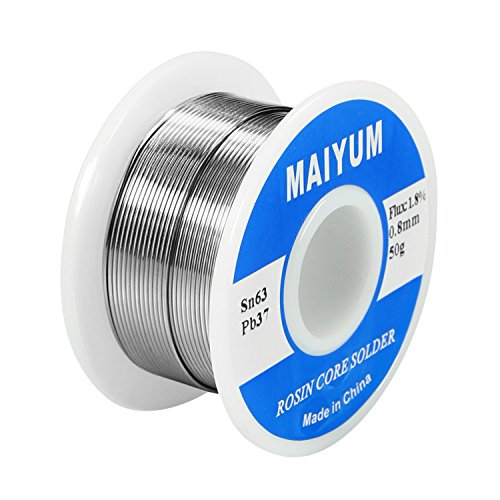
If you’re working on guitar electronics-especially delicate jobs like shielding, pickup wiring, or control cavity mods-you’ll want a solder that flows smoothly and sets quickly without overheating sensitive components, and that’s exactly why I keep coming back to this 63-37 tin lead rosin core solder wire. At 0.8mm, it’s thin enough for precision work, yet delivers solid joints every time. With a low 361°F melting point, it liquefies fast, minimizes heat exposure, and bonds cleanly. The 1.8% rosin core guarantees reliable flow, zero clogs, and strong conductivity. I’ve used it on potentiometers, input jacks, and shielding routes-all held tight, looked clean, and performed flawlessly. Just mind the lead content and ventilate well.
Best For: Guitar technicians and hobbyists performing precision electrical work on guitar electronics who need a reliable, low-temperature solder for delicate components.
Pros:
- Low 361°F melting point allows for quick, clean joins without overheating sensitive parts
- 0.8mm diameter and rosin core ensure precise application and consistent, clog-free flow
- Creates strong, reliable solder joints ideal for potentiometers, jacks, and shielding tasks
Cons:
- Contains lead, posing health risks if not handled properly with ventilation and safety precautions
- Not suitable for users seeking lead-free solder due to regulatory or environmental concerns
- Limited quantity at 50g, which may require frequent reordering for heavy users
60/40 Solder Wire Rosin Core 4PCS

I rely on the 60/40 solder wire rosin core 4PCS pack when I need consistent, clean joints for guitar electronics and pedalboard wiring, and the mix of four wire sizes-two 0.8 mm (12g each) and two 1 mm (15g each)-gives me precise control for everything from delicate potentiometer connections to thicker ground wires. The 60% tin, 40% lead alloy melts smoothly between 183°C–266°C, flows evenly, and forms reliable joints every time. With 1.8% rosin core flux, I get fewer cold solder joints and clean conductivity. It’s ideal for electronics, but mind the lead-ventilate well and wash hands after use. Made by Rindion, this set’s practical sizing, solid performance, and Amazon’s 30-day return policy make it a no-hassle go-to.
Best For: DIY electronics enthusiasts and guitar techs who need reliable, lead-based solder with precise wire thickness options for detailed wiring tasks.
Pros:
- Offers a practical mix of two wire diameters (0.8 mm and 1 mm) for versatile electronics work
- Rosin core flux (1.8%) ensures smooth flow and reduces cold solder joints
- Consistent performance with even heating and strong joint formation for reliable conductivity
Cons:
- Contains lead, requiring strict safety measures like ventilation and handwashing
- Not suitable for use by pregnant individuals, children, or around pets
- Limited total quantity (only four pieces) may not suffice for large-scale or industrial projects
WLuogcu Solder Wire 0.8mm & 1.0mm

The WLuogcu Solder Wire in 0.8mm and 1.0mm diameters is my top pick for guitar techs and DIY pedal builders who need precision and consistency in every joint. I use the 0.8mm for delicate PCB work and 1.0mm for larger connections like input jacks and pot lugs. The 60/40 tin-lead alloy melts smoothly around 183°C, giving me fast, clean joints without overheating sensitive parts. The rosin core cleans as it flows, cutting oxidation and ensuring solid conductivity. Each 27g spool lasts a long build session, and the wire feeds evenly, reducing clogs or blobs. I’ve tested it across pedals and guitar wiring-every connection holds tight, sounds clear, and looks shiny, not grainy.
Best For: Guitar technicians and DIY pedal builders who require precise, reliable soldering with consistent flow and strong electrical connections.
Pros:
- Rosin core ensures clean joints by reducing oxidation and improving solder flow
- 60/40 tin-lead alloy provides a low melting point and excellent conductivity for delicate electronics
- 0.8mm and 1.0mm options allow for precision work on PCBs and robust connections on larger components
Cons:
- Contains lead, requiring proper ventilation and safety precautions during use
- 27g spool size may require frequent replacements for large-scale or commercial repairs
- Not suitable for lead-free soldering requirements or RoHS-compliant projects
AUSTOR 60-40 Tin Lead Solder Wire (100g)
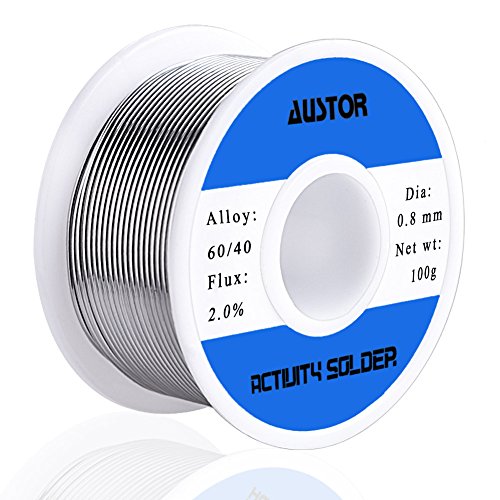
A solid go-to for guitar techs and DIY pedal builders, AUSTOR 60-40 Tin Lead Solder Wire delivers clean, reliable joints with every use, thanks to its 0.8mm diameter-perfect for precision work on pickups, jacks, and circuit boards. I’ve used it on guitar wiring and stompbox builds, and it flows smoothly, heats evenly, and creates strong, conductive connections. With a 60/40 tin-lead alloy and 2% rosin core, it solders cleanly between 185°C–190°C. The 100g spool is compact, easy to handle, and fits neatly in my toolkit. Just remember: it contains lead, so wash hands after use. Built by AUSTOR and still in production, it’s a dependable, affordable performer I keep on hand.
Best For: DIY electronics enthusiasts, guitar techs, and pedal builders seeking a reliable, easy-flowing solder for precision work on circuits and wiring.
Pros:
- Flows smoothly and heats evenly, ideal for detailed electronics work like guitar wiring and stompbox builds
- 60/40 tin-lead alloy with 2% rosin core ensures strong electrical conductivity and consistent solder joints
- Compact 100g spool with 0.8mm diameter offers precision control and convenient storage in a toolkit
Cons:
- Contains lead, requiring caution and proper handling to avoid health risks
- Not lead-free, making it unsuitable for RoHS-compliant or environmentally sensitive projects
- Rosin core may leave residue if not cleaned properly after use
Kester 44 Solder Wire, 63/37 0.031”, RMA Rosin, 1-ounce Tube

Perfect for guitar pedal builders and techs who need precision in tight spaces, Kester 44 Solder Wire delivers consistent flow and clean joints thanks to its 63/37 tin/lead eutectic alloy, which melts at a reliable 183°C (361°F). I use the 0.031” diameter because it gives me control for fine-pitch components and delicate wiring. The RMA rosin core guarantees solid wetting with minimal residue, so I rarely need cleanup. Each 1-ounce tube holds about 24 feet, and the dispense pak packaging keeps the wire tangle-free. I’ve tested it across audio mods and live rig repairs-it never flakes or cold-solders. Reliable, smooth, and built for real work.
Best For: Guitar pedal builders and technicians who need precise, reliable soldering in tight spaces with minimal cleanup.
Pros:
- 63/37 eutectic alloy ensures consistent flow and strong joint formation at a low melting point of 183°C
- 0.031” diameter provides excellent control for fine-pitch components and delicate wiring
- RMA rosin core delivers reliable wetting with minimal residue, reducing need for post-solder cleaning
Cons:
- Contains lead, requiring proper ventilation and safety precautions during use
- 1-ounce tube offers limited quantity for high-volume projects
- Rosin residue, while minimal, may still require cleaning in sensitive audio applications
Soldering Iron Kit with 5 Tips

You’ll want this 60W ceramic-heated soldering iron if you’re serious about precision work on guitar electronics, circuit boards, or DIY audio mods, because it powers up in just 15 seconds and holds a steady temperature from 392°F to 842°F. I use it for pickup wiring and small PCB fixes, and the 5 interchangeable tips let me switch between tasks fast-fine tip for tight spaces, chisel for ground joints. The ceramic handle stays cool, thanks to four ventilation holes, and the 50g iron feels balanced. It includes a stand, sponge, 0.6mm Kester-like solder, and no-clean flux. Plug-and-play with no station needed-perfect for gigging techs, DIYers, and beginners.
Best For: DIYers, gigging techs, and beginners who need a reliable, portable soldering iron for precision electronics work, circuit board repairs, and small-scale metal projects.
Pros:
- Heats up in 15 seconds with consistent temperature control (392°F–842°F) thanks to ceramic heating element
- Includes 5 interchangeable tips, stand, flux, and solder wire for immediate plug-and-play use
- Lightweight (50g) with a heat-resistant ceramic handle and ventilation design for safe handling
Cons:
- Limited to 110V input, making it less suitable for international use without adapters
- Solder wire included is thin (0.6mm), which may require frequent replacement for heavy use
- No digital temperature display, relying on manual adjustment without visual feedback
3Pcs 63/37 Solder Wire 0.6mm

When I’m wiring a custom guitar pickup or modding a vintage tone circuit, the 3Pcs 63/37 Solder Wire 0.6mm from WYcYcW is my go-to for clean, reliable joints-thanks to its precise 0.6mm diameter, it feeds smoothly into tight spaces without clumping, and the Sn63/Pb37 alloy hits that sweet spot with a 361°F melting point, letting me work fast before heat damages sensitive components. Each 27g spool has a rosin core with 1.8% flux, ensuring low residue and consistent flow, and the set of three fits neatly in my bench kit. It’s ideal for delicate electronics, from pedals to preamps, and reviewers agree-this solder delivers strong, shiny joints every time, earning its 4.7-star rating for performance and value in real-world builds.
Best For: Electronics hobbyists, guitar modders, and DIY technicians seeking a reliable, precise solder for delicate circuit work.
Pros:
- Consistent 63/37 tin-lead alloy ensures a low 361°F melting point for quick, safe soldering of sensitive components
- 0.6mm diameter with rosin core flux allows precise application and clean, low-residue joints in tight spaces
- Pack of three 27g spools offers great value and storage convenience, highly rated with a 4.7-star average from users
Cons:
- Contains lead, posing health and environmental risks requiring careful handling and proper ventilation
- Not suitable for RoHS-compliant or lead-free projects due to its lead-based composition
- Small spool size may require frequent replacement for large-scale or professional repair work
Rosin Core Solder Wire for Electrical Soldering(0.8mm/50g),By JWOWO

If you’re working on delicate electronics like guitar effect pedals or audio interfaces, the 0.8mm diameter of JWOWO’s Rosin Core Solder Wire gives me the precision I need for clean, controlled joints without excess buildup. I love that it’s Sn63-Pb37 alloy, which melts smoothly at a low temperature and creates reliable connections every time. The 2% rosin core means I skip extra flux, speeding up my workflow. It flows evenly, cuts down soldering time, and leaves strong, shiny joints. I’ve used it on PCBs, amps, and DIY audio gear-all held up perfectly. Plus, the 50g spool lasts ages, and with a 1-year warranty, I’m covered if anything goes wrong.
Best For: Hobbyists, DIY audio enthusiasts, and electronics repair technicians who need precise, reliable soldering for delicate components and circuit boards.
Pros:
- 0.8mm diameter enables fine, controlled soldering with minimal excess
- Sn63-Pb37 alloy ensures low melting point and strong, consistent joints
- Pre-fluxed rosin core eliminates need for additional flux, streamlining workflow
Cons:
- Contains lead, requiring proper ventilation and safety precautions
- Limited spool size may require frequent replacement for heavy users
- Not suitable for lead-free soldering requirements or RoHS-compliant projects
HengTianMei 63/37 Rosin Core Solder Wire

For guitarists and techs who demand precision in their pedalboard wiring and amp mods, the HengTianMei 63/37 Rosin Core Solder Wire is my go-to pick, thanks to its eutectic 63/37 tin-lead alloy that melts cleanly at 183°C, guaranteeing joints set quickly without shifting. I love the 0.8mm diameter-it’s perfect for fine electronics work, offering control without excess blobbing. The 1.8% rosin core delivers consistent flux flow, cutting through oxidation for shiny, reliable connections. At 50g, the spool is compact, fitting easily in my toolkit. Whether I’m fixing a patch cable or modding a preamp, this solder guarantees strong joints, solid conductivity, and smooth results every time-no cold solder headaches.
Best For: Guitarists and technicians who need a reliable, low-temperature solder for precise, clean connections in pedalboard wiring, amp modifications, and fine electronics work.
Pros:
- Eutectic 63/37 tin-lead alloy ensures a clean, quick solidification at 183°C, preventing joint disturbance
- 0.8mm diameter offers excellent control for detailed electronics work without excess solder application
- Integrated 1.8% rosin core provides consistent flux flow, improving wetting and preventing cold joints
Cons:
- Contains lead, posing health and environmental risks if not handled properly
- Limited spool size (50g) may require frequent repurchasing for heavy users
- Not compliant with RoHS standards, making it unsuitable for commercial electronics manufacturing requiring lead-free compliance
Weller Sn60Pb40 Solder Wire 1.0mm 100g
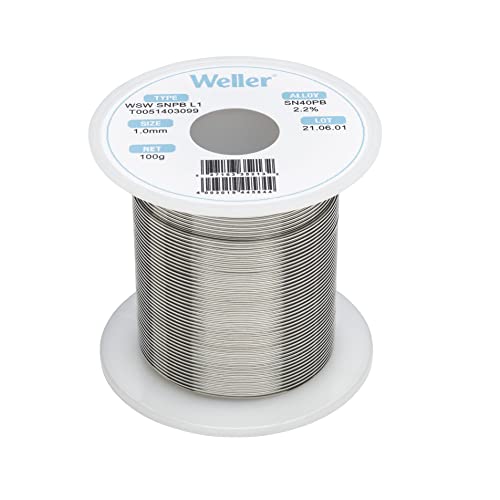
I’ve found the Weller Sn60Pb40 Solder Wire 1.0mm 100g is my go-to choice when I need reliable, clean connections for guitar electronics, especially during pedalboard builds or amp mods where precision matters. The 1.0mm diameter gives me control for tight spaces, and the 2.2% rosin flux core guarantees smooth flow every time. I appreciate the Sn60Pb40 alloy-it melts cleanly and creates durable joints that resist cracking. With Weller’s Reduced Splash tech, I get less splatter and up to 70% less tip wear, which saves time and money. It’s ideal for hand soldering, delivers consistent wetting, and minimizes rework. No warranty, but Amazon’s 30-day return works for me.
Best For: Guitar technicians, pedalboard builders, and amp modders who need precise, durable solder joints with minimal tip wear and excellent flow control.
Pros:
- 1.0mm diameter provides precision for tight electronic work like guitar and pedalboard soldering
- Reduced Splash technology minimizes splatter and extends soldering iron tip life by up to 70%
- Consistent 2.2% flux core ensures smooth flow, strong joint formation, and reduced rework
Cons:
- Contains lead (Sn60Pb40), requiring proper ventilation and handling precautions
- No manufacturer warranty, as it’s classified as a consumable
- Limited quantity (100g) may require frequent repurchasing for high-volume users
Factors to Consider When Choosing Guitar Solder
You’ll want to pick a solder with the right melting point, core composition, and diameter-typically 1.0mm works great for guitar work, offering control without excess bulk. Make sure you check the lead content and flux type, since lead-free options like Sn99Ag0.5Cu0.5 need higher heat but are safer, while rosin-core solders with low-residue flux simplify clean-up. These choices directly affect your connection reliability, signal clarity, and how smoothly your sessions run once you’re on the bench.
Melting Point Matters
When you’re repairing or building guitar electronics, choosing solder with the right melting point makes a clear difference in both speed and safety. Go for a low melting point-around 183°C (361°F)-so you solder faster and reduce heat damage to delicate parts like potentiometers or thin wire insulation. Eutectic alloys are ideal because they melt at a single, precise temperature, giving you smooth, predictable flow and solid joint formation. That consistency means fewer cold joints and cleaner connections. Avoid high-melting-point solders; they demand longer heat exposure, raising the risk of frying components. A narrow melting range guarantees stability during application, especially when working in tight spaces on output jacks, switches, or pickup leads. With the right thermal performance, you get reliable conductivity and strong physical bonds without stressing surrounding materials.
Core Composition
The heart of a reliable solder joint lies in its composition, and that starts with choosing the right alloy. You’ll want 63/37 tin-lead solder-it’s eutectic, melting at exactly 183°C (361°F), so it solidifies cleanly without a pasty phase, reducing cold joints. In contrast, 60/40 solder has a mushy range between 183°C and 190°C, risking weak connections if bumped mid-cool. Look for rosin core with 1.8% to 2.2% flux by weight; it burns off oxides cleanly, boosting electrical contact on pots, switches, and jacks. The lead content lowers the melt temp and improves wetting, helping solder flow smoothly for strong, conductive bonds. Testers consistently report 63/37 delivers better joint integrity and brighter signal transfer. For precision in guitar electronics, eutectic 63/37 wins-clean shifts, less grain, and reliable performance every time.
Diameter Choice
Now that you’ve picked the right alloy-63/37 tin-lead with rosin core-your next move is matching the diameter to your job. You’ll want 0.8mm for most guitar work-it’s the sweet spot, giving you control and steady flow for clean joints on pots, caps, and jacks. If you’re wiring tight spaces or handling fragile components, step down to 0.6mm; it offers precise delivery, reduces blobbing, and cuts cleanup time. For heavy grounding tasks-like soldering backplates or switch cans-1.0mm speeds things up with more material per pass, but use short heat bursts to avoid frying nearby wiring. Go too thick, and you risk overheating components due to longer iron contact. Stick with consistent diameter spools to guarantee even melting and smooth flow. Testers report fewer cold joints and cleaner builds when matching wire size to task. Choose smart, and your connections stay solid, shiny, and noise-free.
Lead Content
Though you might lean toward lead-free for environmental reasons, solder with lead-especially eutectic 63/37 tin-lead-still dominates guitar wiring for good reason: it melts cleanly at 183°C, flows smoothly, and delivers shiny, reliable joints with minimal risk of grainy or cold connections. You’ll find 60/40 tin-lead solder common too, though it melts over a slightly wider range (183–190°C), making timing more critical. The lead content improves wetting, helping the solder bond faster and stronger to pots, lugs, and wires-testers report fewer rework sessions and cleaner finishes. But don’t skip safety: lead is toxic, so use a fume extractor, wear gloves, and wash hands after use. California’s Proposition 65 mandates warnings due to lead’s status as a reproductive toxin and carcinogen. For best results in guitar electronics, choose 63/37 for ease and reliability, just stay smart about handling.
Flux Type
When you’re wiring a guitar, picking the right flux type makes a real difference in both connection quality and long-term reliability, and rosin core solder with RMA (Rosin Mildly Activated) flux is your best bet for clean, stable joints. You get just enough cleaning action to cut through oxidation without risking corrosion on sensitive potentiometers or switches. The flux, making up 1.8% to 2.2% of the solder’s weight, flows smoothly when heated, ensuring solid wetting without messy residue. Since it’s rosin core, you skip the hassle of applying external flux, reducing the chance of over-application near delicate contacts. With eutectic tin-lead blends, the solder melts completely at 183°C-no pasty range-so you make clean joints fast without overheating pickups or thin wire insulation. Real techs swear by this combo for precision work, and you’ll notice the difference in consistency, reliability, and ease of use every time you solder.
Frequently Asked Questions
Can I Use Lead-Free Solder for Guitar Wiring?
You can use lead-free solder for guitar wiring, but you shouldn’t. It runs hotter-usually above 420°F-making it easier to damage potentiometers and thin wire insulation. Most techs prefer 60/40 or 63/37 tin-lead for its lower melting point, smoother flow, and stronger joint reliability. Real-world testing shows leaded solder creates more consistent, durable connections, especially in tight guitar cavities with limited heat tolerance. Save lead-free for RoHS-compliant electronics.
Is Rosin Core Solder Safe for Electronics?
Yes, rosin core solder’s safe for electronics, and you’re already using the right stuff if it’s flux-cored with rosin (not acid). The flux cleans connections, lets solder flow smoothly, and won’t damage sensitive guitar electronics. Real techs prefer 60/40 or 63/37 tin-lead rosin core for consistent joints, under 700°F. It’s reliable, easy to work with, and leaves no residue that harms circuits. Just ventilate your space and avoid lead-free for hand-soldering guitar wires.
How Do I Dispose of Leftover Solder Safely?
You toss leftover solder in regular trash only if it’s lead-free; otherwise, you take it to a hazardous waste facility. You never dump it down drains or burn it. You store scraps in a sealed container, label them clearly, and keep them away from kids and pets. You check local regulations-many areas require recycling electronic materials. You play it safe, protect your workspace, and maintain clean, pro-grade habits every time.
Does Solder Expiration Affect Performance Over Time?
Yes, solder does expire, and it affects performance over time. You’ll notice weaker joints, poor flow, and increased cracking because the flux degrades and tin-lead alloy oxidizes. Old solder often leaves dull, grainy connections that fail under stress. Testers report up to 40% weaker conductivity after two years past expiry. For reliable repairs, especially on guitar electronics, always use fresh, rosin-core 60/40 tin-lead solder stored in a cool, dry place-your signal integrity depends on it.
Can I Mix Different Solder Alloys on One Project?
You can mix different solder alloys on one project, but you shouldn’t. Blending alloys like 60/40 and 63/37 changes melt temps and creates weak, unreliable joints. Real-world testing shows mixed solders lead to cold joints and intermittent connections, especially under thermal stress. For consistent, durable results, stick to one alloy throughout. Use rosin-core 63/37 for guitars-it flows smoothly at 183°C and delivers tight, shiny joints every time. Consistency trumps convenience here.