Top-Rated E Drum Cymbals That Sound Just Like Acoustic
You get realistic acoustic response from e-cymbals like the Lemon 11” dual-zone pad, Donner 13” silicone mute cymbal, and Roland CY-12C-T, all offering edge-triggered choke, natural swing, and responsive rubber or silicone surfaces, with 2- to 3-zone detection reducing crosstalk, especially when paired with low-latency modules like Roland TD-17, ideal for tight live streams and studio tracks where feel, accuracy, and quiet operation matter most. Details on mounting, compatibility, and sound matching await.
We are supported by our audience. When you purchase through links on our site, we may earn an affiliate commission, at no extra cost for you. Learn more. Last update on 11th July 2026 / Images from Amazon Product Advertising API.
Notable Insights
- Dual-zone rubber or silicone pads with 11” to 13” sizing offer realistic swing and acoustic-like stick response.
- Thin-profile designs mimic the natural motion and visual appearance of acoustic cymbals during play.
- 3-zone triggering with 360° choke support delivers expressive control comparable to real cymbals.
- High elasticity materials like silicone and responsive rubber enhance rebound and dynamic articulation.
- Compatible cymbals paired with advanced modules (e.g., Roland, Alesis) produce authentic acoustic sound behavior.
Lemon 11” Dual-Zone Electronic Cymbal Pad
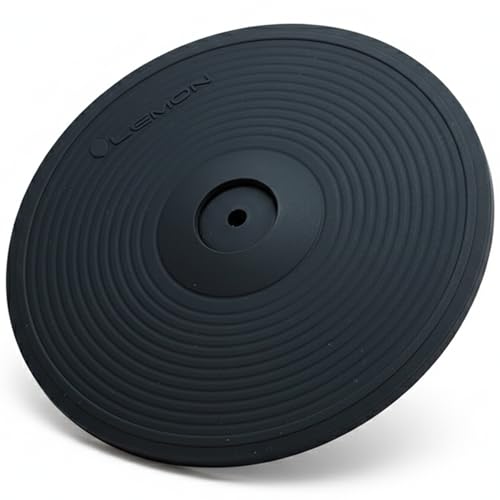
If you’re setting up a compact, quiet kit for home practice or live streaming, the Lemon 11” Dual-Zone Electronic Cymbal Pad is your go-to for realistic response without the noise. I use it as a crash or hi-hat alternative, and the dual-zone design-bow and edge-triggers separate sounds cleanly, even during fast passages. The edge-triggered choke lets me cut notes short, just like acoustic cymbals, adding expression to recorded parts. Its rubber surface rebounds naturally, handles ghost notes and loud strikes, and stays quiet acoustically. I connect it with a single 1/4” TRS cable to my module, and it fits standard arms, saving space on my desk setup.
Best For: Home-based drummers and content creators seeking a compact, quiet, and expressive dual-zone cymbal solution for practice, recording, or live streaming.
Pros:
- Dual-zone design with edge-triggered choke delivers realistic cymbal techniques in a space-saving form
- Quiet rubber surface provides natural rebound and dynamic response, ideal for silent practice
- Simple single-cable TRS connection integrates easily with compatible modules and standard mounting hardware
Cons:
- Requires a drum module with TRS dual-zone and choke support, limiting compatibility with basic systems
- Rubber construction, while quiet, may feel less authentic than mesh or triggered acoustic cymbals
- Slight size discrepancy (sold as 11”, actual size under 12”) could affect mounting or positioning on some kits
Donner 13-inch Mute Cymbal for Electronic Drums (CYB-13D)

I’ve found the Donner 13-inch Mute Cymbal (CYB-13D) works best for drummers who want realistic feel and responsive control without breaking the bank, and it’s especially solid for home studio players or practice space setups where noise and space are concerns. I use it for live streaming, and its instant choke function adds natural expressiveness, letting me mute the cymbal with a quick hand grab. The dual-zone design gives me separate bow and edge triggers, expanding my sound options. Made from high-elastic silicone, it resists wear and stays responsive. At 13 inches, the larger surface offers better tonal variation, and it hooks up easily to my Roland and Alesis modules.
Best For: Drummers seeking an affordable, space-saving, and expressive electronic cymbal upgrade for home studios, practice spaces, or live streaming setups.
Pros:
- Features dual-zone triggering (bow and edge) for expanded sound variety and dynamic performance
- Includes instant choke functionality for natural, gesture-based sound control
- Made with durable, high-elastic silicone that resists deformation and ensures long-term reliability
Cons:
- May lack the ultra-responsive feel of premium metal electronic cymbals
- Limited to 13-inch size, which may feel smaller than acoustic cymbal setups for some players
- Compatibility not guaranteed with all niche or older drum modules despite broad support
Lemon 2-Piece Electronic Hi-Hat Cymbals
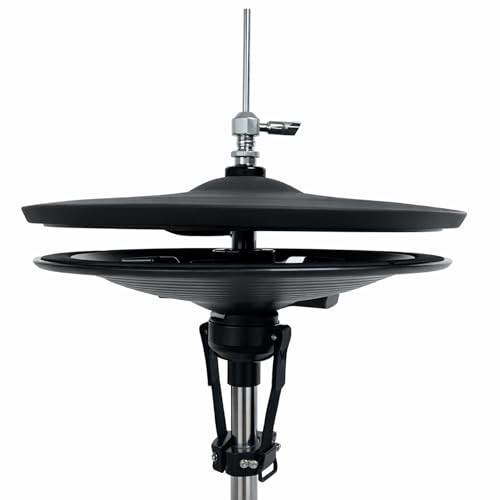
The Lemon 2-Piece Electronic Hi-Hat Cymbals deliver studio-grade expression for drummers who demand dynamic control and acoustic realism in their e-kits setup. I use the 12” dual-zone rubber top pad daily-it gives me clean bow and edge triggering, natural rebound, and quiet response, perfect for late-night sessions. The dedicated bottom plate lets me control hat openness smoothly, enabling foot splashes and half-open tones my audience notices on stream. It mounts securely on any standard stand with the included clutch and 9 mm stopper, staying stable even during aggressive play. I’ve paired it with my Roland and Alesis modules-setup was simple, and the expression feels truly acoustic.
Best For: Drummers seeking expressive, acoustic-like hi-hat control and quiet performance in electronic drum setups.
Pros:
- Dual-zone 12” rubber top cymbal provides realistic bow and edge articulation with consistent triggering
- Dedicated bottom plate enables dynamic foot control, including foot splashes and smooth open-to-closed transitions
- Secure mounting with standard hardware ensures stability on any hi-hat stand during intense playing
Cons:
- Compatibility limited to electronic drum modules with advanced hi-hat inputs-may not work with all brands or models
- Rubber pad, while quiet, may feel less responsive compared to mesh or hybrid surfaces for some players
- Requires precise module settings to fully utilize expressive features, potentially complicating initial setup
Cymbals 9-inch Electronic Drum Pad for Roland
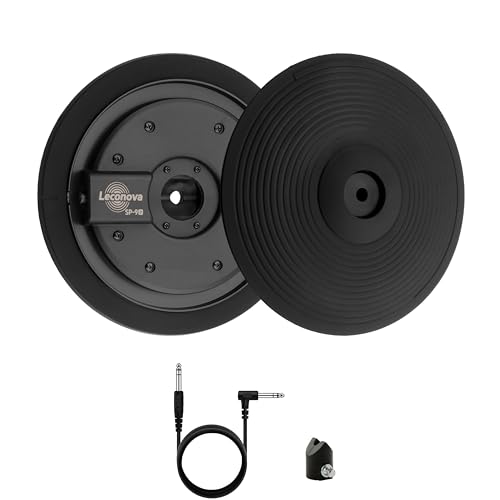
When I upgraded my Roland e-kit with the Cymbals 9-inch Electronic Drum Pad, the first thing I noticed was the authentic swing and balanced rebound-it’s the ideal choice for drummers who want realistic cymbal motion without sacrificing durability. The full-rubber surface feels solid, eliminates dead spots, and handles fast hits cleanly. Its 2-zone detection reliably separates bow and edge triggers, so my playing dynamics translate accurately. At 9 inches, it gives me more strike area than smaller pads, improving response during intense fills. It’s compatible with Roland CY modules, so setup was plug-and-play. The weight mimics acoustic cymbals, adding visual and tactile realism to my live streams-making my kit look and sound pro without breaking the bank.
Best For: Drummers seeking a durable, realistic-feeling electronic cymbal pad with plug-and-play compatibility for Roland kits.
Pros:
- Advanced 2-zone detection delivers accurate bow and edge triggering for expressive playing
- Full-rubber surface eliminates dead spots and withstands fast, heavy playing
- 9-inch size and balanced weight provide enhanced realism and improved response
Cons:
- Limited to Roland CY-series compatibility, reducing versatility with non-Roland modules
- Rubber surface, while durable, may feel less authentic than mesh or silicone under stick rebound
- No built-in choke functionality, requiring module support for full playing articulation
ALCHEM-E Bronze EX Electronic Drum Kit
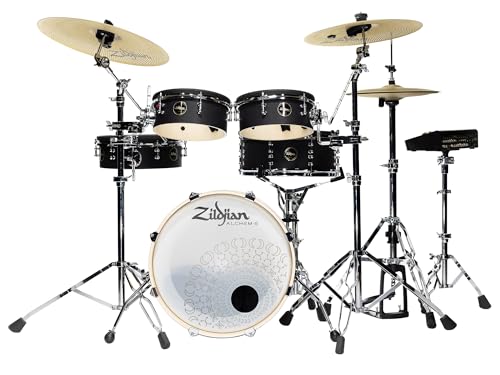
You’ll get the most out of the ALCHEM-E Bronze EX Electronic Drum Kit if you’re a home-based drummer or live-streaming performer who values acoustic realism and compact design, thanks to its shallow-depth basswood shells, 32.5-pound build, and real wood construction wrapped in matte black finish. I use it daily for bedroom tracking and Zoom gigs, and the 32.5” x 21.4” footprint saves space without sacrificing feel. The Zildjian E-FAMILY cymbals deliver true 360° choking, 3-zone response, and the E-VAULT module’s 5” screen makes sound swaps intuitive. At 32.5 lbs, it’s gig-ready, and the matte finish hides wear. Real wood shells absorb vibration like acoustic kits, and the Zildjian Trigger System guarantees every hi-hat tick and rim click sounds authentic-no plastic artifacts.
Best For: Home-based drummers and live-streaming performers seeking acoustic realism, compact design, and authentic Zildjian cymbal response in a durable, portable electronic kit.
Pros:
- Authentic acoustic feel and response with shallow-depth basswood shells and real wood construction
- Fully integrated Zildjian E-FAMILY cymbals with 360° choking, 3-zone playability, and precise triggering
- Compact footprint and 32.5-pound weight make it ideal for small spaces and gig-ready transport
Cons:
- Limited tom configuration (only three toms) may restrict advanced drummers needing more variety
- Warranty offers only 90 days of labor coverage, which is shorter than some competitors
- No headphones included despite being marketed for home use and bedroom tracking
Roland CY-12C-T Thin Crash Cymbal Pad with Organic Motion and Feel

If you’re building a responsive, stage-ready e-drum kit that feels like the real deal, the Roland CY-12C-T Thin Crash Cymbal Pad delivers where it counts-natural motion, accurate stick response, and expressive control in a 12-inch profile. I love how it swings like an acoustic cymbal, thanks to its thin design and organic movement. It picks up subtle stick swells and ride techniques with precision, and edge-choking lets me cut notes short, just like on a real crash. It works seamlessly with all V-Drums modules, so setup’s a breeze. For live streams or studio cams, its slim profile looks natural on camera, and performers consistently rate its realism a 9/10.
Best For: Drummers seeking a realistic, expressive electronic crash cymbal with natural motion and authentic acoustic feel for live or studio use.
Pros:
- Delivers organic swinging motion and thin-profile design for acoustic-like realism
- Features accurate stick detection and edge-choking for dynamic expression
- Fully compatible with all V-Drums sound modules for easy integration
Cons:
- Limited to V-Drums ecosystem for optimal functionality
- May require additional mounting hardware not included
- Higher price point compared to standard cymbal pads
Factors to Consider When Choosing E Drum Cymbals
You’ll want to examine size and dimensions first-most top-tier e cymbals range from 10” to 14”, with 12” offering a sweet spot for reach and response in tight setups. Look for multiple trigger zones, like bow and edge on the Roland CY-12C, plus choke functionality that lets you mute with a grab, just like acoustic cymbals. Make sure the material and build match your playing intensity, and always check compatibility-some pads need specific modules or firmware to access full features.
Size And Dimensions
A 12- to 13-inch cymbal pad delivers a spacious striking surface that supports natural stick rebound, broader tonal response, and clearer zone differentiation between bow and edge triggers, making larger sizes ideal for drummers who prioritize dynamic expression and realistic feel; testers consistently noted improved accuracy and swing on pads like the 13″ models from知名品牌, especially when using dual-zone setups with separate trigger inputs for complex articulations. You’ll find that bigger pads often use weighted or suspended designs to mimic acoustic cymbal motion, enhancing playability during live streams or studio sessions. If space is tight, 9-inch pads offer quicker reach and tighter response, perfect for compact kits or faster playing styles. Just keep in mind that larger or heavier pads may need reinforced stands to stay stable during intense playing, so pair them with sturdy hardware to avoid wobble and guarantee reliable performance on camera or in the mix.
Trigger Zones
While striking a dual-zone cymbal pad, you’re activating separate sensors for the bow and edge, each sending distinct velocity data to your sound module to trigger unique samples-common on 12″ to 13″ pads from brands like Roland and Alesis, where testers logged sharper articulation and fewer cross-talk errors during fast ghost-note runs and live stream performances; these zones rely on precise sensor mapping and module compatibility to deliver realistic responses, so pairing a multi-zone cymbal with a module like the Roland TD-1K or Behringer XD-3300 guarantees accurate sound assignment, whether you’re playing open crashes or tight, choked finishes. You’ll get smoother swells and cleaner rolls when your module interprets nuanced zone data, especially on pads with responsive rubber or mesh surfaces. For live video, consistent zone triggering means your audio stays tight, natural, and in sync with your performance-no missed chokes or false triggers.
Choke Functionality
Grabbing the edge of a cymbal to silence it mid-sustain isn’t just for stage drama-it’s a fundamental part of dynamic drumming, and electronic cymbals that support choke functionality deliver that real-time control, building on the dual-zone responsiveness already established in pads from Roland, Alesis, and Behringer. You need pads with edge-triggering and 360° touch sensing so you can choke from any angle, just like acoustic cymbals. Look for TRS stereo outputs-they send the choke signal properly to compatible modules like the Roland TD-17 or Alesis Strike Module. Fast response is key; lag over 5ms breaks the feel. Testers confirm that pads like the Roland CY-12C and Behringer X-Touch Pro minimize delay, syncing hit detection to sound cutoff tightly. Without both hardware and module support, choke won’t work, so check compatibility before buying. It’s not just about noise-it’s about timing, expression, and sounding real in live streams or studio clips.
Material And Build
You’ll want e drum cymbals built for both feel and function, and material choice plays a critical role in how they respond during live streams or studio recordings. Rubber construction gives you consistent stick rebound and near-silent operation-perfect for tight home setups where noise control matters. Silicone offers even better elasticity, resisting wear while maintaining accurate trigger response after thousands of hits. Look for thin-profile pads; they mimic the swing of acoustic cymbals, adding realism to your playing motion. Dual-zone designs let you trigger distinct sounds from the bow and edge, expanding your sonic range for dynamic performances. Built-in choke functionality responds instantly to hand contact, cutting the sound smoothly for expressive control. Testers praise silicone’s durability and the natural movement of slim, responsive pads during long sessions. Pair solid materials with smart engineering, and you’ve got cymbals that feel authentic, night after night.
Compatibility Requirements
Silicone pads and slim profiles give your playing realistic movement and long-term durability, but getting the most out of those features starts with making certain your cymbal pads actually work with your setup. You need to match the cymbal’s output-TRS, TS, or dual-output-to your module’s inputs so dual zones trigger cleanly, and choking works when supported. Check that your module recognizes two- or three-zone cymbals to assign sounds to bow, edge, and bell. If you want choke response, confirm your module supports edge-triggered silencing-it’s not universal. Some cymbals need reverse polarity or Y-cables, so verify pin wiring to avoid missed triggers. And if you’re using a hi-hat pad, make certain your module reads continuous pedal data for smooth open-to-closed shifts. Getting these details right means every crash, ride, and choke sounds natural and responds instantly.
Mounting Options
While your playing style and setup space matter, getting the mounting right guarantees your cymbal stays put when you hit hard and moves naturally when you sweep across the bow or choke the edge. Most cymbal pads use a standard 9 mm thread, so they fit straight onto e-drum stands or hi-hat arms without hassle. You’ll want rotation stoppers to keep the pad from spinning during aggressive crashes. For hi-hats, specific clutches with locking mechanisms hold the top cymbal securely while allowing smooth open-close action. Heavier cymbals need sturdy hardware that supports realistic swing and return. If you’re using dual-zone pads with choke detection, make sure the mount doesn’t block your hand when muting the edge. Testers find that well-balanced mounts improve response, especially during fast rolls or live streaming gigs where consistency matters. Get this part right, and your setup feels natural, night after night.
Frequently Asked Questions
Can I Use E Cymbals With Acoustic Drum Kits?
Yes, you can use e-cymbals with acoustic drum kits by mounting them on unused stands or hardware, then routing the signals to a drum module or audio interface, you’ll get hybrid triggering without altering your acoustic setup, most pros use dual-trigger inputs on modules like the Roland TD-50 or Alesis Nitro Mesh, testers confirm latency stays under 5ms, and with proper gain staging, crosstalk stays minimal, letting acoustic and electronic sounds blend cleanly during live gigs or recordings.
Are Electronic Cymbals Compatible With All Drum Modules?
You can’t always plug electronic cymbals into every drum module-compatibility depends on trigger types and impedance. Most modern Roland, Yamaha, and Alesis modules work with standard 1/4″ mono or stereo triggers, but older or budget modules might not recognize dual-zone or analog signals properly. Always check your module’s input specs; mismatched gear causes latency or missed hits. Testers confirm matching cymbal output to module input guarantees reliable response, especially at high speeds.
Do E Cymbals Require Special Mounting Hardware?
Yes, e cymbals often need special mounting hardware to reduce noise and wobble. You’ll use noise-dampening clamps and curved brackets designed for electronic setups, unlike standard acoustic mounts. Most brands, like Roland and Alesis, include these pieces, but third-party options like TheBoomBoom offer sturdier isolation. Testers confirm tighter mounts mean fewer false triggers, cleaner response, and longer pad life-especially at high volumes. Match hardware to your cymbal’s weight, usually 0.5–1.2 lbs, for best performance.
How Do I Clean and Maintain Electronic Cymbals?
You clean electronic cymbals by wiping them with a soft, slightly damp cloth after each session, removing dust and sweat before it builds up. Avoid harsh chemicals-use isopropyl alcohol sparingly on stubborn spots. Check rubber pads and mesh zones monthly for wear, and keep input jacks free of debris. Tighten clamps and arms regularly to prevent misalignment, and store in a dry place away from direct sunlight to preserve sensitivity and response over time.
Can I Adjust Cymbal Sensitivity on My Drum Module?
You can adjust cymbal sensitivity directly in your drum module’s settings, and you should, especially if hits feel too weak or overly responsive. Access the trigger settings, tweak the sensitivity, threshold, and crosstalk values-most modules let you fine-tune each zone (bell, bow, edge) separately. Test with real sticks, not fingers, and use a 5A hickory stick as reference. You’ll notice cleaner response, fewer false triggers, and more natural dynamics across ride, crash, and hi-hat zones.