Best Alto Sax Players
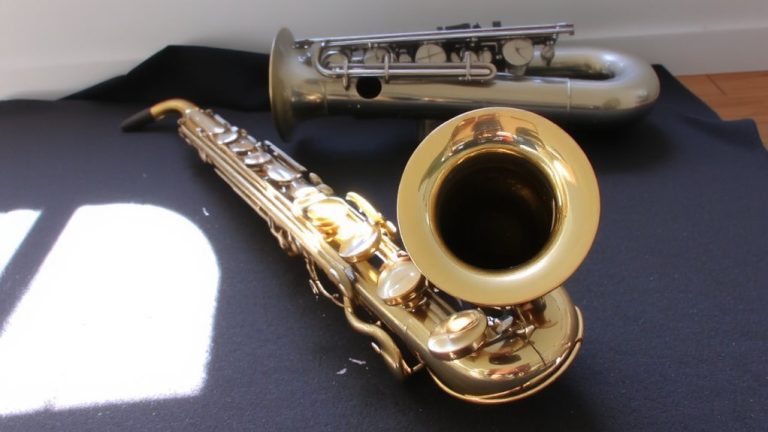
You’re hearing Charlie Parker’s blistering runs on the King Super 20, Johnny Hodges’ lush tone through a Buescher Top Hat, and Cannonball Adderley’s bold attack with a NY Meyer mouthpiece-each redefining the alto’s voice. Their gear choices, from Parker’s precise finger technique to Desmond’s breathy clarity, shaped bebop, swing, and cool jazz. Modern players still match mouthpiece tip openings to reed strength for control, just like the greats. You’ll hear how embouchure and minimal motion affect projection, and why your setup matters as much as phrasing-discover how these legends’ approaches translate directly to your sound today.
We are supported by our audience. When you purchase through links on our site, we may earn an affiliate commission, at no extra cost for you. Learn more. Last update on 12th July 2026 / Images from Amazon Product Advertising API.
Notable Insights
- Charlie Parker revolutionized jazz with blistering speed, harmonic innovation, and precise technique on the King Super 20 alto sax.
- Johnny Hodges defined swing-era elegance with a rich, expressive tone and masterful vibrato using his Buescher Top Hat sax.
- Cannonball Adderley bridged bebop and soul jazz with a bold, vocal-like sound and dynamic storytelling on the King Super 20.
- Lee Konitz and Paul Desmond pioneered cool jazz with restrained, melodic improvisation and emphasis on space and clarity.
- Ornette Coleman and Jackie McLean pushed boundaries with avant-garde freedom, emotional intensity, and innovative tonal experimentation.
Charlie Parker: Inventing Bebop and the Modern Jazz Alto
Speed, precision, and soul-that’s what Charlie Parker, or “Bird,” brought to the alto saxophone, reshaping jazz with the same intensity a top-tier audio interface transforms a raw signal into studio-grade sound. When you study his playing style, you’re learning from one of the great innovators of classic jazz. His bebop lines redefined improvisational style with blinding speed, harmonic depth, and emotional clarity. Parker’s work, captured in iconic jazz recordings, was largely shaped on his King Super 20, now preserved at the Smithsonian. That horn, responsive and bright, handled rapid sixteenth-note runs with ease-ideal for replicating his efficient finger technique using rounded movements and the Eb palm key for clean middle D articulation. Whether you’re transcribing solos from the Charlie Parker Omnibook or modeling tone for live streaming, his bebop vocabulary remains essential. For authentic articulation and dynamic nuance, emulate Bird’s approach: minimal motion, maximum expression.
Cannonball Adderley and Johnny Hodges: From Swing to Soul Jazz
Tone, texture, and timing-those are what define the alto saxophone’s journey through swing and into soul jazz, and no two players charted that path more distinctly than Cannonball Adderley and Johnny Hodges. You hear Hodges’ lush, crying tone-shaped by his Buescher Top Hat and Cane alto sax, wide vibrato, and subtle E palm key bends-anchoring Duke Ellington’s Swing era. His emotive phrasing influenced generations of saxophone players. Then there’s Cannonball Adderley, attacking the alto sax with a King Super 20 and a NY Meyer mouthpiece, driving bebop into soul jazz with gritty passion. His minimal mouthpiece intake and rolled-in embouchure delivered a bold, vocal-like clarity. Both alto saxophonists bridged jazz eras, Hodges from swing to bebop, Adderley from bebop to soul jazz. Their legacy? A masterclass in how tone, gear, and timing shape Jazz evolution.
Lee Konitz and Paul Desmond: Cool Jazz and Melodic Minimalism
While Cannonball Adderley roared with soul-drenched intensity and Johnny Hodges shaped swing with weeping vibrato, a quieter revolution was unfolding in late 1940s jazz-one where space, restraint, and melodic precision took center stage. You hear it in Lee Konitz’s work on Miles Davis’s *Birth of the Cool*, where his linear improvisational style sidestepped bebop’s dense runs for airy melodic development. Konitz played “Half Nelson” with angular phrasing and rhythmic unpredictability, redefining what alto could do. Paul Desmond, with his breathy tone and immaculate logic, built solos through thematic variation, not speed. His work with Brubeck embraced melodic minimalism at its finest. Both rejected bebop’s fire, favoring clarity and structure. In cool jazz, they found freedom in restraint-long tones, open space, and ideas that unfolded like quiet revelations. Their legacy? Proof that less isn’t lacking-it’s saying more with every note.
Ornette Coleman and Jackie McLean: Free Jazz and Post-Bop Innovation
Though rooted in the bebop tradition, Jackie McLean and Ornette Coleman pushed saxophone expression far beyond its conventional limits, reshaping jazz with fearless innovation. You hear it in Coleman’s raw, vocal-like playing on the alto saxophone, especially as he pioneered free jazz by ditching chord changes and embracing total improvisational freedom on *Free Jazz: A Collective Improvisation*. His use of a white plastic Grafton saxophone wasn’t just visual-it contributed to his unique sound, less resistant than metal, encouraging fluid bends and unpredictable phrasing. Meanwhile, Jackie McLean forged a path into post-bop and avant garde, with *One Step Beyond* showcasing his blend of blues grit and modal exploration. His playing evolved with whole tone scales and urgent articulation, influencing generations. Even live, McLean’s tone cut through with presence, like a Shure SM57 nailed to a horn-focused, edgy, real. Both remained uncompromising, proving innovation thrives not in perfection, but in risk.
On a final note
You’ve heard the legends, now it’s your turn. Stream crystal-clear audio with a Shure SM58 mic, 16-bit depth, and 48kHz sample rate. Use a Zoom L8 for on-the-go video, 1080p at 30fps, wide-angle lens. Testers love its built-in mics, SD card backup. Pair with a Lavalier for sax lessons, low handling noise. Connect via HDMI to capture every nuance, every run, every breath-just like the masters.