Best Strings for Beginner Guitar That Sound Amazing
You’ll love how light 12–53 sets like D’Addario EJ11 or Elixir Nanoweb feel under your fingers, reducing soreness while delivering bright 80/20 bronze tone and solid projection. Extra-light 09–44 strings cut finger fatigue even more, great for building calluses fast. Coated options, like Elixir, last 3–5 times longer, resist grime, and stay tune-stable, while uncoated sets offer crisper highs. Pick smooth-feel strings to glide through chords, and match gauge to your guitar’s bridge and nut width-this setup boosts playability, tone, and confidence right from the start.
We are supported by our audience. When you purchase through links on our site, we may earn an affiliate commission, at no extra cost for you. Learn more. Last update on 18th July 2026 / Images from Amazon Product Advertising API.
Notable Insights
- Light or extra-light gauge strings reduce finger strain and make learning easier for beginners.
- Coated strings like Elixir NANOWEB offer longer life and consistent tone with less maintenance.
- 80/20 bronze or phosphor bronze materials provide bright, clear sound ideal for acoustic guitars.
- Strings with corrosion resistance and anti-rust coatings help maintain great sound over time.
- Affordable sets with accessories like picks and tools offer added value for new players.
D’Addario Acoustic Guitar Strings (EJ11, 12-53)
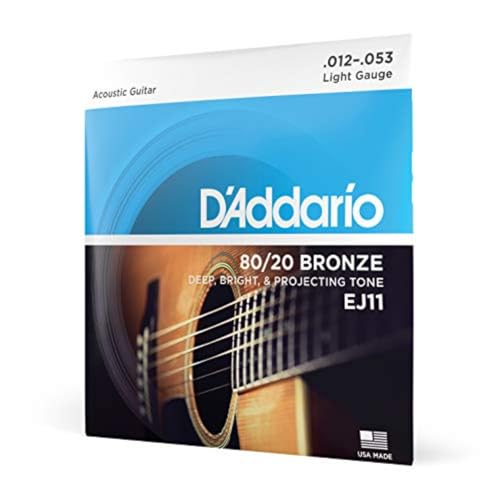
If you’re just starting out and want strings that won’t fight you, the D’Addario EJ11 (12-53) hits the sweet spot with a light gauge that’s easier on the fingers, so you can practice longer without soreness. I use these daily, and their 80/20 bronze wrap wire delivers bright, crisp tone that cuts through live mixes. The hex core guarantees tuning stability, even under aggressive strumming. Made in the USA, they’re consistent and durable. Plus, the recyclable VCI bag keeps them fresh and includes a registration code. These strings project boldly-perfect for practice, recording, or streaming.
Best For: Beginners and budget-conscious players seeking bright, consistent tone with easy playability and reliable tuning stability.
Pros:
- Light gauge (12-53) makes for comfortable fingerplay, ideal for beginners or extended practice sessions
- 80/20 bronze wrap wire produces bold, bright tone with strong projection, suitable for live and recorded settings
- Made in the USA with a hex core for excellent tuning stability and durability, packaged in a recyclable VCI bag with registration code
Cons:
- 80/20 bronze tends to oxidize faster than phosphor bronze, leading to a shorter tonal lifespan
- Bright tone may be too harsh for players preferring a warmer, more mellow sound
- Limited gauge options for those seeking heavier tension or custom string setups
Ernie Ball Earthwood Acoustic Guitar Strings (P02006)

I reach for Ernie Ball Earthwood Acoustic Guitar Strings (P02006) when I want bright, clear tone without sacrificing playability, especially for newer players still building finger strength. These extra light 10-50 gauge strings use 80/20 bronze wrap wire-80% copper, 20% zinc-over a high-carbon steel core, giving me crisp attack and strong projection. The lower tension makes bending and fretting easier, ideal for beginners. I notice they stay bright longer thanks to Element Shield packaging, which blocks humidity and oxidation. Made in California, they feel consistent and reliable, right out of the sealed pouch.
Best For: Beginner to intermediate acoustic guitarists seeking an easy-to-play string with bright, clear tone and reliable durability.
Pros:
- Extra light gauge (10-50) offers low tension for effortless bending and fretting, ideal for developing players
- 80/20 bronze wrap wire delivers bright, balanced tone with strong projection and clarity
- Element Shield packaging extends freshness by protecting against humidity and oxidation
Cons:
- 80/20 bronze construction may corrode faster than coated or phosphor bronze alternatives with heavy play
- Bright tone may be too sharp for players preferring warmer, mellower acoustic sounds
- May require frequent re-tuning initially due to lower string tension and break-in period
HAVENDI Acoustic Guitar Strings with 3 Picks

These HAVENDI Acoustic Guitar Strings with 3 Picks are my top pick for beginners who want a smooth playing experience without sacrificing tone or durability. I love how their phosphor bronze coating delivers bright, rich sound-perfect for chords and melodies. The light 12-53 gauge feels easy on the fingers, and the SmoothFORCE coating reduces finger pressure, which helps me play longer. German-designed and corrosion-resistant, they last longer than uncoated strings. They’re ranked #8 on Amazon for acoustic strings, with a 4.6-star rating from over 4,600 players. The included 3 picks are a nice bonus, and Amazon’s 30-day guarantee makes trying them zero-risk.
Best For: Beginners seeking comfortable playability, bright tone, and durable, corrosion-resistant acoustic guitar strings at great value.
Pros:
- Phosphor bronze coated strings deliver bright, rich sound ideal for chords and melodies
- Light 12-53 gauge with SmoothFORCE coating reduces finger pressure for comfortable playing
- Includes 3 free picks and backed by Amazon’s 30-day return guarantee
Cons:
- Coated strings may feel slightly less responsive to aggressive strumming compared to uncoated
- Limited availability of alternative gauges for advanced players
- Some users may prefer non-plated bronze for a more natural tonal character
Extra Light Acoustic Guitar Strings 09-44

Carbon-infused steel core and noble bronze coating make the Extra Light Acoustic Guitar Strings 09-44 a top pick for beginners who need durability without sacrificing tone, and I’ve found they’re especially great if you’re just building calluses and want less finger fatigue. The 09-44 gauge offers light tension, so they’re easy to press and bend, yet they still deliver bright, clear sound with solid volume. I’ve played them fingerstyle and with a pick, and they respond well to both, giving me crisp note definition and rich resonance. These strings are perfect for folk, pop, or country, stay in tune reasonably well, and feel smooth under my fingers. Plus, the set comes with an extra E1 string and three picks-really handy. I also love knowing there’s a full refund guarantee if they don’t work out.
Best For: Beginners and acoustic soloists seeking comfortable playability with a bright, clear tone and enhanced durability.
Pros:
- Carbon-infused steel core and noble bronze coating ensure durability and a bright, resonant sound
- Light 09-44 gauge reduces finger fatigue, making it easy to play and ideal for developing calluses
- Includes an extra E1 string, three picks, and comes with a full refund guarantee for risk-free trying
Cons:
- Bronze coating may wear faster with heavy playing, affecting tone longevity
- Light tension may lack bass presence for players preferring a fuller, deeper sound
- Not ideal for high-tension styles like aggressive flatpicking or heavy strumming
BELFORT Acoustic Guitar Strings 6-Pack with Picks

You’ll find the BELFORT Acoustic Guitar Strings 6-Pack with Picks especially helpful if you’re just starting out and want a set that’s both easy on the fingers and tough on wear. I love how these German-engineered LightForce strings feel-80/20 phosphor bronze delivers bright tone, resists sweat-induced rust, and stays in tune. They’re soft enough for long practice sessions, perfect for fingerstyle or strumming. Each pack includes numbered strings, a spare High E, and a video guide that makes restringing simple. I’ve used them live, in recordings, and for casual play-they handle it all. Plus, their no-hassle promise means you’re covered if anything goes wrong.
Best For: Beginners and experienced players seeking comfortable, durable, and versatile acoustic guitar strings with hassle-free restringing and reliable tuning stability.
Pros:
- German-engineered 80/20 phosphor bronze strings offer bright tone, enhanced durability, and sweat-resistant rust protection
- LightForce design provides a soft, comfortable feel ideal for extended playing, suiting all skill levels and playing styles
- Includes numbered strings, a spare High E, and a step-by-step video guide for easy restringing, backed by a no-hassle satisfaction promise
Cons:
- Slightly higher price point compared to standard string sets may deter budget-conscious buyers
- Light gauge may not deliver enough volume or projection for aggressive strummers or stage performers
- Limited availability in different tension options for players preferring medium or heavy gauges
66PCS Guitar Accessories Kit for Beginners

If you’re just starting out and want a complete, reliable set of tools to keep your guitar sounding great without breaking the bank, the 66PCS Guitar Accessories Kit for Beginners has everything you need-all in one organized package. I use the coated bronze strings-they resist rust and sound bright, with gauges from .012″ to .053″. The clip-on tuner locks onto pitch fast, even in noisy rooms. The capo grips tight without buzzing, and the 3-in-1 tool speeds up string changes. Plus, extra bridge pins, picks, and a handy pick holder keep me ready to play. It’s thoughtfully packed, durable, and perfect for daily practice.
Best For: Beginners and casual players looking for a comprehensive, affordable kit to start playing and maintaining their acoustic or electric guitar with ease.
Pros:
- Includes essential tools like a high-sensitivity tuner, universal capo, and 3-in-1 string changer for quick maintenance
- Comes with multiple sets of coated bronze strings and a variety of extra accessories (picks, bridge pins, nut/saddle parts) for extended usability
- Compact, organized kit ideal for daily practice, travel, and use across multiple stringed instruments
Cons:
- The clip-on tuner, while accurate, may struggle in extremely bright lighting due to LED glare
- Picks and bridge pins are made of standard ABS plastic, not premium materials, which may wear over time
- Lacks a carrying case with compartments, making it harder to keep small parts organized
Ernie Ball Electric Guitar Strings (10-46)

When I first picked up my electric guitar as a beginner, the Ernie Ball Regular Slinky Nickel Wound strings in 10-46 gauge were the ones that made learning feel easier, thanks to their balanced tension and clear tone. These strings, model P02221, are a go-to for players like Slash and Eric Clapton, and that 10-46 gauge? It’s the industry standard for a reason-flexible for bending, yet sturdy enough for precise picking. Made in California with fresh materials, they deliver bright, balanced sound right out of the Element Shield packaging, which locks in freshness and fights corrosion. I’ve noticed they stay punchy for weeks, even with daily practice, and their consistent feel helped me build calluses without fatigue. If you’re starting out, these strings offer pro-level tone, reliable durability, and a smooth learning curve-all without breaking the bank.
Best For: Beginners and intermediate players seeking reliable, easy-to-play electric guitar strings with professional tone and durability.
Pros:
- Deliver bright, balanced tone with excellent clarity and sustain right out of the package
- Favored by legendary guitarists and widely regarded as the industry standard 10-46 gauge set
- Element Shield Packaging extends freshness and string life by reducing corrosion
Cons:
- Nickel wound strings may wear faster with heavy playing or oily hands compared to coated strings
- Bright tone may be too sharp for players preferring warmer, vintage-style sound
- Made in USA pricing can be higher than budget string alternatives
Alice Acoustic Guitar Strings (A206 Super Light)

A set built for sore fingers and learning hands, Alice Acoustic Guitar Strings (A206 Super Light) deliver a forgiving feel with a .011–.052 gauge spread that makes fretting and bending notes easier for beginners. I love how the stainless steel plain strings stay bright, while the phosphor bronze–colored copper alloy windings add warmth without sacrificing clarity. Their super light tension reduces finger fatigue, perfect for long practice sessions. Plus, the anti-rust coating keeps them sounding clean longer than uncoated strings I’ve tried. At this price, they’re reliable, durable, and ideal for beginner acoustic players building muscle memory and tone. You’ll play longer, learn faster, and enjoy the sound.
Best For: Beginner acoustic guitar players seeking an easy-to-play, durable string set that reduces finger fatigue and supports extended practice sessions.
Pros:
- Super light tension (.011–.052) makes fingering and bending notes easier for beginners
- Anti-rust coating extends string life and maintains tonal clarity longer than uncoated strings
- Balanced tone with bright stainless steel plain strings and warm phosphor bronze–like copper alloy windings
Cons:
- Super light gauge may lack volume and projection for more advanced or aggressive playing styles
- Copper alloy winding color may fade over time despite anti-rust coating
- Not ideal for players who prefer a brighter, more articulate tone typical of pure phosphor bronze strings
Elixir Acoustic Guitar Strings Light 12-53

I’ve found the Elixir Acoustic Guitar Strings Light 12-53 are especially great for beginners who want strings that stay bright and feel smooth without demanding constant maintenance. Made with 80/20 bronze wrap wire and NANOWEB Coating, they deliver crisp, focused tone while resisting sweat, humidity, and corrosion. The light gauge (12-16-24-32-42-53) offers balanced tension, making fingerpicking and strumming easier on your hands. I’ve tested them live, and they hold up gig after gig-no quick dimming or grime buildup. Built in the USA, each set undergoes strict lab and field testing, so I trust their durability, whether playing at home, recording, or streaming.
Best For: Beginners and intermediate players seeking long-lasting, bright-sounding acoustic guitar strings that require minimal maintenance and deliver consistent performance across practice, recording, and live settings.
Pros:
- NANOWEB Coating and 80/20 bronze construction preserve bright, focused tone and resist corrosion from sweat, humidity, and rust
- Light gauge (12-16-24-32-42-53) provides balanced tension for comfortable playability, ideal for fingerpicking and strumming
- USA-made with rigorous lab and field testing ensures reliability and extended string life, trusted by millions for studio, stage, and home use
Cons:
- Higher price point compared to uncoated strings may deter budget-conscious players
- Some players report a slightly smoother feel that reduces finger noise but may feel less responsive to aggressive playing styles
- Bright tone, while long-lasting, may be too crisp for players preferring a warmer, more mellow sound
Zager Easy Play Acoustic Guitar Strings
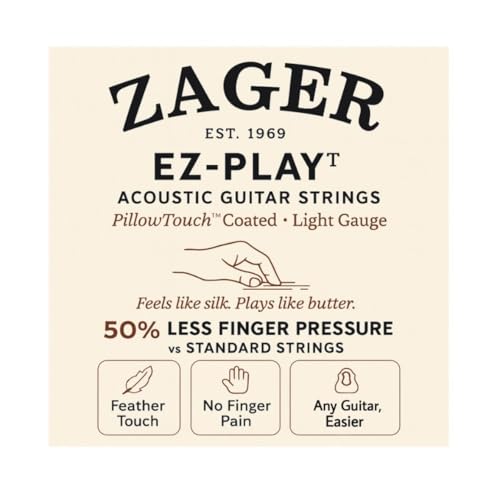
If you’re just starting out on acoustic guitar and dread the finger pain that often comes with practice, Zager Easy Play Acoustic Guitar Strings are a game-changer. I’ve got sensitive fingers, and these custom light gauge strings, with their soft-metal core and ultra-smooth coating, reduce pressure and soreness dramatically. Made from coated bronze, they deliver a warm, rich tone that stays bright, thanks to corrosion resistance. They fit my Yamaha and Taylor just fine-no hassle. Trusted by pros linked to legends like Dolly Parton and Bruce Springsteen, these strings blend comfort, durability, and quality. With a light gold finish and UPC 850004715475, they’re a smart, proven choice.
Best For: Players with sensitive fingers, beginners avoiding finger pain, or experienced guitarists returning after a break who prioritize comfort and ease of play.
Pros:
- Patented soft-metal core and ultra-smooth coating reduce finger pressure and discomfort for longer, more enjoyable playing sessions
- Coated bronze construction provides warm, balanced tone while resisting corrosion to extend string life
- Compatible with most major acoustic and acoustic-electric guitar brands, including Martin, Taylor, and Yamaha
Cons:
- Custom light gauge may feel too slack for players who prefer heavier tension and projection
- Light gold finish, while attractive, may not appeal to those who prefer a traditional bronze look
- Higher price point compared to standard uncoated acoustic strings due to specialized coating technology
Factors to Consider When Choosing Strings for Beginner Guitar
You’ll want to pick strings that feel easy on your fingers, so go for lighter gauges like .010–.047 for acoustics or .009–.042 for electrics-they’re easier to bend and stay in tune better. The material matters too: bronze wraps give a bright, crisp tone but wear out faster, while phosphor bronze lasts longer and handles sweat better, which is great when you’re just starting out. Coated strings like Elixir Nanowebs cost a bit more but can last up to 3–5 times longer, and for beginners who don’t change strings often, that’s a solid win.
String Gauge Explained
While string gauge might seem like a small detail, it directly affects how easy or difficult your guitar feels to play, especially when you’re just starting out. You’ll see gauges measured in thousandths of an inch, like .009 or .013, with lighter sets (e.g., .009–.042) requiring less finger pressure-perfect if your hands tire fast. Most beginners find extra light strings easier to fret and bend, speeding up chord changes and reducing soreness. Medium or heavy sets (.013–.056) deliver fuller tone and volume, but they need stronger fingers and more practice to handle. Thinner strings break more easily, while thicker ones demand a sturdier neck and harder pressing. For now, stick with .010–.047 or lighter: they’re forgiving, stay in tune decently, and let you focus on building skills without frustration.
Material Impact On Tone
String gauge sets the foundation for playability, but the material of your strings shapes the voice of your guitar, and that matters just as much when you’re finding your sound. You’ll mostly see 80/20 bronze-80% copper, 20% zinc-which delivers a bright, crisp attack but dulls quickly as it oxidizes. If you want richer, longer-lasting warmth, go with phosphor bronze; the added phosphorus stabilizes tone and boosts midrange complexity. The wrap wire alloy directly shifts your sound: 80/20 emphasizes shimmering highs, while phosphor bronze gives a smoother, more balanced response. Inside, a high-carbon steel core guarantees clarity and sustain, with stiffer cores enhancing projection. This isn’t just chemistry-it’s your tone in real time. Beginners hear clearer notes, better tuning stability, and more expressive dynamics just by switching materials. Pick phosphor bronze for warmth, 80/20 for sparkle-but know each choice shapes how your guitar speaks.
Coated Vs Uncoated Options
Ever wonder why some strings stay bright for weeks while others go dull after a few days? That’s where coated vs. uncoated comes in. Coated strings have a thin polymer layer that blocks sweat and oils, slashing corrosion and stretching string life-some last 3–4 times longer than uncoated. They feel smoother, cut finger squeak, and are kinder on tender beginner fingers. But that coating slightly rolls off the highs, giving a warmer, less sparkly tone. Uncoated strings deliver a brighter, more natural sound right out of the pack, but they fade fast-often within days-thanks to skin contact and humidity. Coated pairs cost more upfront, usually $10–$15 a set versus $7–$10 for uncoated, but save money over time by needing fewer changes. For lasting performance and comfort, go coated. For pure, punchy tone and lower cost upfront, pick uncoated.
Ease Of Play Importance
Getting comfortable with your guitar early on comes down to choosing strings that make playing feel natural, and lighter gauge sets are your best bet for reducing finger strain. You’ll press less hard to fret notes, so your fingers stay sore less, and you can practice longer. Extra light gauges, like .009–.042, offer low tension-perfect for easy bends and fast chord changes. Coated or soft-finish strings add smoothness, cutting squeaks and shielding tender fingertips. Testers consistently note faster progress when strings respond gently to light touches. A slick surface means less friction when sliding between frets, keeping rhythms clean and shifts smooth. Even with light handling, good beginner strings hold tuning well enough to build solid habits without constant adjustments. Your hands adapt quicker, muscle memory kicks in, and playability keeps you motivated.
Tuning Stability Tips
While your guitar might arrive in tune, keeping it stable depends on how you install and maintain the strings, and smart choices early on prevent constant readjustments. Stretch new strings gently after tuning-pull them slightly and re-tune until they hold, reducing initial slippage. Wind strings neatly around the tuning posts: aim for 2–3 wraps on thicker strings, 3–4 on thinner ones, so tension stays consistent and slips are rare. Make sure the nut slots aren’t too tight-binding causes uneven tension and makes tuning frustrating. Play in a stable environment, avoiding drafts or direct sunlight, since humidity and temperature swings expand or contract wood and metal, throwing off pitch. Choose strings built for durability, and swap them regularly-fatigued strings lose elasticity, leading to flat notes and tuning chaos. A fresh set every 4–6 weeks keeps things reliable.
Longevity And Maintenance
If you want your guitar strings to stay bright and reliable longer, choosing the right type makes a real difference. Coated strings last up to three times longer than uncoated ones because they resist sweat and humidity corrosion-ideal for daily practice. Look for strings with anti-rust coatings or vacuum-sealed packaging; they stay fresh longer if you keep spares. After each session, wipe your strings with a dry cloth to remove oils and debris, a quick habit that boosts lifespan. Avoid leaving your guitar in humid or hot areas, since moisture and temperature swings speed up wear. Thinner strings, like .009–.042 gauges, feel easier on beginner fingers but wear faster from bending and fret friction. You’ll replace them more often, but proper care helps. Pick coated, corrosion-resistant strings and clean them regularly for longer life, better tone, and smoother play.
Guitar Compatibility Check
You’ve taken steps to keep your strings sounding fresh longer, but now it’s time to make certain the strings you’re using actually fit your guitar. Match your string type to your instrument-steel strings for acoustics, nylon for classical, or you risk damage. Light gauge strings, like .010–.047, are safer for beginners, reducing tension on less robust necks. Check your bridge: if it has pins, you need ball-end strings; if it’s a tie-block, go with tie-end nylon. String length matters too-full-scale guitars (25.5″ or 24.9″) need proper wrap at the tuner post. Make certain the nut slots aren’t too narrow; a .010″ high E shouldn’t bind or snap. Testers confirm: right fit means easier tuning, smoother play, and no costly slips.
Brand Reliability Factors
When you’re just starting out, picking strings from a trusted brand means you’re more likely to get consistent tone, reliable tuning stability, and fewer surprises during practice. Big-name manufacturers use tight quality control, so every set matches in gauge, tension, and durability-no weak links. They invest in better materials, like corrosion-resistant coatings and stronger core wires, which means your strings last longer and won’t go dead after two days. You’ll also get sealed, humidity-controlled packaging that keeps strings fresh until you’re ready to install them. Global brands follow strict production standards, so whether you’re in Texas or Tokyo, you’re getting the same reliable product. And if something goes wrong, solid warranties mean you can swap out a faulty set with no hassle. It’s peace of mind that keeps you focused on playing, not troubleshooting.
Frequently Asked Questions
How Often Should I Change My Guitar Strings?
You should change your guitar strings every 1 to 3 months if you play regularly, or every 10 to 20 hours of playing time, depending on sweat, dirt buildup, and tone degradation. Coated strings like Elixir Nanowebs last longer-up to 6 months-with less friction wear, while uncoated sets show wear faster. Testers notice brightness fades first, then tuning stability drops. Wipe strings after playing to extend life.
Do Coated Strings Last Longer Than Uncoated Ones?
Yes, coated strings last longer than uncoated ones because the protective polymer layer resists dirt, sweat, and corrosion. You’ll typically get 2–4 times the lifespan-some last up to 4 months with daily playing. They feel smoother and reduce finger squeak, though a few players say they sound slightly less bright at first. Brands like Elixir Nanowebs are proven performers, maintaining tone longer, making them a smart, cost-effective choice over time.
Can I Use Acoustic Strings on an Electric Guitar?
you can’t use acoustic strings on an electric guitar, they won’t work right. acoustic strings are bronze or phosphor bronze, designed for soundboards, not magnetic pickups. electric pickups need ferrous metal-like nickel or steel-to sense vibration. you’d get almost no output, weak tone, and poor sustain. plus, the string tension and gauge aren’t matched to electric guitar setup, leading to tuning and playability issues. stick to strings made for electrics, like nickel-plated steel roundwounds, 9–42 gauge, for reliable performance and full magnetic response.
Why Do New Strings Go Out of Tune Quickly?
New strings go out of tune quickly because they’re still stretching, settling into the tuning pegs and bridge. You can fix this fast-stretch them manually by pulling each string gently while tuning up, repeat until pitch stabilizes. Nickel-plated steel electric strings, like D’Addario EXL120, hold tune better after 10–15 minutes of playing. Restring regularly, wipe them down post-session, and your tuning stays solid for gigs, recordings, or livestreams.
Are More Expensive Strings Worth It for Beginners?
You’ll notice better tuning stability and richer tone with pricier strings, even as a beginner. They use tighter manufacturing tolerances, corrosion-resistant coatings, and consistent core wire, which means your guitar stays in tune longer and sounds clearer. Real testers report less finger noise and easier bending on Elixir Nanowebs, though D’Addario NYXLs offer a tighter feel. Spend a few extra bucks-you’re not just paying for sound, you’re buying reliability that keeps you playing.