Best Way to Practice Guitar
Use the 4-step method: set clear goals like 120 BPM with alternate picking, practice with structured repetition, demand three perfect runs using guitar picks as counters, and reset on any mistake. Keep your thumb centered behind the neck, press with firm fingertip pressure, and maintain straight knuckle alignment. Simulate live gigs by leaving the room, re-entering, and nailing the first four bars flawlessly. Train in focused 5-minute blocks at 70 BPM on exercises like Caterpillar, advancing only when clean-your technique sharpens fast, and there’s a smarter way to lock it in.
We are supported by our audience. When you purchase through links on our site, we may earn an affiliate commission, at no extra cost for you. Learn more. Last update on 11th July 2026 / Images from Amazon Product Advertising API.
Notable Insights
- Set clear, measurable goals like mastering alternate picking at 120 BPM for focused, effective practice.
- Use structured repetition with three flawless runs in a row to build precision and consistency.
- Maintain proper hand alignment by centering the thumb behind the neck and using fingertips to press frets.
- Simulate live performance by exiting and re-entering the room to play error-free opening bars.
- Practice in focused 5-minute blocks on single techniques, advancing only after clean execution.
Use the 4-Step Method to Practice Guitar Perfectly
While most players jump straight into repetition, the real breakthroughs happen when you structure your practice with the 4-Step Method-design, practice, test, and repeat-so you’re not just putting in time, you’re building precision under pressure. In Guitar Practice, defining clear goals like 120 BPM with alternate picking guarantees your practice time is effective practice. You don’t just play-you get better by demanding three perfect runs in a row before moving on. Use guitar picks as physical counters to keep track; one mistake resets you to zero. This builds unshakable muscle memory. Stress-test it: walk out, come back, and play it cold-this simulates live performance better than passive drills. You can practice anything this way, from tricky solos to rhythm shifts. Real players use it to nail tough material before gigs. It’s not about reps-it’s about results.
Set Up Your Hand and Thumb to Practice Guitar Stronger
You’ve just locked in your practice routine with the 4-Step Method, so now it’s time to make every rep count by optimizing how your hand and thumb work together. Every guitar player can build better technique by learning how to setup your hand properly. Keep your thumb position centered behind the middle finger, using the flat pad for stability-this transfers force to your palm’s stronger muscles. Align one finger per fret, pressing with just the tips, three-quarters up each fret. Bring base knuckles forward to keep a straight line from knuckles to elbow, especially when playing every string down. A flat palm during moves like the Caterpillar Exercise helps your pinky stay rounded and strong.
| Proper Focus | What to Avoid |
|---|---|
| Flat thumb pad, mid-neck | Thumb tip or side use |
| Fingertips on frets | Collapsed knuckle joints |
| Knuckles aligned with neck | Excessive wrist bending |
This setup boosts control, reduces strain, and makes practice more effective.
Simulate Live Gigs to Practice Guitar Under Pressure
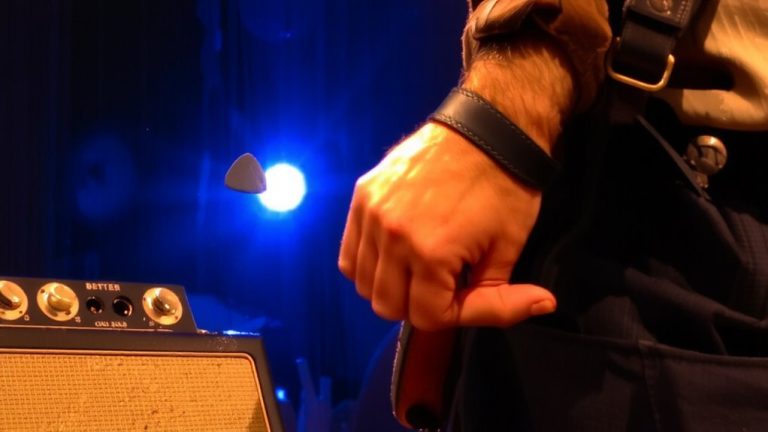
When you’re trying to build real-stage confidence without stepping on stage, simulating live gig pressure starts with a simple but powerful routine: leave your practice space, shut the door behind you, and walk back in like it’s showtime. Now you play the first four bars perfectly-no mistakes, no second chances. Use three guitar picks as counters; slide one over for each flawless run, reset if you’re going off the rails. This drill forces focus, mimics real-pressure entrances, and helps you stay locked on what’s happening. You’re not just practicing-you’re getting better under stress, training your brain to perform when it counts. The structured re-entry tricks your nervous system into thinking it’s go time, which helps us adapt faster, especially during last-minute dress rehearsals. It’s proven, measurable, and sharpens accuracy. You’ll notice better execution, cleaner shifts, and tighter timing-all critical when the stream goes live or the lights hit. This method doesn’t just build skill, it builds grit.
Practice Guitar in 5-Minute Focused Blocks
Five-minute blocks might sound too short to make a dent, but they’re actually your secret weapon for steady progress, especially when you’ve already trained your nerves with live-sim pressure runs. To practice guitar effectively, use 5-minute focused blocks that match your natural attention span. Target one specific element per block-like a chord shift or scale run-to boost precision without overload. Frequent short sessions, like five blocks daily, build muscle memory faster than one long stretch. Try the Caterpillar Exercise at 70 BPM in each block to develop dexterity; only advance when clean. Track every completed block on your practice schedule for momentum and clarity.
| Block # | Focus Area | Exercise |
|---|---|---|
| 1 | Chord Change | G to C smooth change |
| 2 | Right-hand Control | Alternate picking |
| 3 | Strength & Speed | Caterpillar Exercise |
On a final note
You’ve got this-use the 4-Step Method to stay focused, keep your hand and thumb aligned for cleaner bends and faster runs, and simulate live gigs with a metronome at 120 BPM or stream practice sessions using a Zoom H5 and Logitech C920. Practice in 5-minute blocks to build precision, reduce fatigue, and track progress with 48kHz/24-bit audio recordings that reveal real improvements.