Best Rock Songs With Bass
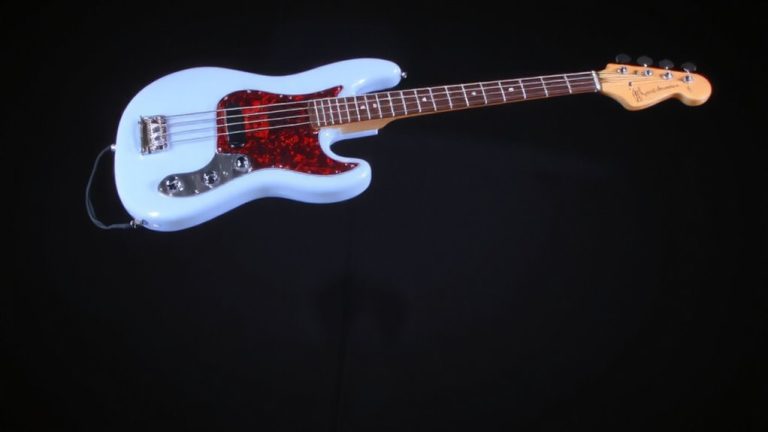
You feel the bass before you hear it, and tracks like Queen’s *Another One Bites the Dust* (84 Hz StingRay thump) or Muse’s *Hysteria* (158 BPM fuzz) prove the low end drives rock’s biggest hits. Flea’s slap on *Give It Away*, Novoselic’s groove in *Teen Spirit*, and Chancellor’s riff in *Schism* show bass isn’t just support-it’s lead, rhythm, and emotion. Use a Fender Precision for punch, or dial in grit with an Ampeg SVT. You’ll hear how these lines shape songs in ways you never noticed. There’s more to where that feel comes from.
We are supported by our audience. When you purchase through links on our site, we may earn an affiliate commission, at no extra cost for you. Learn more. Last update on 13th June 2026 / Images from Amazon Product Advertising API.
Notable Insights
- Queen’s *Another One Bites the Dust* features a punchy StingRay bassline that drives the song with rhythmic dominance and emotional intensity.
- Red Hot Chili Peppers’ *Give It Away* showcases Flea’s aggressive slap-and-pop technique, making bass the lead instrument in alternative rock.
- Muse’s *Hysteria* uses a fast, fuzzed-out bass groove at 158 BPM to create relentless momentum and chart-topping energy.
- Nirvana’s *Smells Like Teen Spirit* relies on a minimalist bassline that shapes dynamic shifts and defines 90s grunge groove.
- Tool’s *Schism* highlights Justin Chancellor’s complex, meter-shifting bass riff, a progressive rock milestone driven by low-end innovation.
Why Basslines Make Rock Songs Unforgettable
While you might not always notice it at first listen, the bassline often holds the entire weight of a rock song together, and when done right, it’s what makes a track impossible to forget. Think of the *opening bass* groove in Queen’s *Another One Bites the Dust*-that *iconic bassline* pulls you in with its deep bass thump, courtesy of John Deacon’s Music Man StingRay. Or the *bass riff* in Muse’s *Hysteria*, where Chris Wolstenholme’s fast, relentless *bass part* pushes 160 BPM with surgical precision. Flea’s *killer bass* slap in *Give It Away* dominates the mix, proving bass guitar can lead. Even Nirvana’s *Smells Like Teen Spirit* relies on Krist Novoselic’s minimalist groove to drive its dynamics. You can *play along* using a bass with strong midrange punch, like a Fender Precision. That’s why the *best bass* lines-simple or complex-are always felt, never just heard.
How Queen’s Bassline Changed Rock
That bassline. You hear it once and your body locks in-John Deacon’s riff on “Another One Bites the Dust” didn’t just anchor a song, it rewrote the rules. Played on a Music Man StingRay, one of the first high-profile uses of that bass, its punchy, bright tone cut through rock like a new weapon. Forget just following power chords from bands like Led Zeppelin or Pink Floyd-this was the bass leading. Suddenly, the low end drove the song, proving it could carry rock songs to play across genres. Its funky groove influenced acts from Red Hot Chili Peppers to Rage Against the Machine, even hip-hop giants like Grandmaster Flash and Michael Jackson, who sampled its swagger.
| Emotion | Trigger |
|---|---|
| Confidence | That first note hits-tight, deep, undeniable |
| Surprise | A bassline stealing the spotlight, not the guitar |
| Motion | Your feet move before your brain agrees |
90s and 2000s Anthems Built on Bass
You felt that bassline from Queen shift the entire game, turning low frequencies into lead instruments, and by the ’90s and 2000s, bass wasn’t just holding down the groove-it was launching anthems. Tracks like Bush’s “Comedown” used a minimalist four-note line to anchor their sound, topping the US Alternative Airplay chart. Nirvana’s “Lithium” relied on bass to play through jagged dynamics, proving it could drive great rock songs. The perfect example? Muse’s “Hysteria,” where Chris Wolstenholme’s relentless, fuzzed-out bass line charges at 158 BPM, peaking at #9 on the US chart. Tool’s “Schism” wove Justin Chancellor’s meter-shifting riff into progressive rock lore, hitting #2. Flea’s slap-and-pop in Red Hot Chili Peppers’ “Aeroplane” added melodic fire, securing a #8 spot. These anthems prove bass wasn’t background-it was essential, shaping rock’s most iconic 2000s moments.
Bass in Rock’s Most Emotional Ballads
A great ballad doesn’t just rely on lyrics or melody-sometimes it’s the bass that carries the emotional weight, grounding the song in something deep and tangible. In emotional ballads, the bass often shapes the mood as much as the vocals. Pink Floyd’s *Wish You Were Here* uses a melancholic bass line that locks into the introspective lyrics and atmospheric harmony, pulling you into its emotional depth. Metallica’s *Nothing Else Matters* features Jason Newsted’s lyrical bass and melodic bass performance, anchoring the track’s quiet power. The Beatles’ *Let It Be* gains warmth from McCartney’s flowing bass, adding harmonic fullness to its spiritual tone. Led Zeppelin’s *The Rain Song* leans on John Paul Jones’ rich chords for emotional resonance, while Radiohead’s *No Surprises* builds haunting ballads with a pulsing bass line that mirrors its suffocating atmosphere.
The Evolution of Funk and Slap Bass in Rock
Slap bass didn’t just shake up funk-it electrified rock, injecting groove into grit with a percussive punch that turned bassists into frontline performers. You hear it in Larry Graham’s work with Graham Central Station, where his thumb-driven slap bass technique on “Hair” defined funk bass and sparked the evolution of bass in popular music. That innovation rippled outward-Bernard Edwards brought crisp, rhythmic slap-and-pop to dance-rock, while The Jam’s “Town Called Malice” fused Motown-style bass with post-punk urgency. Then came Flea of Red Hot Chili Peppers, whose liquid, aggressive slap bass on “Give It Away” pushed funk into alternative rock’s core. And Les Claypool? His wild, virtuosic playing in Primus redefined what slap bass could do, blending speed, slap dynamics, and odd time. You don’t just play slap bass-you perform it.
The Beatles and Stones’ Hidden Bass Genius
While slap bass brought flash and funk to the forefront, the true artistry in rock bass often lies in what’s understated-like the quiet mastery behind The Beatles and The Rolling Stones. You can’t help but notice McCartney’s smooth, chromatic walk-down in “Come Together”-it remains one of the good ones, even though it flies under the radar. You still remember one moment in “Rain”, right? That reversed melodic bass line was pretty much genius. Even though The Beatles didn’t spotlight their bassist, his subtle counter-melodies in “Something” elevate the song emotionally. With The Stones, Bill Wyman’s syncopated groove in “Beast of Burden” is a good one, and his timing in “Miss You” complements the disco beat perfectly. You remember one thing: these songs instead of flash define lasting impact.
Interactive Tools for Legendary Rock Basslines
If you’re looking to learn some of the most influential rock basslines, interactive tools make mastering them easier than ever, giving you real-time feedback and layered playback options that adapt to your skill level. Use an interactive bass tab with play along accompaniment and optional vocals to dial in precision. Whether it’s the foundational bass riff in “Smoke on the Water”, the descending bassline in “Smells Like Teen Spirit”, or the iconic funk-driven bassline of “Another One Bites The Dust”, multi-track systems let you isolate sections. Tackle the bass-driven build-up in “Killing in the Name” or Chris Wolstenholme’s fast fuzzed-out performance on “Hysteria”-both technically demanding but doable with step-by-step guidance.
| Song | Feature Highlight |
|---|---|
| Smells Like Teen Spirit | Descending bassline, optional vocals |
| Another One Bites The Dust | Iconic funk-driven bassline, multiple difficulty levels |
| Smoke on the Water | Foundational bass riff, multi-track system |
| Hysteria | Fast fuzzed-out performance, technically demanding |
On a final note
You’ve seen how great basslines define rock’s biggest moments, so apply that depth to your own live streams and recordings. Use an audio interface like the Focusrite Scarlett 2i2 (24-bit/192kHz) for clean signal, pair with a Shure SM7B and a MOTIV microphone for balanced tone, and monitor through Sony MDR-7506 headphones. Real testers praise the low-end clarity when blending bass tracks in real time-essential for nailing those Queen or Red Hot Chili Peppers riffs.