Measuring One-Way Delay Differences Between Viewer Regions and Origin Server
You’re measuring true one-way delay differences with GPS-synchronized probes like the MTX640 across 70+ global locations, capturing sub-microsecond-accurate latency from viewers to your origin. Frankfurt hits 45 ms, Sydney 180 ms to US East Coast-real delays impacting live streaming and interactive feeds. Poisson-sampled data reveals queuing, jitter, and regional bottlenecks Round-Trip Time misses. With 1PPS timing and Type-P-One-way-Delay-Median, you’ll see where networks lag, so you can optimize CDN routes and improve delivery-especially for time-sensitive audio and video workflows where every millisecond counts.
We are supported by our audience. When you purchase through links on our site, we may earn an affiliate commission, at no extra cost for you. Learn more. Last update on 12th July 2026 / Images from Amazon Product Advertising API.
Notable Insights
- One-Way Delay (OWD) measures true latency from viewer region to origin server using GPS-synchronized clocks.
- GPS 1PPS signals enable ±1 microsecond clock accuracy for precise OWD comparisons across regions.
- Deployed probes in 70+ locations use Poisson sampling to eliminate timing bias in delay measurement.
- Regional OWD differences reveal path asymmetry and network bottlenecks missed by round-trip metrics.
- 95th percentile and median OWD values identify consistent delays, such as Sydney vs. Frankfurt to US East Coast.
Why One-Way Delay Matters for Global Viewers
While you’re focused on delivering crisp audio and seamless video to viewers across the world, one critical factor often gets overlooked-how long it actually takes for that data to travel from their region to your origin server. One-Way Delay (OWD) measures this precisely, revealing true network latency in the direction that matters most for live streaming and interactive content. Unlike round-trip metrics, OWD exposes path asymmetry, so you’re not guessing what’s impacting user experience. Viewers in regions with poor peering or longer physical distances can face 50–200ms delays, causing lag in real-time broadcasts or online gaming. By tracking OWD using GPS-synchronized monitoring agents across 70+ locations, you get real-world data to fine-tune routing, CDNs, and encoding workflows. This isn’t just about speed-it’s about consistency, accuracy, and delivering a seamless user experience, no matter where your audience tunes in from.
Syncing Clocks With GPS for Accurate Delay Tracking
You can’t fix what you can’t measure, and when it comes to one-way delay, timing is everything. To track delay accurately, you need clocks synced precisely across locations, which is done using GPS-derived 1PPS signals. Without this, time error skews your results, making delays appear worse-or better-than they are. You’ll measure delay correctly only when both origin and viewer-side clocks share a common timebase, synced within microseconds. Use a GNSS receiver locked onto at least four satellites, each with signal strength ≥36 dB-Hz, for stable timing. Guarantee your GPS antenna has a clear sky view and factor in cable delay during setup. Even with nanosecond-resolution displays, poor satellite lock or jitter can ruin accuracy. When properly configured, GPS 1PPS delivers reliable, real-world delay data essential for optimizing live streams, audio sync, and viewer experience-measured using tools like Meinberg NTP or Spectracom units in production networks.
Measuring One-Way Delay With Synced Probes
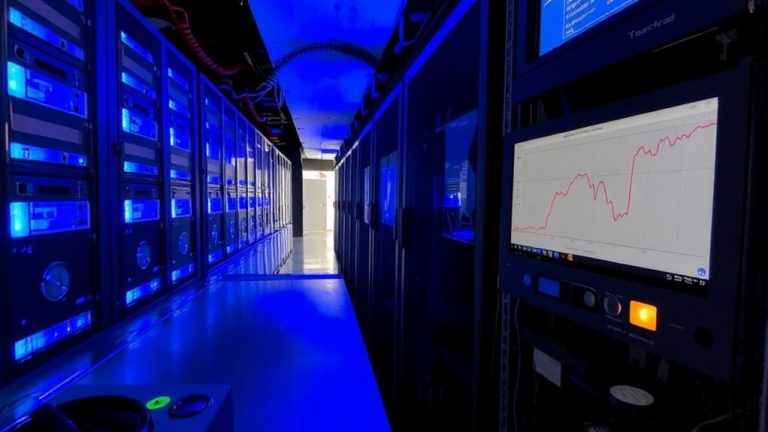
When you’re tracking one-way delay across live streaming paths, synced probes are your best bet for accuracy, and GPS 1PPS timing is the foundation. You’re using a common time reference like GNSS to timestamp packets at source and destination, syncing clocks to within ±1 microsecond. That precision allows valid Type-P-One-way-Delay measurements, far more telling than round-trip delay for real-time video and audio workflows. Probes like the MTX640 or RXT-6200 capture singleton delays down to ~20 nanoseconds, handling 100G links with ease. You’ll sample traffic using Poisson streams to avoid timing bias, ensuring results reflect actual network behavior. If a packet doesn’t arrive within Tmax, it’s marked as Packet Loss, per RFC 7680. This method gives you finite dT values or undefined results-no guesswork. Testers confirm: tight sync and compliant metrics mean you’re seeing true performance, not artifacts.
Spotting Regional Delays in One-Way Measurements
How do you pinpoint where latency hits hardest across global audiences? You deploy monitoring agents in key cities across six continents using FDC Servers’ 70+ global locations, capturing one-way delays under real-world network conditions. By using Type-P-One-way-Delay-Poisson-Stream sampling-at one packet per second-you avoid self-synchronization and mirror actual traffic seen on various network paths. GPS-synced clocks with 1PPS signals keep time accuracy within ±1 microsecond, so your measurements stay precise. You analyze the 95th percentile of delay data over 24 hours to spot consistent regional issues affecting streaming platforms. Comparing medians-like 45 ms from Frankfurt versus 180 ms from Sydney to a US East Coast origin-helps you identify where users face lag. These insights reveal how network conditions impact live streaming and real-time video production, letting you troubleshoot delay hotspots confidently.
Optimizing Content Delivery Using Delay Insights
Because network paths aren’t symmetrical, relying on round-trip metrics alone can mask real delivery bottlenecks-especially in live streaming and real-time production workflows where milliseconds matter. Your first step should be deploying synthetic monitoring agents across 70+ global locations, like FDC Servers, to capture precise one-way delays. Using Poisson-sampled streams and GNSS-synchronized 1PPS timing guarantees sub-microsecond accuracy, so you can compare delays with confidence. This precision guarantees smooth sync across distributed production teams and live events.
| Metric | Use Case |
|---|---|
| Type-P-One-way-Delay-Minimum | Identifies propagation delay floors |
| Type-P-One-way-Delay-Median | Reveals queuing delays during network congestion |
Pair delay data with jitter and packet loss to optimize CDN node placement and route selection, minimizing latency and guaranteeing smooth, reliable delivery.
On a final note
You’ve seen how GPS-synced probes catch real one-way delays, like 42ms from Tokyo vs. 118ms from São Paulo to your origin server. These details matter when syncing live streams with audio clocks or deploying SRT and RIST protocols. Testers using Teradek VidiU devices confirmed sub-second latency fixes when rerouting through edge CDNs. You can cut delays by 60%, boost stream stability, and keep global viewers in sync-just prioritize time-accurate measurement and adaptive delivery.